We are thrilled to announce the initial launch of Lean Library‘s One-Click to PDF feature, with the next phase launching later this year. The initial launch offers users one-click access to the full-text PDF of academic content via a widget on the library’s discovery layer — without requiring users to download the Lean Library browser extension.
Read on to learn everything you need to know about this exciting development, what’s coming in the next phased release, and how it benefits librarians, students and researchers.
Accessing library-subscribed scholarly resources has long been a challenge for researchers and students, especially as the majority of content discovery starts outside the library environment. When searching for content online, it can take students and researchers an average of 12 clicks to reach a full-text PDF of an article, costing them valuable time.
Lean Library is a trusted tool in streamlining access to library resources and delivering library services directly to users in their online workflows through its browser extension. Lean Library previously saved users up to 3 minutes per content search by streamlining authentication and access to library-subscribed content on publisher sites, where users then click to the desired content.
While this remains at the core of Lean Library’s offering, the new One-Click to PDF feature expands on this by instead taking users direct to the full-text article PDF (or HTML equivalent) in just one click. Furthermore, it does this without the need for the browser extension via a ‘Get PDF’ widget that can be injected on the library discovery system.
As a pioneer in access solutions for libraries, this development underscores Lean Library’s commitment to enhancing the visibility and usage of library resources. Whether through the trusted browser extension or the new ‘Get PDF’ widget, Lean Library removes barriers to knowledge by streamlining academic workflows and strengthening the library’s central role in supporting students and researchers.
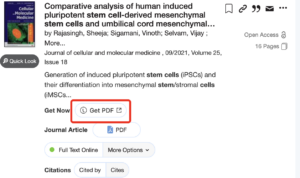
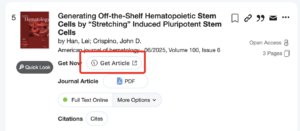
This initial launch provides Lean Library customer institutions with an injectable ‘Get PDF’ widget to embed on their library discovery layer. The widget is powered by an integration with GetFTR, which ensures high-quality and reliable linking with all major publisher content. It detects in real-time where an article PDF is available and displays a ‘Get PDF’ button that instantly downloads the article PDF for users in just one click. If a PDF isn’t available, users instead see a ‘Get Article’ button, which takes them to the publisher’s HTML version or landing page as the next best option.
This streamlines content discovery for students and researchers and saves them time from having to navigate between library discovery layers and publisher sites to get their hands on the actual full-text.
Get PDF button example:
Get article button example:
The widget is initially available for Ex Libris Primo and Summon library discovery services. It will next support OCLC Worldcat and EBSCO EDS. Customer librarians will be able to access engagement metrics on click-through rates and successful downloads via the Lean Library dashboard shortly after launch.
While the integration with GetFTR offers reliable PDF linking for all major publisher content, we plan to rapidly expand content coverage in the next phases of development. In addition, the ‘One-Click to PDF’ button will be made available within the Lean Library browser extension to streamline workflows of students and researchers who bypass the library discovery layer entirely and who prefer to start their content discovery online. Furthermore, we are looking to extend this to multi-search platforms like Google Scholar for the button to appear next to academic content in users’ search results — ultimately to meet students and researchers in their different preferred workflows.
As Lean Library continues to grow and develop, we remain committed to streamlining the research experience by amplifying the value of academic libraries. If your institution wants to learn about, contact us.
Promote and Bring Your Print Collection Online with Lean Library June 24, 2025Academic libraries play a crucial role in providing students and researchers with access to both digital and physical books and other collections. While digital resources offer convenience and easy access, physical books remain an essential part of the student and research experience, ensuring permanence, mitigating screen fatigue, and addressing access inequities, ensuring accessibility for all users.
Our Lean Library product originally focused on connecting users with the library’s digital collections when they search online on sites like Google Scholar. We’re pleased to share that Lean Library has now introduced Print Alternatives to also connect users with the library’s physical, print resources when they search on the open web.
Print Alternatives is a new enhancement to Lean Library’s existing Alternatives feature that seamlessly surfaces the library’s print book availability when users search for books online. When a user is browsing for books online (whether on Amazon, Waterstones, or any book seller site) and an ISBN is detected, the Lean Library browser extension will now alert users to whether a physical copy of the book is available in the library’s collection instead. This ensures that users are aware of all available formats—digital and print—at their point of need.
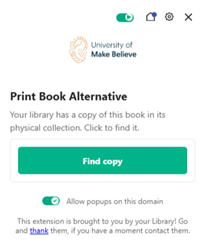
Print Alternatives functions as part of Lean Library’s existing Alternatives flow, which links users to alternative ways to access content they are searching for online, whether:
When a print book is identified, the extension provides a “Find copy” button that pre-generates a search in the library’s catalogue, directing patrons to locate the print title. This feature increases the visibility and circulation of physical collections while offering students and researchers greater flexibility in accessing materials.
Print Alternatives works with the major library discovery system providers, including:
For institutions using other discovery systems, the original Print Book functionality, which included a “Check for print” button, remains available, allowing patrons to navigate to their library’s website for print book searches.
In an increasingly digital world, print books continue to provide unique value. They offer a break from screen fatigue, ensure longevity, and support equity by providing access to students who may not have reliable digital access. By integrating Print Alternatives into Lean Library, we’re helping institutions maximize the impact of their print collections alongside digital offerings.
For more insights into the importance of print, explore our blog post.
With Print Alternatives, Lean Library can make the library’s print collections as accessible as digital resources, ultimately increasing engagement, improving resource usage, and supporting a diverse range of learning preferences.
Discover how Print Alternatives can amplify your library’s impact today by requesting a demo.
Congratulations to our June Library of the Month, Concordia University Irvine! June 19, 2025Each month we select a Library of the Month to honor libraries who have been using our library technologies in interesting and innovative ways, driving usage of library content with Lean Library.
The winning library will be awarded a prize to share amongst their team or a donation to a charity of their choice as a way for us to say thank you.
Concordia University Irvine (CUI) is a private, nonprofit Christian university located in Irvine, California, United States. They educate nearly 5,000 students on campus and online, and their alumni network has grown to over 25,000 worldwide.
We chose CUI as June’s Library of the Month as one of the first institutions to turn on our newly launched Lean Library Workspace feature to support its students across the entire research journey – from content discovery and access through to reference management, project collaboration and authoring work.

We asked Regina Powers, Library Director at CUI to tell us more about the university library and Lean Library:
“In fall of 2024, we set up Lean Library as a fresh way to connect learners to content. Concordia students appreciated the flexibility of being able to conduct research outside of the library’s search box. We have only just begun demonstrating the functionality of the new all-in-one Lean Library Workspace. But already students, especially graduate students, are excited about how much time they will save using Workspace to find, organize, annotate, and cite their research and include it in their writing projects. We plan to introduce Lean Library Workspace to faculty as a potential formative assessment tool. When added to a student’s Workspace project, faculty will be able to view and/or collaborate on their students’ research progress. (There will be no need to wonder if AI has done the work. Instructors will be able to view the student-selected articles linked up to their Workspace project.)
Concordia University Irvine is honored to be recognized as Library of the Month. We are beyond grateful to be partnering with Lean Library now and into the future.”
Discover our previous winners below:
Could your library be next?
Join us next month to see who’s won.
Lean Library Case Study: Higher Colleges of Technology June 18, 2025
Higher Colleges of Technology (HCT) is the UAE’s largest applied higher education institution, renowned for its leadership in applied and technological education. The university faced a common challenge across university libraries: ensuring seamless access to their extensive library resources across diverse online platforms. With students and faculty increasingly conducting research online, HCT needed a solution that brought library content directly to users wherever they were working.
HCT chose Lean Library to promote library resources throughout the research workflow to students via the Lean Library browser extension. This streamlines student access to library holdings and Open Access content and takes library services and guidance to students at their point of need.
After implementing Lean Library, HCT experienced a significant transformation in how their academic community accessed and engaged with library resources. Lean Library’s browser extension acts as a direct bridge between users and the library’s digital holdings, surfacing content and support exactly when and where it’s needed, whether the student begins their research on Google Scholar, PubMed, Wikipedia, or even ChatGPT.
“Lean Library has completely streamlined our users’ research workflows. Our students no longer waste time navigating complex access routes; instead, they’re instantly connected to full-text articles, eBooks, and licensed materials.”
Chrisa Karakasidou, Act. Asst. Library Manager, HCT
A key feature that has greatly benefited HCT is Lean Library’s Assist messages which are targeted, customizable notifications that appear contextually to guide users directly within their workflow or promote relevant library services.
Chrisa added: “The Assist messages allow us to provide timely support directly in the users’ workflow, whether reminding them about resource availability or drawing them back to the Library homepage, where they can contact the team directly using our integrated messaging service. This proactive approach has increased engagement and reduced barriers to accessing our collections.”
Lean Library has also increased visibility and usage of HCT’s licensed content significantly.
“Since launching Lean Library, we’ve seen a measurable rise in resource downloads and database engagement. It’s clear that providing targeted library messages and simplifying access empowers our academic community.”
Mostafa Osman, System Librarian, HCT
One standout benefit for HCT was Lean Library’s integration with Open Access repositories like Unpaywall and DOAB , which redirected students around paywalls to millions of freely available articles and eBooks, saving students money.
This feature not only enhanced access to papers for students but also contributed to library budget savings by reducing reliance on costly document delivery.
HCT Library has recently used the Lean Library integration to put LibGuides directly into student workflows. HCT can now offer timely support and personalized assistance without students needing to leave their research environment. This would lead to improved student satisfaction and a stronger connection between library services and academic success.
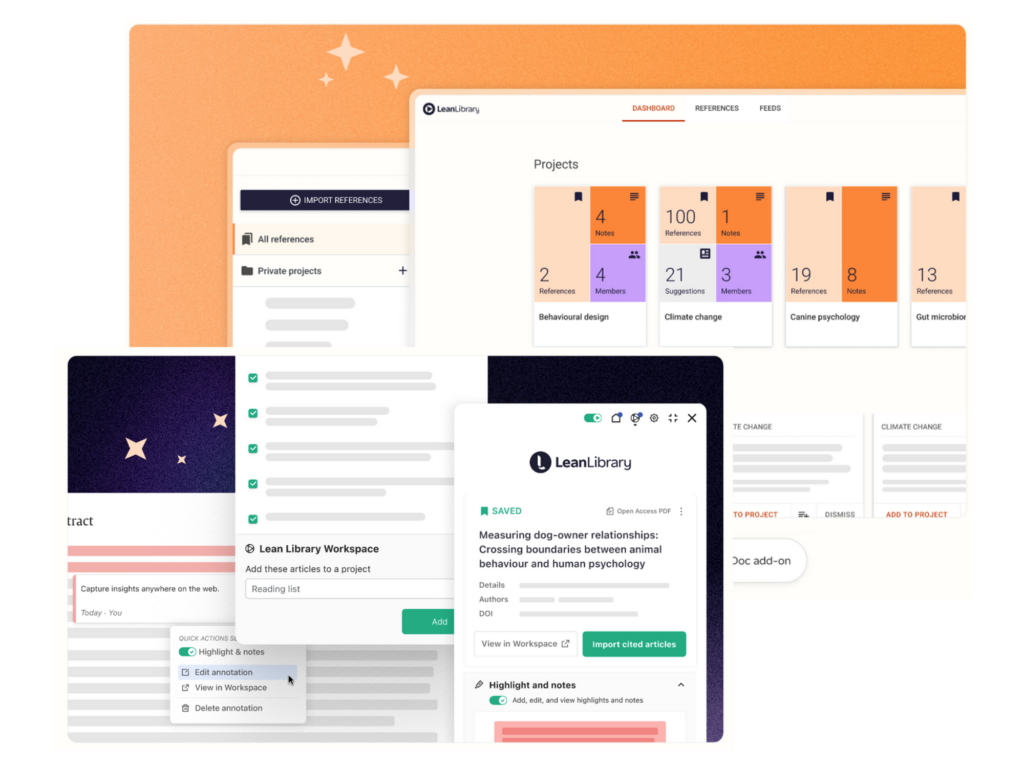
HCT is excited about rolling out Lean Library Workspace, formerly Sciwheel, an end-to-end research tool that integrates with the Lean Library browser extension. They believe this will increase uptake of Lean Library by enabling students to not only to find easier routes to access content but also to save articles, books, and other resources to their personal Workspace account.
Students will then be able to create in-text citations and bibliographies seamlessly, further supporting academic writing and research efficiency and providing students with an uninterrupted research experience.
By partnering with Lean Library, Higher Colleges of Technology has empowered its students and faculty with efficient, user-friendly access to essential resources, transforming the research experience and maximizing the impact of library services across campus.

Find out more about Lean Library.
If you’d like to hear more or receive a product demo, get in touch.
10 Key Findings on Students, AI and the Library from Librarian Futures Part IV June 17, 2025We recently launched Librarian Futures Part IV report: Librarian Leadership on the AI Frontier. The report draws on global surveys of 1000 students and 300 librarians, and uncovers a complex relationship between confidence, capability, and trust in the academic use of AI.
The report explores how artificial intelligence (AI) is reshaping the academic research journey—and the vital role librarians can play in guiding its responsible use.
Read on for a sneak peek of ten of the key findings from Librarian Futures Part IV…
AI clearly now has a significant role on the student workflow but has not necessarily changed it beyond recognition. Instead, it appears that AI has simply expanded the pool of resources available for students beginning their research.
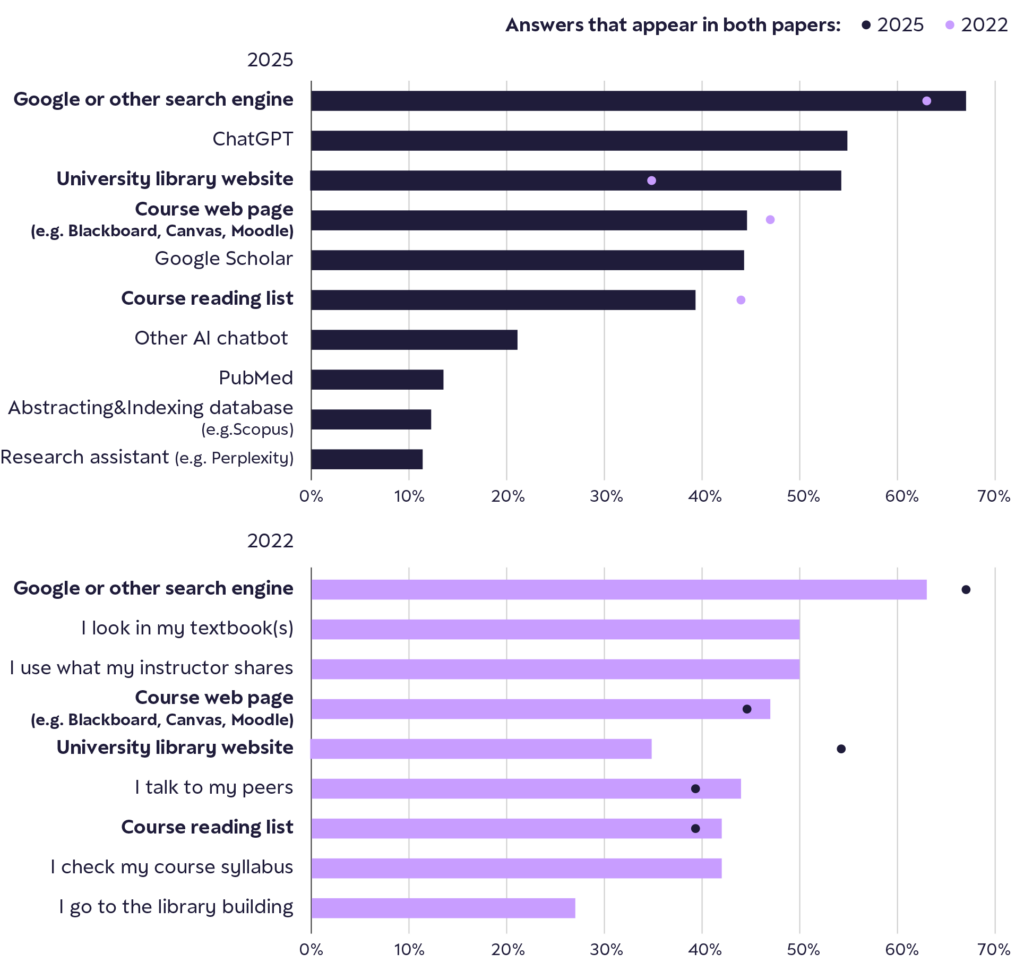
Figure 1. Data from Librarian Futures Part 2 compared with newly collected data (n=930) on: Student research habits.
Student use of AI at present is concentrated on a small pool of AI tools, rather than integrating it into every facet of their studies.
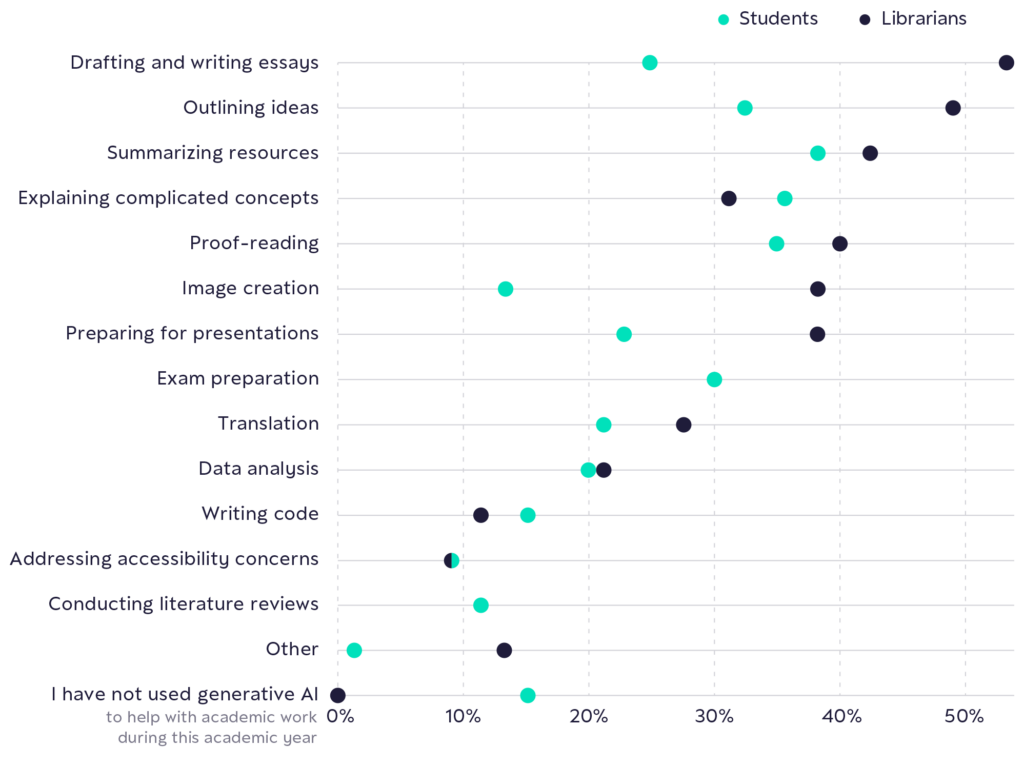
Figure 2. Student (n=912) and librarian (n=235) responses to the question: How have you used generative AI to help with academic work during this academic year?
Over half of students feel overwhelmed regularly (19% very often, 38% often). The effects of being overwhelmed are various. Half of students (50%) report that they either pay less attention in class or stop attending class completely.
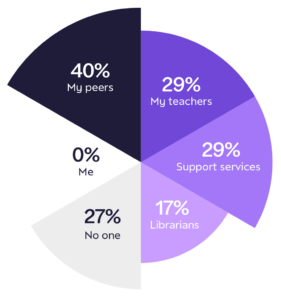
Figure 3. Student responses (n=902) to the question: At your institution, who would you look to for guidance on AI use?
Although more were enthusiastic than not, significant numbers of both students and librarians were either ambivalent about the prospect or actively opposed. This suggests a looming gap in practice and, therefore, attainment.
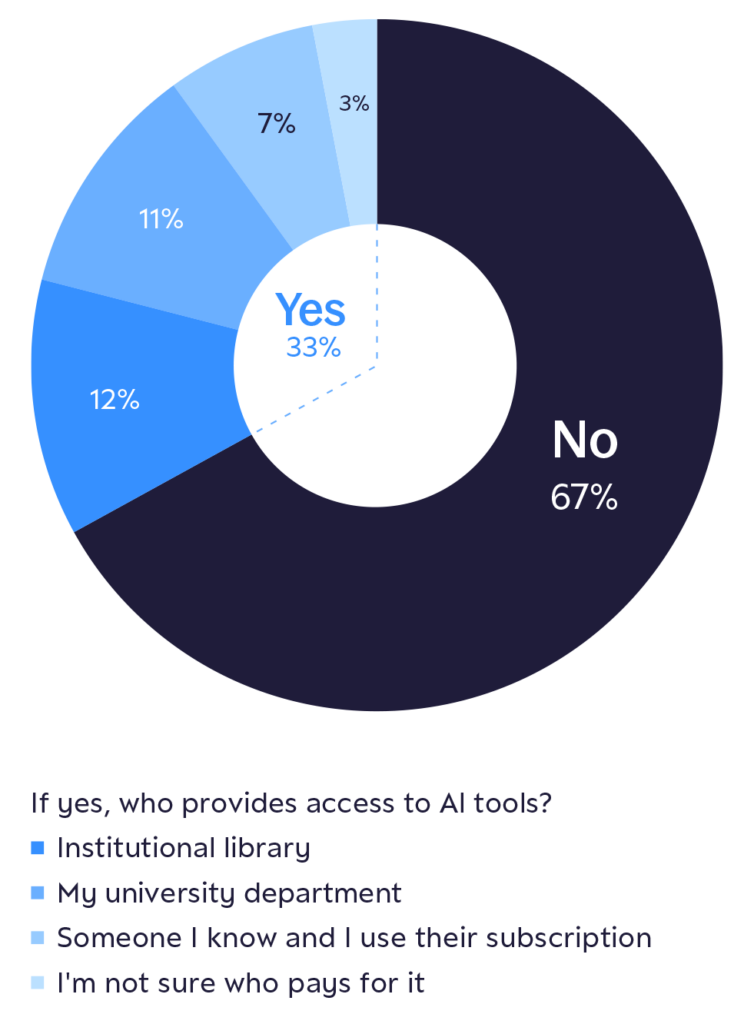
Figure 4. Student (n=911) responses to the question: Have you had access to any AI tools purchased on your behalf to help with academic work during this academic year?
Download Librarian Futures Part IV to discover more noteworthy insights regarding how the library to embed themselves into emerging AI workflows and the complementary skills librarians can develop to ensure the library is an authoritative voice on AI.
Share your thoughts about the findings in the new Librarian Futures Part IV report on LinkedIn and Bluesky.
From Tool Overload to Seamless Research: Lean Library Workspace May 21, 2025
We recently hosted a webinar introducing Lean Library Workspace—the latest development in our mission to redefine and amplify the power of the academic library to advance teaching, learning and research. Lean Library Workspace transforms Lean Library into the ultimate end-to-end research tool.
Library professionals from around the world joined us, sharing their experiences, challenges and perspectives. Through polls and discussion, one message was clear: students and researchers are expected to navigate too many tools and libraries need to provide more streamlined and integrated support.
Lean Library Workspace takes the library and its users beyond the access, discovery and guidance part of the research workflow that Lean Library currently supports, through to reference management, project collaboration and authoring work. It connects the browser extension to a new Lean Library Workspace website and accompanying Google Docs and Word plug-ins.
One of the strongest themes to emerge from our webinar polls was tool fatigue. Students and researchers are often expected to juggle multiple platforms—one for access, another for reference management, a third for collaboration, and so on.
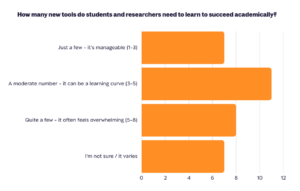
When we asked, “How many new tools do students and researchers need to learn to succeed academically?”, most respondents said between three to eight. That’s a steep learning curve, especially for new students. And it often leads to confusion about what the library supports, or where to go for help.
This underlines the value of an all-in-one tool like Lean Library Workspace—one that simplifies the research journey by bringing together discovery, access, citation, collaboration, and authoring into one seamless tool. The result? A more focused, less fragmented experience, helping students and researchers focus on their work rather than struggling to manage multiple tools and platforms.
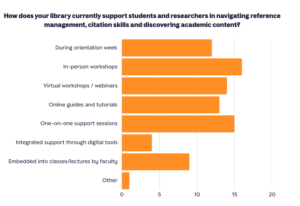
Libraries are already doing a great deal to support research skills through:
But even with this support, users often remain unaware of what resources and services are available through the library or how to access them. Lean Library helps bridge this gap by delivering support at their point of need—whether on Google Scholar, Wikipedia, or even ChatGPT.
📌Tip: Take advantage of Lean Library’s promotional toolkit—including a Lean Library Workspace LibGuide, videos, flyers, and more—to help build awareness of Lean Library on campus. Group deployment is also available and can increases engagement significantly.
Our polls uncovered key gaps in current library offerings:
This highlights a growing need for tools that work across the entire research workflow—just like Lean Library Workspace does.
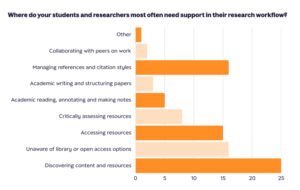
When we asked, “Where do your students and researchers most often need support in their research workflow?”, responses consistently highlighted a few key areas:
These challenges reflect the complex nature of the modern researcher workflow. Lean Library supports users in each of these areas without requiring them to leave their workflow or learn yet another platform.
According to attendees, an all-in-one tool like Lean Library Workspace could offer a wide range of benefits, including:
With our librarian dashboard, Lean Library Workspace also equips libraries with valuable analytics to inform decision-making and demonstrate the library’s impact.
The answer: everyone! According to poll respondents, undergraduate students, postgraduate researchers, faculty, and librarians all stand to gain from a tool like Lean Library Workspace.
It simplifies the research journey, increases efficiency, boosts productivity, saves money and time, drives usage of resources, and brings more visibility to the library.
“I love it more than Papers and EndNote. It’s intuitive, quick, and easy.”
— Ernesto Perez, Postdoctoral Fellow, NIH
“The best scholarly tool I’ve seen so far in terms of its practical usage!”
— Shervin Safavi, PhD student, Max Planck Institute
Lean Library Workspace isn’t just another tool. It’s a direct response to the increasing complexity of today’s digital research workflows. It removes the challenges of jumping between platforms and brings your library’s resources and service into a single user-friendly experience.
Lean Library puts the library at the heart of every research journey. Providing an uninterrupted research rhythm to your users. Stop requiring students and researchers to find the library—let the library come to them.
Interested in a personalised demo? Request one here or email us at info@leanlibrary.com.
🔗 Explore Lean Library Workspace today: workspace.leanlibrary.com
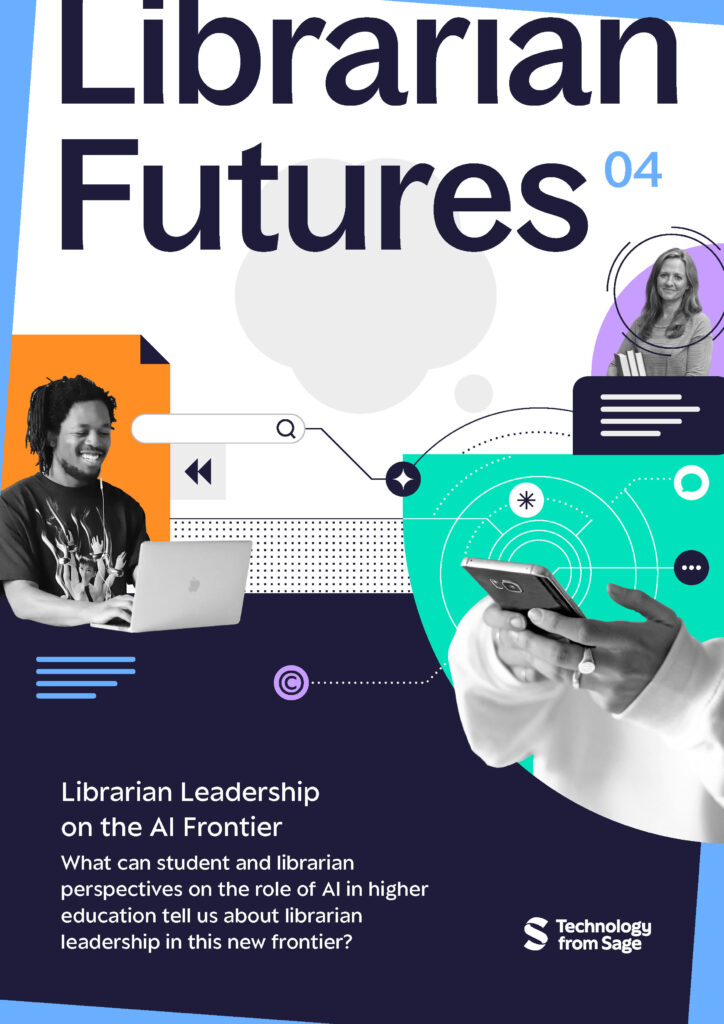
New Lean Library Report Explores Librarian Leadership in the Age of AI May 20, 2025Lean Library has published the fourth instalment in its acclaimed Librarian Futures series: Librarian Leadership on the AI Frontier. The report explores how artificial intelligence (AI) is reshaping the academic research journey—and the vital role librarians can play in guiding its responsible use.
Drawing on global surveys of over 1,000 students and 300 librarians, the findings uncover a complex relationship between confidence, capability, and trust in the academic use of AI. While over half of the students reported using AI tools like ChatGPT in their research, just 8% say they’ve received support from their librarian in doing so. This presents both a challenge and an opportunity: students overwhelmingly trust their librarians, with more than half saying they’d feel more confident using AI tools if recommended by them.
Sciwheel is becoming Lean Library Workspace April 29, 2025
Lean Library is consolidating Sciwheel into its Lean Library offering to launch as Lean Library Workspace. This will provide libraries and their users with an all-in-one offering that supports the entire research journey, from content discovery and access through to authoring work.
Lean Library acquired Sciwheel in 2022, with plans to integrate it with Lean Library to provide one uniquely comprehensive research tool that helps reduce student overwhelm when learning new skills and tools for their studies, while maximizing library budgets and time across the tools they support.
We’re excited to share that this is launching as Lean Library Workspace.
The new functionality that will be available in the Lean Library extension includes:
Current users can log in with the same credentials for uninterrupted access to their references and projects, with the same familiar user experience they know and love.
Users will need to download and use the Lean Library browser extension instead of the Sciwheel extension, but have until 31st August 2025 to do so, so as not to cause disruption during any research periods.
By moving to the Lean Library extension, users will unlock new content discovery and access benefits, including:
✅Saving up to 2 mins per search when discovering content online with streamlined access.
✅Unlocking instant and legal access to millions of Open Access articles and thousands of eBooks when hitting paywalls online.
✅Getting email alerts to updates to ‘Table of Contents’ to your chosen journals.
✅Building information literacy skills with article retraction alerts and trust ratings.
Sciwheel customer institutions can also choose to implement the full Lean Library offering to unlock wider benefits including; increasing usage of library content up to 40%, saving an estimated $90k per year with Open Access integrations, and promoting library branding, content, and customizable messages on any domain.
Libraries using Lean Library can choose to toggle on Lean Library Workspace for their institution so their users can create personal Lean Library Workspace accounts to:
✅ Instantly discover, access and save resources.
✅ Effortlessly manage references, annotate resources and collaborate on projects.
✅ Write, cite and author work smarter, faster.
This will embed libraries into further core stages of user workflows to gain actionable insights, help reduce student overwhelm, and better support researcher output.
Meanwhile, users of Lean Library’s free offering, Lean Library Open, can benefit from a more limited, freemium account to Lean Library Workspace – even if their institution does not subscribe.
Find out more about Lean Library Workspace on our product page and register for our upcoming launch webinar to see it in action.
OpenAthens Guest Post: Breaking Down Barriers to Knowledge with Library and Publisher Collaboration April 23, 2025We’re joined by Emma Wilson-Shaw, e-resource manager at OpenAthens for a guest blog post about library and publisher collaboration.
Read Emma’s commentary below:
As a cloud-based authentication service, OpenAthens is all about making access to digital resources easy and secure. It allows library patrons to discover and access online content wherever they choose. They can use any discovery platform they like and they need only a single set of credentials. In essence, it puts library users in the driving seat on a discovery journey without hold-ups, diversions or roadblocks.
Ultimately, libraries are customers with power. Ones that work closely with their vendors and publishers have an advantage in understanding challenges, overcoming technical issues and providing a great user experience for their patrons. Fostering these relationships makes sound sense and, in most cases, libraries will be pushing at an open door when they kick off those conversations. After all, happy customers mean vendors and publishers have fewer support tickets and an easier time when it comes to subscription renewals.
Collaboration gets things done
Last year OpenAthens and Lean Library ran a webinar encouraging partnerships between library professionals and IT specialists within their organisations to anticipate and overcome technical challenges. These days new technologies become mainstream fast, and closer cooperation can help hard-pressed library services to keep their systems up to date, and their staff’s skills current. Adoption of AI went from 0-60 in what felt like moments, and librarians with effective relationships with their IT departments will have been able to tap into IT knowhow and fast-track skills development.
In the same collaborative spirit, we strongly encourage libraries to collaborate with publishers. Complicated, multi-layered library systems don’t always integrate optimally with vendor platforms; when they don’t, resources can become harder to discover and use.
In these cases, it’s usually best to arrange a call between the parties, and we’re always keen to facilitate this. Our priority is to scope out a technical issue and fix it, and it helps if the relationship is already established. Typically, a call will involve our library customer, OpenAthens technical support and often me as well.
There isn’t always a quick fix, however. Where this is the case, it helps to be having honest conversations to understand the vendor or publisher’s priorities and make sure they know the library’s difficulty. We may be aware that the issue is more widespread and urgent than the publisher thinks, and relay this to them. And if the library is part of a purchasing consortium, we might be able to leverage its buying power to encourage a speedier resolution.
Advice for libraries
Taking the first step towards developing closer working relationships is simple. Talk to your account manager at the publisher or vendor, if you have one. If you don’t, contact your OpenAthens support provider, and we can bring all parties together.
By understanding each other’s needs, requirements, struggles and challenges, libraries and publishers can work together towards shared goals of making the library end user experience the best it can be.
Publishers and vendors benefit from their licensed resources being available to the people who are entitled to them. And the library can offer a personalized, added-value service that is measurable to ensure future business decisions regarding resource management and product development are data-driven with anonymized user data.
AI in Libraries: March Edition March 11, 2025At Lean Library we believe that the right technology can remove barriers to knowledge. We recently launched an AI in Libraries feature to round-up the latest AI developments for academic librarians.
Read on for March’s edition, collated by Rajeh Shaikh, Product Manager at Sage.

Oxford University has launched an exciting new five-year collaboration with OpenAI to enhance research and education. This partnership will provide students and faculty with access to different AI tools, including OpenAI’s advanced models, along with research grants and enterprise-level security. One of the initiatives is to digitize Oxford’s historical collections, including thousands of dissertations from the Bodleian Library, and exploring AI’s impact on education and global challenges such as health and climate change. This collaboration is also part of the NextGenAI consortium, where OpenAI is investing $50 million to support innovation in education and research.
Read more about the collaboration.
University libraries in Zimbabwe are facing growing ethical challenges as they are starting to integrate AI into higher education. A recent study highlights the concerns surrounding privacy, intellectual property, and job security, as AI transforms teaching and learning environments. Interviews with librarians and academics reveal that many institutions are still in the early stages of AI adoption and lack clear policies to address these issues. Among the main concerns are transparency, data security, and the potential for plagiarism detection issue.
Yale University Libraries are focusing on AI as a key priority for the next five years, aiming to leverage its potential to enhance access to the university’s extensive collections. Barbara Rockenbach, the reappointed University Librarian, emphasize the importance of digitization and AI in making Yale’s archives more accessible. With ongoing digitization efforts and AI tools already supporting collection management, the library plans to expand AI’s role in guiding students and faculty through its resources. Rockenbach views AI as a new form of literacy, enabling deeper engagement with digital content.