Based on Skilltype data and a Librarian Survey, the new Lean Library report explores the current librarian skills landscape and identifies areas for further development.
The second Librarian Futures report asked the question: How can academic libraries be more deeply involved in the undergraduate learning journey? This new report, in partnership with Skilltype, explores the emerging skills required to fulfil a library’s mission – in a decade shaped by social, political, and technological change – and meet the needs of today’s library patrons. We gathered global perspectives from over 2,000 academic library professionals, from frontline librarians to library directors, to ensure a representative set of insights for the report.
“Lean Library is proud to be a strategic investor in Skilltype, supporting their mission of building librarian skills for the future. I’m delighted that we could collaborate with Skilltype on this important report on librarian futures, helping Tony and his team share their unique insights on librarian skills – both where we are now, and what’s needed in the coming years.”
Matthew Hayes, PhD, MD, Lean Library
“Our aim with this collaboration is for information professionals and their teams gain new perspectives on the competencies they should be cultivating within their personal repertoires and their organizations. Librarians, and the new skills, competencies and responsibilities they will develop in the years ahead, are going to be pivotal to this. But it all starts with increased dialog, understanding where we are and where we want to go. I hope this report contributes to that dialog and inspires conversations in your library, amongst your peers, and within the wider library community.”
Tony Zanders, Founder and CEO, Skilltype
We believe the right technology can remove barriers to knowledge. So, we curated a suite of library technologies that improve your patrons’ workflow – from managing reading lists to discovering online resources and reference management. Whether used individually or in combination, our technologies amplify the library’s value on campus and prepare your library for the future.
Find out more at: leanlibrary.com
Skilltype is a talent management platform designed for libraries to analyze, develop, and share expertise. Founded in 2018, the platform uses linked data to help libraries identify skill gaps across their organization, create personalized training plans for employees, and identify opportunities for collaboration. Skilltype is based in Baton Rouge, Louisiana with offices in New Orleans and Boston.
Unlocking success: Start your new academic year with Lean Library October 6, 2023Throughout September we ran our Lean Library ‘Back to school’ webinar series, which consisted of three webinars, revisiting Lean Library’s key functionalities to ensure that our customers provide the best possible support to their patrons, and present our product roadmap for the year ahead. Let’s dive into the details of each webinar:
In our first webinar session, Senior Customer Success Consultant, Clare Chan, went over the key features of the Lean Library dashboard, providing the necessary tools for institutions to get the most out of this academic year. This session included:
In our second webinar session, Senior Customer Success Consultant, Clare Chan, was joined by Beatriu Piera Moreno, a Project Manager from the Autonomous University of Barcelona (UAB), who presented the results of AUB’s introduction of Lean Library, their strategy, and next steps, including:
In our third and last webinar session, Customer Success Consultant, Mariette Asem, was joined by Lean Library’s Senior Product Manager, Becca Richards, who looked back at Lean Library’s recent releases, upcoming updates to the product and what is being planned for Lean Library in 2024.
Read our latest case study from Kennesaw State University, who increased their collection usage by 3712% in just 4 months!
7 Ways to Reimagine the Academic Library September 26, 2023

In September we were excited to collaborate with OpenAthens on a webinar titled: Striving for a painless route to online content: Reimagining the academic library for the student of tomorrow. We explored how researchers can do their best work when they’re unable to get online, and how academic libraries can meet the evolving needs of students in the 21st century.
The webinar was presented by: Richard French, Product Manager at OpenAthens, Matthew Weldon, Library Patron Consultant at Lean Library, Ian Snowley, Dean of Learning Skills and University Librarian at University of Lincoln, and Maizie and Madeline, two second year students from University of Lincoln.
The webinar also explored the findings of two key reports, both published earlier this year:
We’re delighted to present 7 ways to reimagine the academic library based on Matthew’s discussion with Ian, Maizie and Madeline. Here are the ways the academic library can be more involved with the student learning journey:
The Librarian Futures Part II report found that that students receive support from “myself”, “my peers”, and “my teachers” more than librarians. This is a key issue which a lot of academic librarians are aware of, especially as they put huge amounts of effort into trying to communicate with students.
We feel it’s really important to try and integrate our support as much as possible ….It’s very clear that academics are in a key position to influence students, much more so than other staff in the university.”
Ian Snowley
Madeline highlighted that she found it incredibly useful to participate in library training sessions at the beginning of the academic year which provided guidance on using the library resources. Maizie noted that they had library led sessions where they actually went to the library and were taught how to use it, and this support was incredibly helpful.
There was a big push for us to sort of do our work in the library and at least for the first few weeks of university just to come and sort of see how the library works.”
Madeline
Maizie said the type of support from the library which has been the most useful has been referencing help, especially when she first started at university. Ian added that getting students to understand referencing and to do it right is a relatively solvable problem, but selecting reference management software is quite a personal decision amongst students. However, the library can support with signposting students towards the different reference management options.
Obviously referencing is such a new concept and I know myself and some of my friends have gone to the library and they’ve gave us guides which tells us exactly how to do it … but that’s where I found it most helpful.”
Maizie
Madeline said that she was grateful University of Lincoln offers a lot of skills seminars, especially academic reading which is really is something she has to focus on more with studying an essay-based subject with a dissertation. Maizie agreed with Madeline that academic reading is a skill which does take a lot of time to hone and perfect and analysing is probably the hardest part of reading.
I think that’s definitely something we’re very grateful that the library offers because I think all of our seminar tutors would get very sick of us asking all the time how to do it properly.”
Madeline
Both Madeline and Maizie acknowledged that they feel students may not instantly make the connection between librarians being that academic support, as their lecturers are normally their first port of call for academic issues.
The lecturers really promote their office hours and they host drop in sessions so that support seems more readily available whereas you have to seek it out yourself in the library, which might seem quite daunting to a lot of students.”
Maizie
I think it is just sort of more at the front of our minds to go to [seminar tutors] rather than to go to our subject librarian, which, obviously, as you were all saying, is a shame, because subject librarians do have a lot of knowledge that they can offer.”
Madeline
Ian described the work University of Lincoln have done to further integrate what the library does into the academic process of reading for students’ degrees.
We think it will take some time, but it just allows us to really work more closely with academics. And as Maizie and Madeline pointed out, we can, as librarians, deliver some key learning objects that students will benefit from and that aren’t necessarily part of the subject discipline.”
Ian
Ian said that effective library support needs to fit all the different types of students that attend University of Lincoln, from full-time students to those participating in apprenticeships. The library should help students get through the many pressures they face.
Our students, I suspect, are as pressured as any students have been before, with all the sort of implications of the economy and the kind of cost-of-living crisis. So, we need to be there for them, delivering what they need when they need it.”
Ian
Finally, Madeline noted that an effective library just needs to support students when they need the support and be a resource that all students can use, whether that’s supporting with essay writing or academic reading or how to read statistics properly.
I think a library that is accessible and also approachable is just so useful. If a student feels at ease and willing to utilise all the services and resources librarians offer, then it’ll just be even more beneficial.”
Maizie
Recent reports highlight the struggles faced by students and researchers in finding and accessing valuable resources. Strategies for librarians include establishing connections with academic staff and participating in the university’s teaching and learning strategy. However, by improving the discovery process, centralizing information, and showcasing the expertise of librarians, we can navigate this online research maze with ease. Let’s work together to bridge the gap between students, researchers, and libraries and create a seamless path to knowledge in the digital age.
Download our Librarian Futures Part II report to discover more noteworthy insights regarding how academic libraries can be more deeply involved in the undergraduate learning journey.
Lean Library Case Study: Kennesaw State University August 31, 2023
In this case study, we look at how Kennesaw State University Library used Lean Library to increase patron usage of its digital collections.
Lean Library has been instrumental in helping students and faculty become aware of the breadth of resources they can access through our subscriptions, particularly those provided through academic publishers.
Karen Doster-Greenleaf, Director of Research & Instructional Services/Librarian Associate Professor
Kennesaw State University librarians tried on multiple occasions to promote their digital collection offering through social media outlets without much success due to a lack of awareness of their digital collection holdings and how to access this content by students and faculty. This led the team to research and find a solution that simplified the search process and saved access and research time for faculty and students.
We analyzed our digital collection data and found only a 24% usage level from November 2021 to November 2022… We asked ourselves how we could maximize the exposure of our resources and increase usage.
Li Chen and Karen Doster-Greenleaf, Kennesaw State University (KSU)
Kennesaw State University introduced Lean Library Access in July 2022, promoting the tool through a mixture of passive and active promotion, including website banners, campus announcements and FAQs on how to use Lean Library.
Since we adopted Lean Library, we have received positive feedback from both faculty and students. The usage of our library collection through Lean Library has steadily increased as well.
Li Chen and Karen Doster- Greenleaf, Kennesaw State University (KSU)
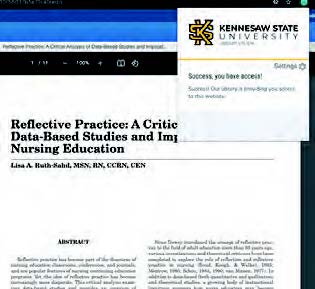
When patrons accessed a website Kennesaw State University is subscribed to, they would receive a pop-up assist message

To promote the availability of Lean Library to patrons, promotional collateral was created and shared throughout the campus
The introduction of Lean Library created a sharp increase in the number of library resources accessed, growing from 88 to 3,355 (3712%) in just 4 months.
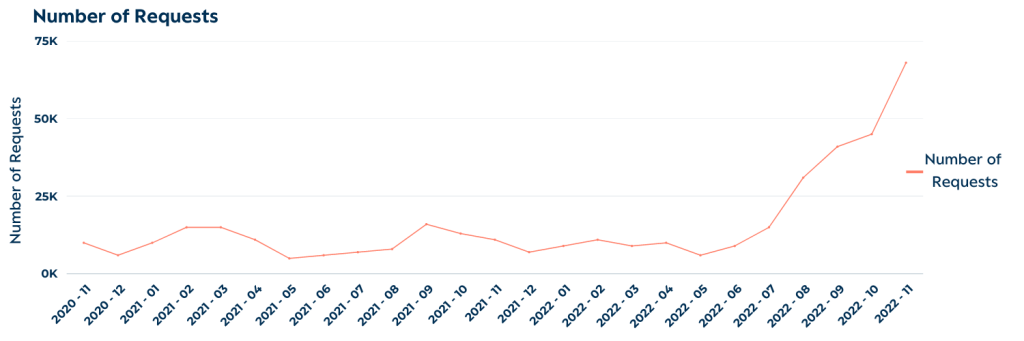
The number of Link Resolver requests also increased after the introduction of Lean Library.
If you’d like to hear more or receive a product demo, get in touch.
Lean Library launches redesigned extension on major web stores August 22, 2023We’re thrilled to announce that Lean Library, a Lean Library product, is launching a redesigned and improved browser extension on all major stores. This is the same access broker and workflow tool loved by librarians and their patrons – only quicker, sleeker, and better than before.
Lean Library puts your library on your patrons’ shoulder via one easy-to-use extension on their browser. Lean Library simplifies online access to library content and open access alternatives, and embeds library collections and services into the patrons’ workflow – whether they start on Google Scholar, PubMed or beyond.
The improved extension first launched on the Google Chrome store in June, and is being made available on Microsoft Edge, Opera and Mozilla Firefox stores this August-September. The final web store it will be made available on is Safari later this year. The extension automatically updates for users of Lean Library, along with their regular app updates, so existing users don’t need to download anything new to get the new experience.
Founded in late 2016, Lean Library provides an award-winning library service, bringing library resources and support directly into the patron’s workflow. This redesign marks a significant milestone in our journey to facilitate seamless learning and research workflows. It is the culmination of an extensive period of development, driven by invaluable feedback from librarians, students, and researchers.
There were three main goals for the redesign:
Our new UI design is sleek, modern, and thoughtfully crafted to emphasize content and minimize distractions. This will allow library patrons to focus on what truly matters – accessing your library-licensed content as soon as they need it.
Time is precious for students and researchers, and we want to make their tasks effortless. We have carefully restructured the navigation in one side tray, bringing together multiple notifications and features across all subscription packages. With just a few clicks, users can effortlessly customize preferences and discover new tools and content that enriches your library’s digital presence.
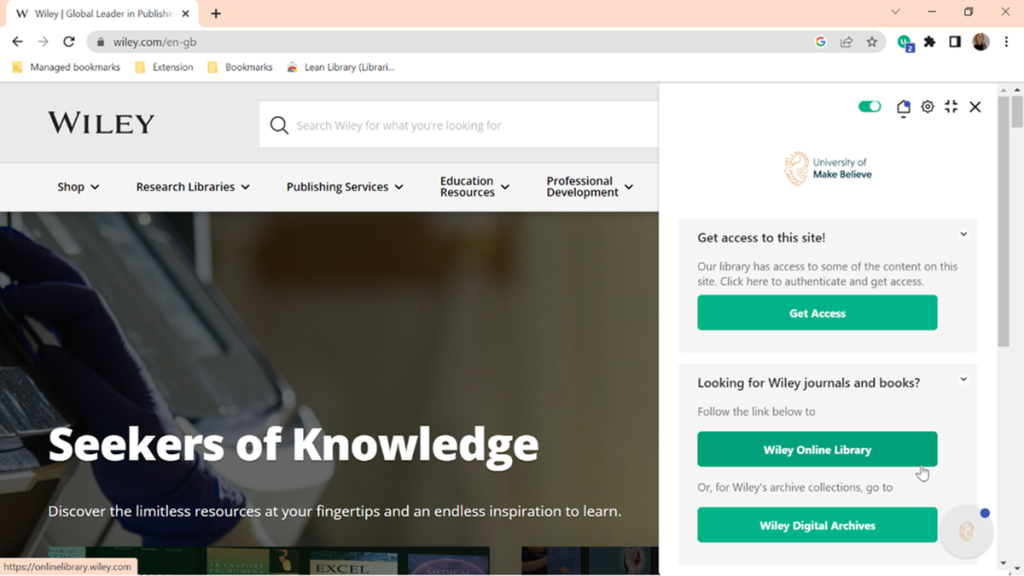
The redesign delivers significant performance and speed enhancements. We’ve fine-tuned the inner workings of the extension, optimizing it to provide libraries and their patrons with a swifter browsing experience. Say goodbye to longer pop-up loading times and hello to instant access to patrons’ favorite library resources.
Whether patrons are searching for scholarly articles, exploring databases, or accessing e-books, they’ll experience accelerated browsing with the new Lean Library extension!
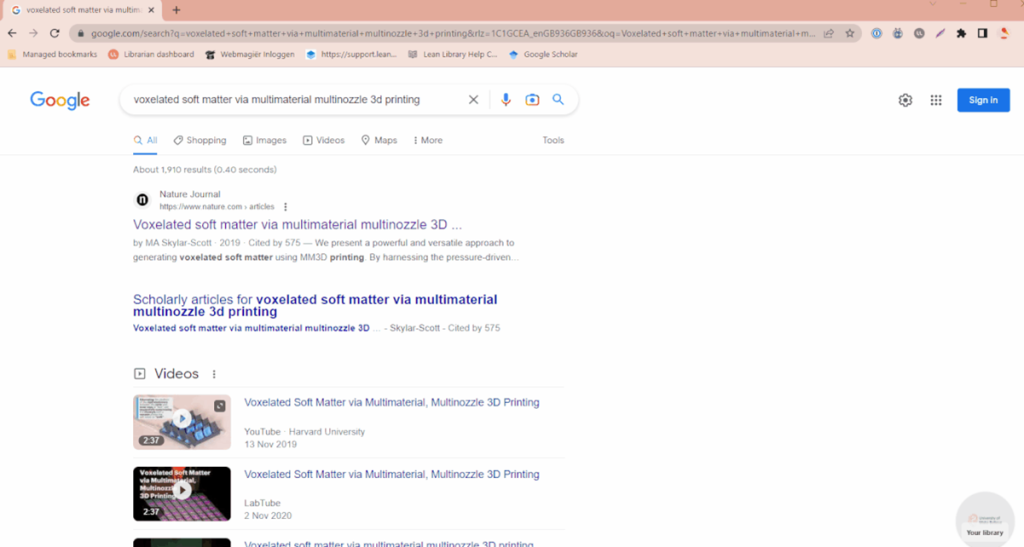
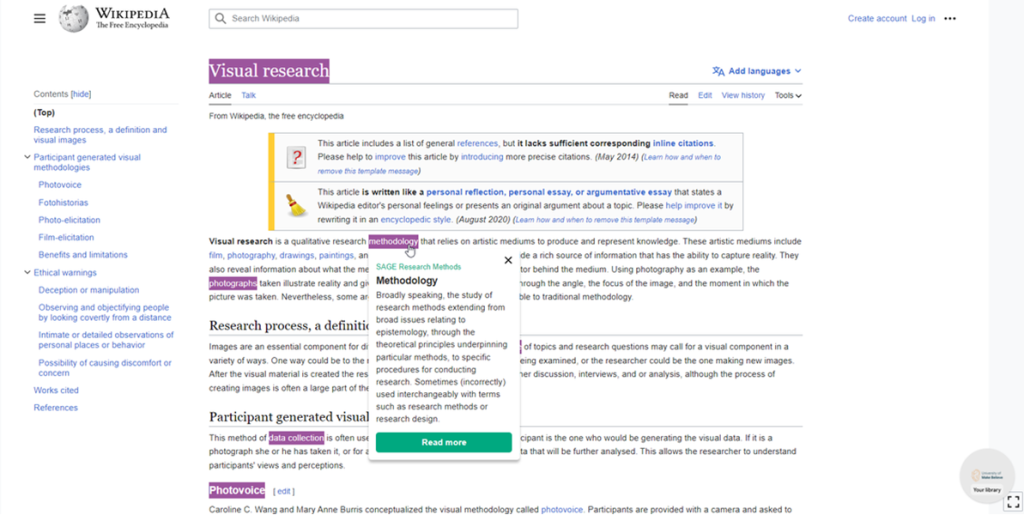
‘Keyword Enhancements’ is a functionality of the Lean Library Futures package that highlights library-licensed publisher or special collections content to users in their workflow. One optimization within the new extension is the ‘Always On’ feature for Keyword Enhancements. Relevant taxonomy terms will now appear automatically to your users on sites such as Google and Wikipedia.
If users did want to turn off one or all packages, however, they can do so easily by using the toggles or the ‘enable/disable’ button.
The best way to get to know the new Lean Library experience is by getting a demo from one of our experts. Request a demo today.
What are the risks and opportunities for AI in the academic landscape? July 25, 2023
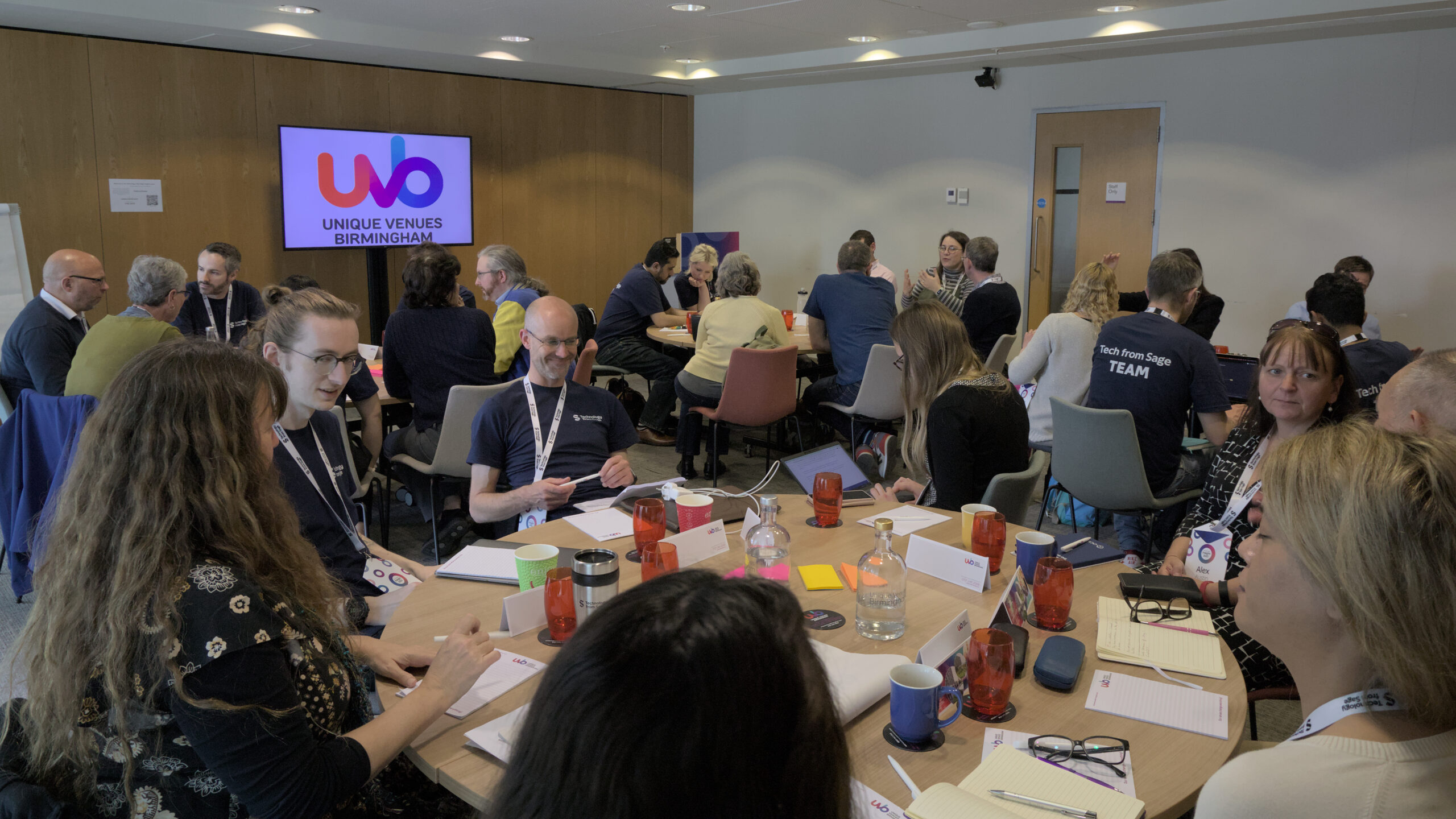
We recently held our inaugural Tech from Sage Insight conference, a two-day event held in Birmingham, bringing together Lean Library staff, academic librarians, students and thought leaders from across the higher education sector. At the event, members from Lean Library’s Tech Team hosted a ChatGPT and Generative AI Co-design Challenge: How can we address the risks and benefit from the opportunities? breakout session with librarians. As technology continues to advance, artificial intelligence (AI) is making its way into various aspects of our lives, including the field of education.
Benjamin, Nadeem, Richard and Alex from Lean Library’s Tech Team have shared the discoveries from the workshop in this blog post. They’ll explore the effects of AI on assignments and assessments in educational settings; from AI-powered answer generation and checking to the digitization of resources and examine the advantages and challenges that arise from integrating AI into the learning process.
AI has the potential to revolutionize the way students answer questions. With AI algorithms, students can receive immediate assistance in formulating well-structured and accurate responses. AI can analyze the question, identify relevant keywords, and suggest appropriate answers, providing a valuable resource for students to enhance their learning experience.
Additionally, AI-powered tools, similar to Grammarly, can assist in checking the accuracy and clarity of students’ answers. These tools can help students identify grammatical errors, enhance their writing style, and improve overall academic performance.
One challenge with integrating AI into education is the dated nature of training materials. As AI relies on vast amounts of data, outdated training materials can lead to inaccurate or fictional references. Educational institutions need to ensure that the data used to train AI models is up-to-date and relevant to avoid misleading students.
Another area where AI can be beneficial is link validation in reading lists. Currently, identifying broken or outdated links is a manual and time-consuming process for librarians. AI-powered algorithms can automate this task, making it easier to ensure that students have access to reliable and up-to-date resources. Additionally, AI can assist in automating purchasing needs, enabling institutions to make cost-effective decisions by comparing prices and suppliers.

AI can play a significant role in improving content discovery for students. By analyzing user preferences, reading histories, and academic requirements, AI algorithms can provide personalized and accurate recommendations for further reading. Similar to Netflix’s recommendation system, AI can suggest relevant resources that align with a student’s interests and academic goals.
Furthermore, AI can help address the issue of bias in resource collections. By considering a broader range of factors beyond just keywords, AI algorithms can provide more diverse and unbiased content recommendations. Cross-institution and cross-department recommendations can also facilitate interdisciplinary learning and collaboration.
The digitization of resources brings accessibility benefits to students. AI can assist in formatting resources to meet accessibility standards, such as providing image alt text for visually impaired students. However, challenges arise in accurately converting scanned chapters to digital format, especially with complex elements like tables and graphs. Librarians may face difficulties in identifying issues with Optical Character Recognition (OCR) and ensuring the quality and usefulness of digitized content.

Live chat and chatbot services have become popular ways for students to seek assistance. AI-powered chatbots can handle frequently asked questions, reducing the workload of librarians and providing immediate responses to students’ queries. However, there may be a lack of trust or enjoyment in using chatbots, highlighting the importance of improving their training and performance.
The COVID-19 pandemic has further accelerated the adoption of chat services, with some institutions implementing 24/7 support from American universities. There is also potential in training AI models on librarian knowledge bases to provide more accurate and tailored responses to student inquiries.
Educational institutions need to adapt assessments to account for the influence of AI and prevent academic dishonesty. While plagiarism has always been a concern, the use of AI raises questions about the reliability and fairness of traditional assessment methods. Assessments should aim to test understanding in ways that AI cannot currently replicate.
Some interesting remarks were made on a more global approach to AI from educational institutions; while some are resistant to it, and the avenues it opens up to students in the form of plagiarism, AI will be an everyday tool employed in the job market by the time they graduate/enter the workplace. By depriving students of these tools in academia, are institutions restricting the skillsets of individuals further down the line?
Just as when search engines became mainstream, and created concerns over plagiarism and how these tools will be used within the context of education, AI provides both concerns and opportunities.”
ALEX, SENIOR PHP ENGINEER
Librarian Futures: In Conversation with Patrons July 10, 2023
We recently held our inaugural Tech from Sage Insight conference, a two-day event held in Birmingham, bringing together Lean Library staff, academic librarians, students and thought leaders from across the higher education sector.
At the event, EdTech Success Consultant, Matthew Weldon, spoke with Samantha Sharman (student at the University of Lincoln) and Professor Jamie Wood (University of Lincoln) about the key takeaways from part two of our Librarian Futures series of reports. We’ve summarized some of the main points from this thought-provoking session below, as well as provided audio excerpts from our speakers.
Check out the recording from our session at Tech from Sage Insight below:
Our research shows that most students are using Google while during their research, and a plurality go to Google first. Our panelists were not surprised by this, and agreed that academic libraries have a crucial role to play in addressing this. Libraries can empower students by training them to use Google effectively, ensuring that students are equipped to navigate through the vast sea of information and access credible sources.
We also found that students do not identify librarians as having helped them across a number of categories, including reading academic literature. Jamie Wood described how signposting, integrating library resources into modules, and modelling the value of the library might contribute to a better understanding of the role and value of the library among students. Samantha Sharman then described how big a difference being taught by a librarian has made to her studies.
We asked whether, as technology continues to evolve, libraries should be involved in addressing emerging tools like ChatGPT. Our panelists discussed how educating students on how to use such technologies effectively and ethically is essential to promote responsible academic practices, and how by providing guidance on the appropriate use of ChatGPT and fostering discussions on the topic, libraries can help students navigate the ethical challenges inherent in using these technologies.
In our session, we discussed at length the pivotal role that libraries have in supporting students and academics, especially in the digital age. However, as our Librarian Futures series highlights, to provide the appropriate support to students means that librarians must address the bidirectional knowledge gap that exists between librarians and their patrons. We’re grateful to Samantha Sharman and Professor Jamie Wood for joining us at our Insight event to discuss their thoughts on the knowledge gap and the future of the academic library, and we’re excited to continue to work with and support librarians and library patrons.
Click below to access all of the Tech from Sage Insight 2023 recordings:
Unlocking the Power of Teaching & Learning Technologies: Honest Insights from Asking the Students June 26, 2023

At our inaugural Lean Library event in April, we had our breakout session “Ask the Students: Honest insights from students using teaching & learning technologies”. This was an interactive session, with a panel of students discussing their university experience, pedagogy, and the features of different digital tools including: Lean Library and Sciwheel.
Check out the recordings from our studio sessions below.
The panel was facilitated by our Development Manager (International), Christopher Lewis, and the students on the panel were:
In this blog post, we’ll explore the challenges students face in their undergraduate university journey and provide the key takeaways and insights from the students which resonate with their experiences of using digital tools.
University life presents its fair share of challenges, but the integration of digital tools has played a pivotal role in overcoming these hurdles. Students shared their experiences and highlighted how digital tools have addressed common issues faced in their academic journey, including not owning a laptop, or as Stefan says below, being able to ask librarians for support:
“When I think of going into the university library it’s always quite hectic, or at least in the foyer of people coming in and out … Rather than doing that, [wouldn’t it] be good to have somewhere I can go and ask questions about how I can do research?”
Stefan
The integration of digital tools has also had a positive impact on their students’ learning journeys, making learning resources easily accessible and eliminating the need for students to navigate through multiple platforms or physical materials. With everything in one place, students can save time and focus more on their studies. Here are some key points that arose from the session:
Digital tools, like Lean Library, have eliminated paywall barriers, enabling students to access a vast array of scholarly articles and research papers effortlessly. This accessibility has expanded students’ knowledge and enriched their research projects.
I started using it this year. When I started researching my dissertation, and I realized I couldn’t possibly go through 20 different pages of Google Scholar, figuring out if I had access to them. It’s saved me a lot of time.
Sam
We asked the students where they begin their research journey, with many of them beginning their journey with Google rather than the library:
“I tend to just go straight to … the source of a public street to JSTOR, Cambridge, or something like that, rather than navigate the site itself?”
Cameron
Chris asked the students how they felt about referencing regarding their university work:
We have a proprietary referencing system based on MHRA. The university provide us with style guides. Enjoyable is not a word which would apply to referencing in most cases. I personally struggled quite a lot with referencing. It was only in my third year that I discovered reference management softwares, and I used Zotero. I enjoyed it but most reference management software doesn’t adapt to the style guide you’re using.
Annabelle
Annabelle revealed she got signposted to reference management software in her third year of university, in a dissertation skills preparation module, and that it was up to the students to decide which reference management tool to go with and teaching yourself.
After the students played around with Sciwheel, here is what they had to say:
One of the best benefits of Sciwheel is the personalised referencing. Sciwheel responded to customer feedback and got this issue fixed right away. Now that’s resolved, I wish I had a time machine to use Sciwheel for my projects.
Sam
Annabelle and Stefan made the points that they like making references by hand, as they can see where they are in their work, but they can see how reference management tools can be useful for group research projects.
Digital tools have made learning more flexible and convenient. Students can access resources anytime, anywhere, allowing them to tailor their study schedules to their individual needs. This flexibility promotes a better work-life balance and empowers students to take control of their education. We asked students how librarians can encourage student uptake of these tools:
It’s easier to get a different perspective on things via word of mouth. I don’t know if all universities have a network of Student Reps. I’m a Student Rep for my year, so I can signpost students to digital tools or problems in terms of formatting or how to improve library workshops.
Sam

Participating in the workshop and reflecting on how during my studies I was taught using various digital tools reaffirmed to me the importance of intertwining university libraries, teaching, and technology. Universities are continuing to expand, with lecturers’ time further limited and accessing physical resources becoming ever-increasingly difficult… Using these sorts of technologies isn’t spoon-feeding students, rather ensuring in the digital age they have possibility to not only learn but learn well.
Stefan
Providing the tools for students to succeed, such as through showing them how to use certain software and digital tools, is conducive to fostering independence within these students, and enhancing their skills development. Students are not experts at studying and researching, and as such, need more guidance to develop these skills.
Sam
The insights shared by students highlight the transformative power of digital tools in higher education. From organisation and accessibility to collaboration and flexibility, these tools have revolutionised the university experience for students. There are still lots of elements to consider for universities and academic libraries, including providing guidance for students on developing these digital skills and encouraging uptake of these tools within the student community.
At Lean Library, we are committed to continuously improving our solutions to meet the evolving needs of students. Their honest feedback and experiences are invaluable in shaping the future of teaching and learning tools.
9 Key Findings from Librarian Futures Report Part Two June 22, 2023
Back in 2021, we launched our inaugural Librarians Futures report which investigated areas of misalignment between the support and resources prioritized by libraries compared to the areas most appreciated by patrons through a largescale survey of librarians and their patrons.
To build a more detailed picture of this existing misalignment, we commissioned a student-led research project seeking to better understand student perspectives on the university experience, and more specifically, resource and reading lists for the classroom. This offered us great insight into the existing dissonance between Librarians and students, and was the central part of our second Librarian Futures Report titled The Knowledge Gap Between Librarians and Students.
In this blog post we’ll look at 9 key findings from the Librarian Futures Report Part Two:
When students were asked to identify how they find resources during their course, the most popular answer was “I Google stuff” with 63% of respondents. In contrast, far fewer students answered they either use their library website (35%) or building (27%) while searching for resources, and fewer still use them as their first port-of-call (10%, 6% respectively).
When looking for a reason for this, research has shown that this might be due to students reporting difficulty in using the discovery services provided by their library (Sharman & East, 2022, OpenAthens, 2023).
When students were asked to identify how their library supports their studies, only 34% of students reported that libraries help them find resources and only 24% of students reported that librarians taught them about resources.
This might be due to many students seeing the library as merely a building and a source of collections, with 50% of respondents considering the library’s role in supporting their studies as “providing access to academic resources,” and 46% saying that the library “provides access to textbooks”. Most worryingly, 5% believe the library has no role in supporting their studies.

When asked about their academic reading confidence levels, 32% of non-first-generation students reported they were “very confident” reading academic literature, significantly more than 21% of first-generation students. This trend continues as confidence levels decrease, with 37% of first-generation students identifying as “somewhat confident,” significantly more than 22% of non-first-generation students.
Interestingly, there also is a discrepancy in the confidence levels of student as perceived by students themselves in comparison to academic staff, with 41.8% of students rating their academic reading confidence positively while just 11.6% of staff rating student competency as positive.
When students were asked to identify who had helped them grow in key academic skills, just 25% of students reported that librarians in key areas, including:
The results are affected by the type of students, with more experienced and part-time students being more likely to report that librarians have helped them.
When asked if they have participated in additional academic training, 25% of student surveyed reported that they do not participate in additional training of any sort despite the training given.
The most popular form of training included 34% of students training in study skills, while 32% in writing skills and only 18% taking part in citation management and 12% in information literacy.
With the emergence and extreme popularity of large-language models like ChatGPT, which generate convincing (though often unreliable) text, this challenge is set to become even more crucial.

When students were asked to rate areas where they have most trouble when preparing an assignment, 40% answered that they found it very difficult or somewhat difficult to manage their time, 38% had difficulty keeping focused on a task, and most importantly 31% reported difficulty when trying to receive help when they needed it.
It is worth noting that these pain points shift when students gain more experience, with more prepared students reported that they found it easy significantly more than less prepared.
When it comes to areas where students demonstrated their confidence when writing an assignment and found it very easy or somewhat easy to complete these tasks, 57% chose making notes and annotating sources, 54% chose understanding the assignment, however only a slim majority (52%) reported that they found “finding relevant resources” easy.
When students were asked to identify their approach to learning, 57% of students identified themselves as independent learners.
A reason for this might be a lack of access or knowledge of how to use a collaboration software, with just 10% of respondents identifying a collaboration software as a tool they consider using for planning and preparing for assignments.
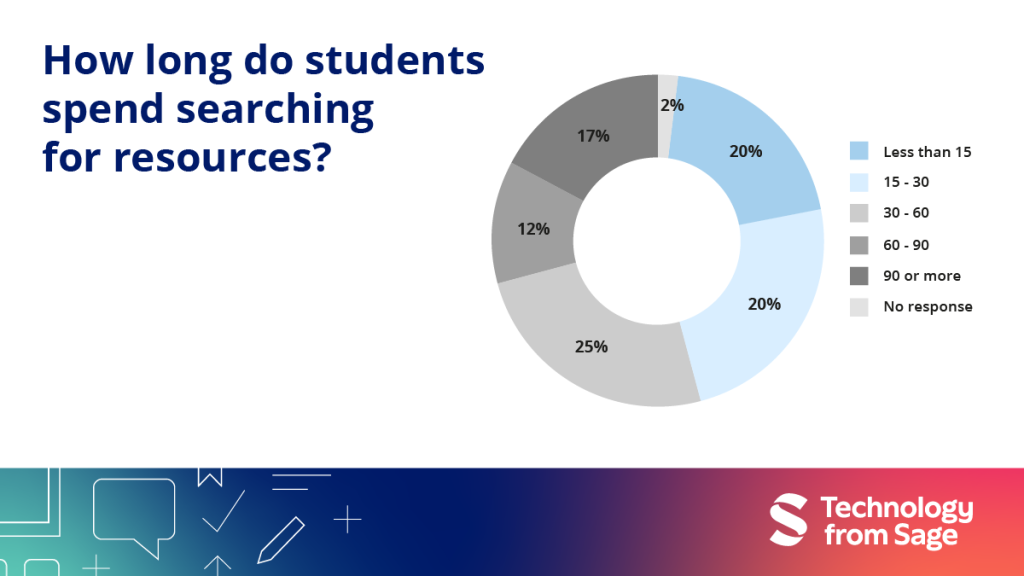
When students were asked how long they spent searching for a relevant resource, 25% answered they would spend 30-60 minutes looking for a resource, 12% 60-90 minutes and 17% 90 or more.
This becomes problematic considering that only 25% of students reported receiving help from librarians for accessing resources, and just 16% said librarians had helped them find good information.

The fact that students with disabilities are more likely to spend less time looking for resources highlights the importance of finding them in their workflow and streamlining the access to relevant high-quality information.
Additionally, students without disabilities reported that they are significantly more likely to go to the library building to find resources and are also more likely to see the library as a place to collaborate with other students.
Download our Librarian Futures Part II report to discover more noteworthy insights regarding how academic libraries can be more deeply involved in the undergraduate learning journey.
Share your thoughts about the findings in the new Librarian Futures Part II report on Twitter and LinkedIn.
Librarian Futures Part Two: Towards a More Accessible Library May 24, 2023
Lean Library recently published the latest instalment in our Librarian Futures series of reports, “The Knowledge Gap Between Librarians and Students”. This report focuses primarily on exploring and elucidating a bidirectional knowledge gap that exists between academic librarians and student patrons, highlighting the discrepancy that librarians see the role of the library as more than just a building and a collection, whereas students are largely unaware of or unlikely to use the other services that libraries provide.
If you haven’t downloaded the new report yet, it’s available to download now.
As part of our research, we asked students whether they identified as having a physical or mental disability. Our research highlighted that many students who identify as disabled view the library very differently to students who did not identify as disabled. If the role of the library is to serve patrons, librarians have to ensure all patrons are served equally. Herein we will explore the differences we observed across our data, and make recommendations for how academic libraries might adjust their practices to support patrons who identify as disabled.
We asked students how easy or difficult they found certain aspects of preparing assignments. Across the following categories, students who identify as disabled reported having significantly more difficulty than non-disabled students:
This data suggests that students who identify as disabled are experiencing difficulties throughout the entire assignment process. To determine who students are looking to for help, we asked students who had helped them grow across a number of areas. Across the board librarians placed low on the list (below “me”, “my peers”, and “my teachers”), with no significant differences between those who identified as disabled and those who did not.
We then specifically asked students how the library supports their studies. In encouraging news for librarians, very few students reported that it simply did not. Our data did show however that students without a disability were significantly more likely to see the library as a place for collaboration with other students than students who identify as disabled are. Collaborative learning is a crucial skill for students to develop across their time at university, so it is concerning that students who identify as disabled have a different experience of collaboration within the library.
Later, when we asked students to identify where they go to find resources for their assignments and studies, students who do not identify as disabled identified the library building significantly more than students who identify as disabled did. This could indicate unaddressed issues surrounding access.
We also wanted to know how long students would continue searching for a relevant resource before moving on for a typical assignment. We found that students who identify as disabled were significantly more likely to spend 15 minutes or less searching before they moved on. Spending reduced amounts of time searching for resources might lead to students missing out on vital research that lends added context to their own work. Understanding why students who identify as disabled are less likely to spend longer looking for resources could help librarians address the issue.
Lastly, we sought to understand whether students were undertaking additional training to support their studies and, if so, how they discovered this. Though we found no significant differences between those who identify as disabled those who do not in whether they undertook such training, we did find that students who do not identify as disabled were significantly more likely to find out about such training from their fellow students, whereas students who identify as disabled are significantly more likely to find out from email communications.
In the first part of our Librarian Futures series, most librarians agreed that the mission of the academic librarian centred around who librarians serve. It is clear from our data however that not all groups are being served equally by the library. Our findings present an opportunity to inform the next steps academic libraries and librarians ought to take.
Our data provide useful starting points for librarians, but they cannot explain the reasons students who identify as disabled do not use the library as often as students who do not identify as disabled. Staff can hypothesise as to the reason, but to address any of these issues, libraries must start with their patrons. The voices of students who identify as disabled must be present and heard in any such conversations: ask students what they want and need and make efforts to meet these requirements. Librarians will then be able to implement targeted measures to address these. Librarians can use a variety of methods to collect student feedback, ensuring diverse perspectives are heard and considered. Librarians might consider running in-person focus groups, as well as online ones. Suggestion boxes or feedback forms will allow students to remain anonymous, potentially contributing to more honest feedback.

Our data clearly suggests that different groups of students have different challenges at university, and thus it’s clear that no one size fits all approach will be appropriate. Following listening exercises with students, librarians must tailor their approach to ensure specific student groups are being well served by the library.
Here at Lean Library, we are well aware of the wealth of knowledge and experience that librarians bring with them, and with the academic library as our North Star we stand ready to work with librarians in addressing these challenges. However, given that relatively few students look to librarians for help around their assignments, much of the insight that librarians can offer is lost. By making efforts to raise their profile within their institution, librarians can expect students to approach them more readily.
Librarians might consider running workshops or making appearances at university learning and teaching events. Collaborating with academic staff to embed the library more effectively within the student journey could also be beneficial. Our data suggests that different approaches may be useful for different cohorts of students: the most effective way to reach students who identify as disabled is via email communications.
The data we presented in the latest Librarian Futures should be seen as the start of something, not the end. We have highlighted that those who identify as disabled and those who do not are not having the same university experience, though more work is required to fully understand the root causes behind this. Working in concert, academic libraries and library vendors can gain a better understanding of the challenges students who identify as disabled face, and how we can address these. Together, we can work towards a more accessible library.