User-centred strategies and point of need content: working with Libraries as Partners
“We want to move away from having our special collections and archives locked away in rooms and, of course the physical is important, but we want to make sure that people who have an interest in our collections can see it and make use of it be they in Lancaster or be they in Texas, China or wherever. So, using Lean Library to help us surface that content within Lancaster Digital Collections will be absolutely key.”
Andrew Barker, Director of Library Services & Learning Development
Ever wished you could nudge your patrons away from Wikipedia or Google and showcase the wealth of relevant content you have collected and collated for them? With Lean Library Futures, you can showcase relevant publisher content at the point of need – whether it’s research methods on Wikipedia or medical terms on Google.
Our premium service bringing all of your library into your patrons’ workflows, increasing usage and relevance of your library services and resources. Lean Library Futures has all the features of our other options plus more.
“I was particularly impressed by Lean Library’s proposal to work with them as development partners. So much resonated with me in terms of where our users go and what they would like the library to do and where they would like the library to be visible when we’re not the first port of call. Given the amount of money we spend on content it was very central to our vision with Lean Library that we get as much value in surfacing the content and making our users aware that the content they’re using, or can use, is ours.”
Andrew Barker, Director of Library Services & Learning Development
Lancaster University are working with Lean Library to:
“Working with Lean Library as a development partner is as much about how we can be innovative within our university, as it is about working in a more imaginative and creative way with our vendor colleagues to think differently about what library content looks like and how it is pushed out and how we can make use of the Open Access content that is clearly vital to our future successors. The idea of working together with our students to co-create content and ensure that content is available at ‘point of need’ fits in very well with both Lean Library’s ambition and what we want to do as a library in relation to content.”
Andrew Barker, Director of Library Services & Learning Development
Lean Library Features: Library Service Workflow Integrations Themes: User centricity, demand driven acquisition, point of need content, special collections, librarian/ patron interactions
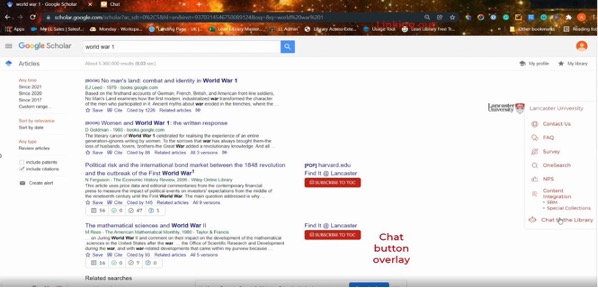
Figure 1: The Workflow Librarian sidebar, which shows the various options available to patrons when searching on Google, including the ability to chat directly with the library, without leaving their workflow.
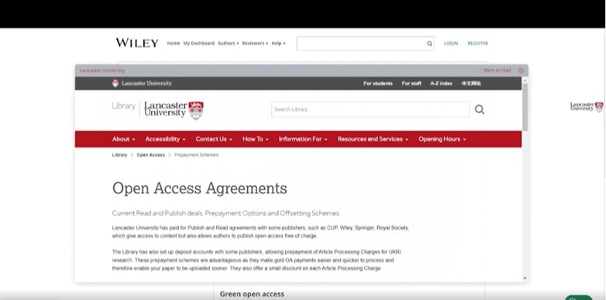
Figure 2: An example of Lancaster University content popping up on Wiley’s Open Access pages, to advise patrons on Lancaster’s existing open access agreements.
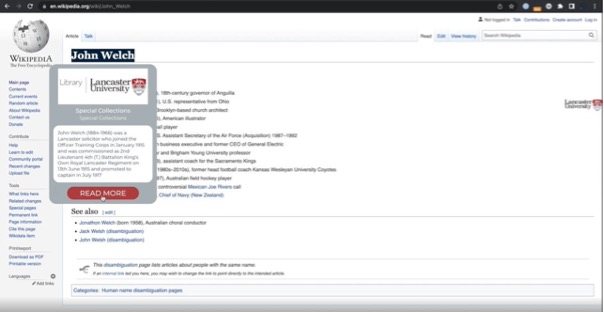
Figure 3: An example of Lancaster Digital Collections deployed on Wikipedia, using Lean Library’s keyword feature.
“It’s early days for us but we think our developing partnership with Lean Library will ensure that we live our vision and leverage value from our existing content as we move forwards.” – Andrew Barker,
Director of Library Services & Learning Development
Find out more about Lean Library.
If you’d like to hear more or receive a product demo, get in touch.
If you’d like to hear more about becoming a library partner please email info@leanlibrary.com.
Unlocking The Power of Lean Library’s Assist Messages: Effective Use Cases May 24, 2024 Many students aren’t aware of the full extent regarding how their library can help them with their studies and research, meaning that key library messages or guidance aren’t reaching students at the point of need. Assist Messages allows your library to communicate personalized messages to patrons via the Lean Library browser extension when they visit specific websites. This tool ensures that your communication is targeted and timely, providing guidance at point of need and enhancing the overall research experience for your patrons.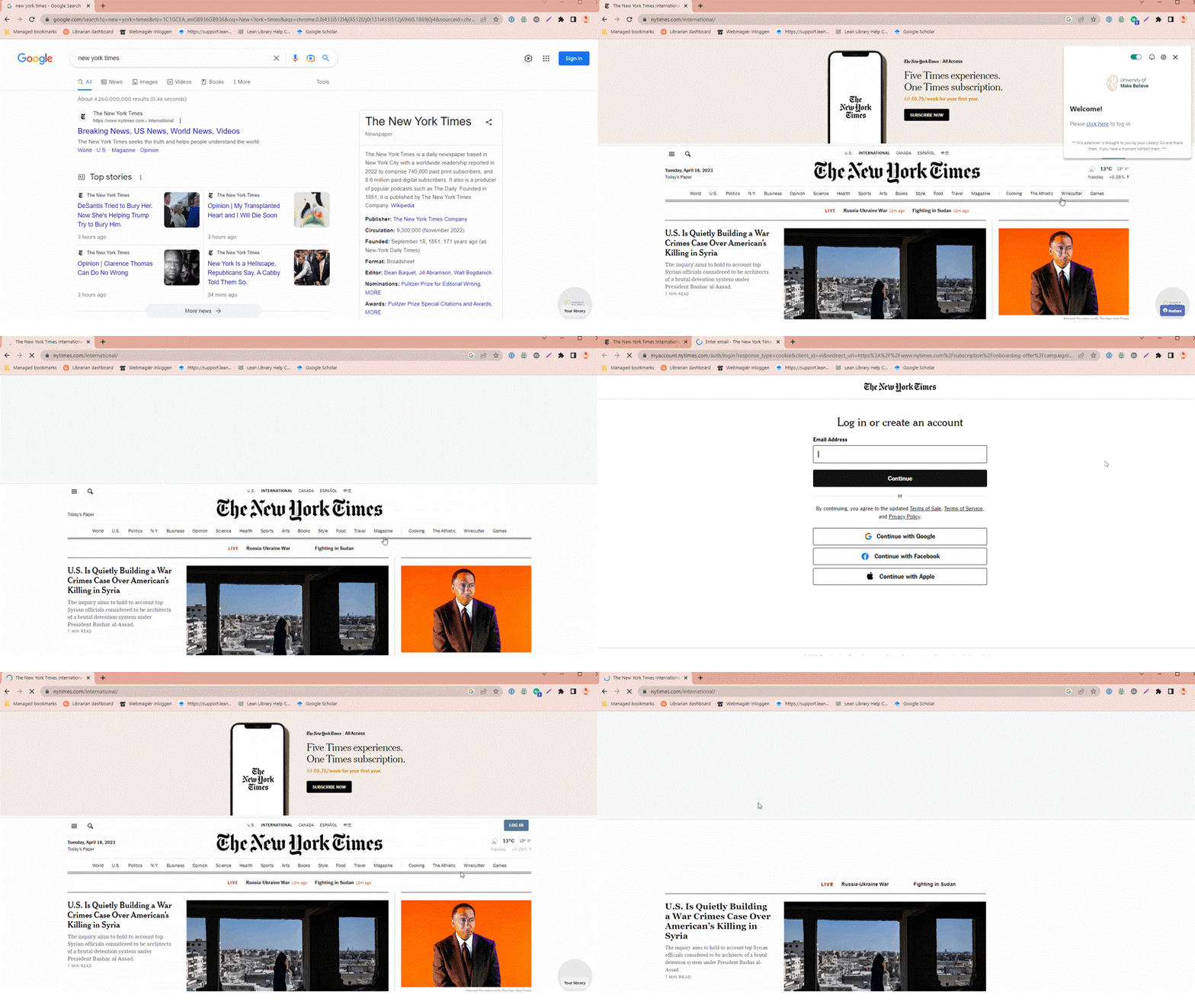
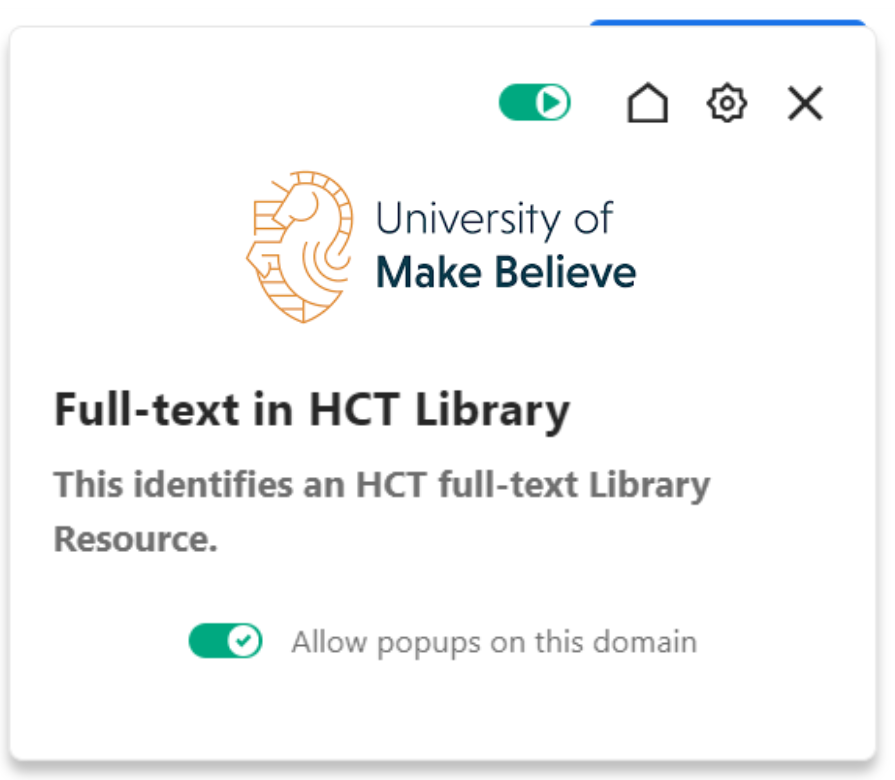

As context: the name LexisNexis is better known than the name of the database, Nexis Uni. A Google search for ‘Nexis Uni’ brings students also to a LexisNexis page (with a login option that only works when you are connected to the network of the university). The link Nexis Uni is a friendly LibGuide URL, which is an EZproxied URL, so students can easily access the database when they are off-campus. Judith Gulpers, Erasmus University Rotterdam
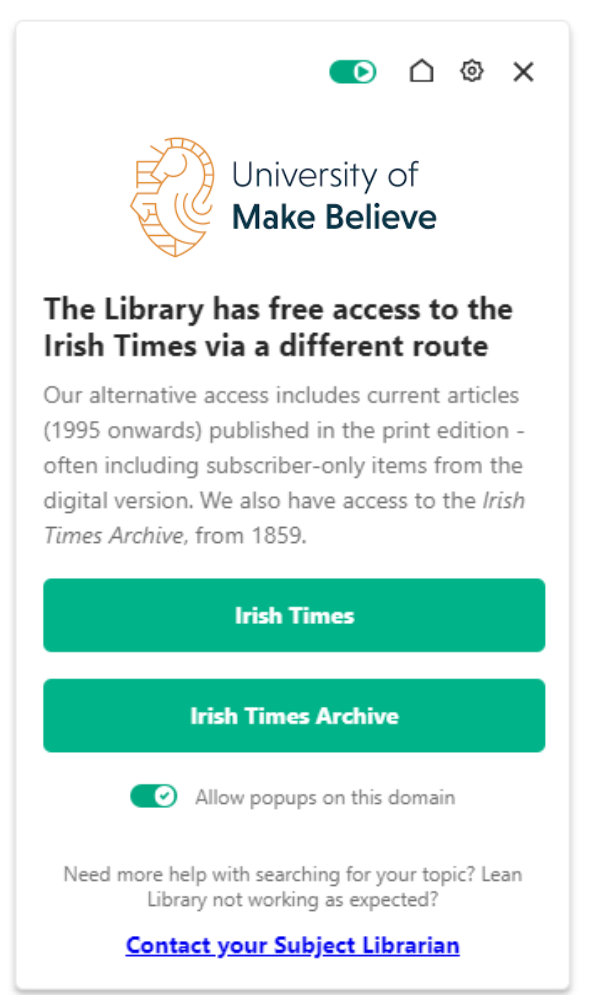
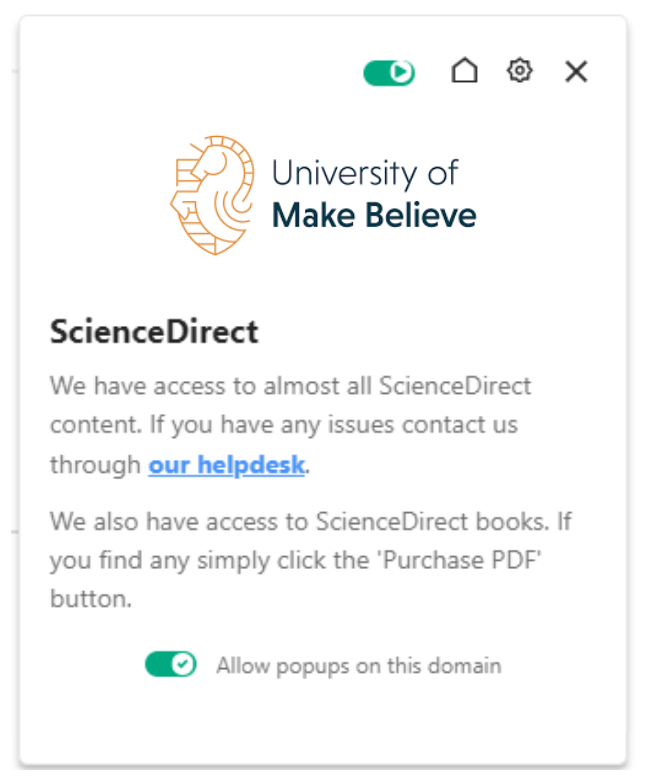
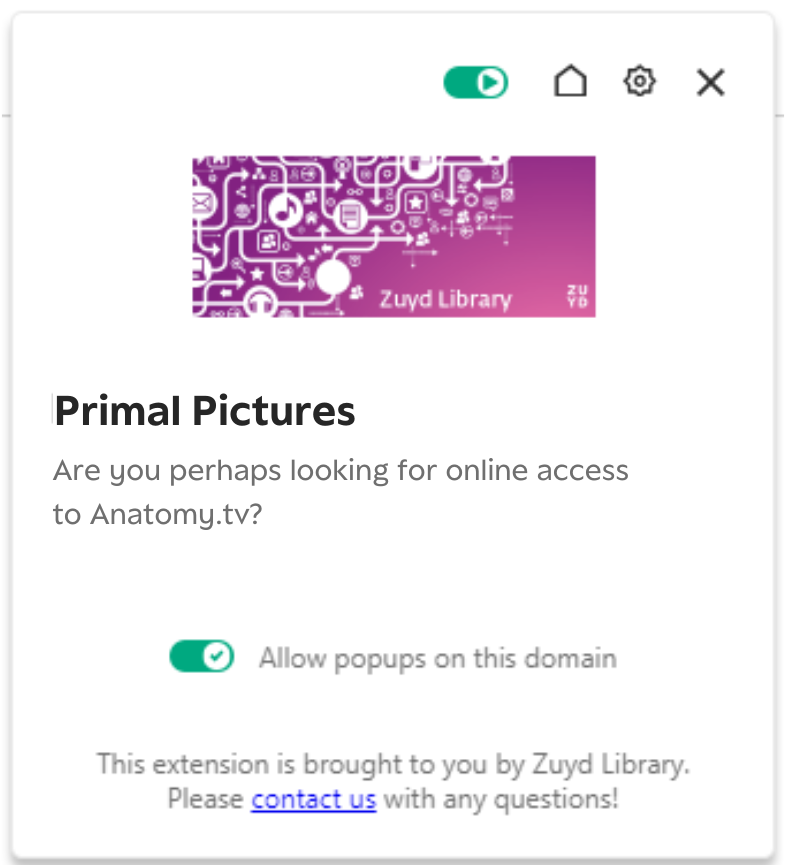
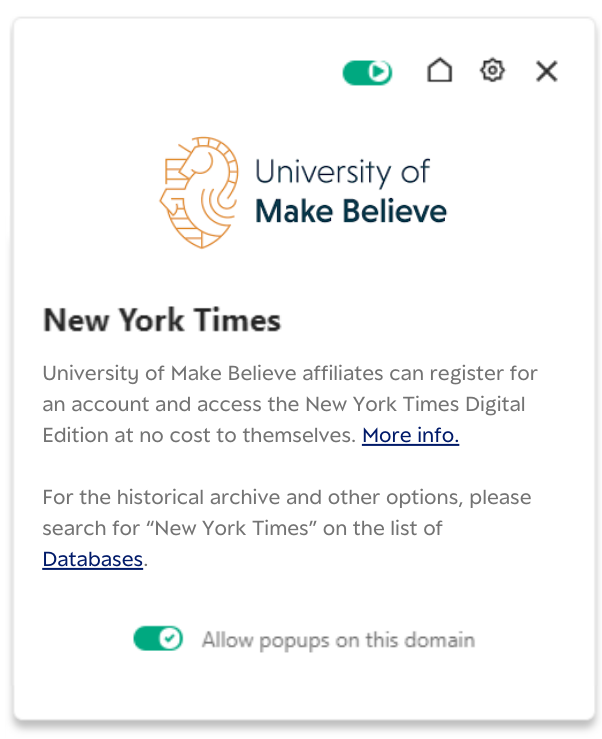
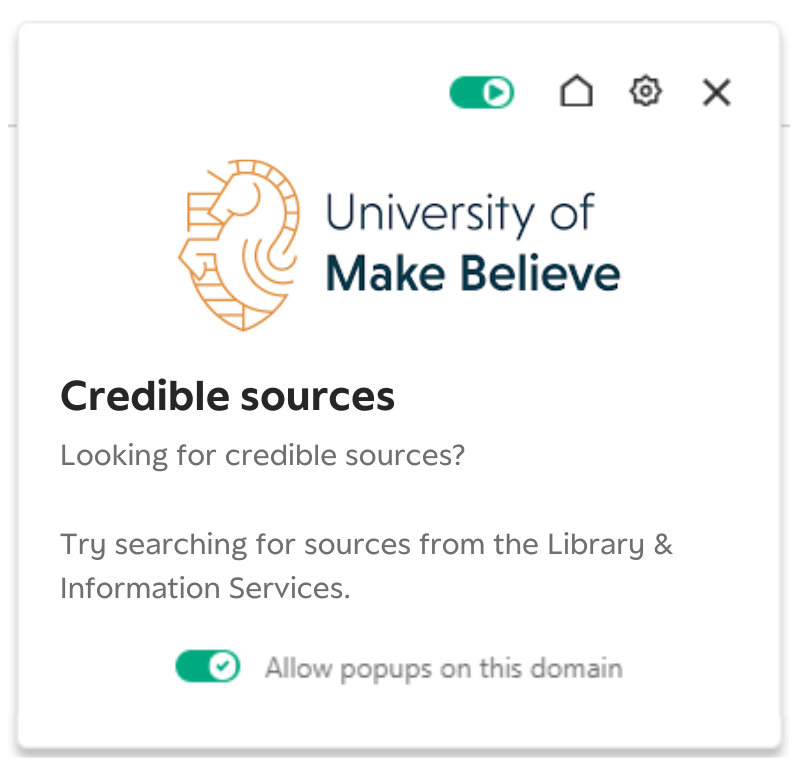
Lean Library is an ideal tool to show that our students do use the library. Even when they don’t always physically visit us, they get a gentle reminder of all the resources that are available to them! Jill Penders, Zuyd Hogeschool

Exciting changes are underway at Lean Library! As part of our rebrand (coming soon), we’ve created a new LinkedIn page for Lean Library page. This means we’ll be shutting down the existing Sciwheel and Lean Library LinkedIn pages by 31st May 2024.
Lean Library is a curated suite of library technologies that amplify the value of your library. We feel it’s time for Lean Library to have its own dedicated LinkedIn page, with Sciwheel and Lean Library as products located within the page. This will streamline our communication with you all, and mean you only need to visit one page to get all Lean Library related news.
Lean Library remain committed to bringing librarians the latest thought pieces and forward-looking perspectives on the digital landscape, for example, our Librarian Futures series of whitepapers. Launching the Lean Library LinkedIn page strengthens our ability to share in-depth analyses and expert opinions by pooling our resources into one page instead of three.
As several of the Lean Library team are academic librarians, our content strategy remains centred around valuable and engaging material which reflects the current and future needs of academic libraries. Whether it’s industry insights, product updates, or blog posts where you can learn more about our team, we’re dedicated to delivering a diverse range of content that resonates with you.
We value each of you as a part of our community. If you don’t currently follow us, give us a follow to receive content relating to our entire suite of library technologies.
20th May 2024: Our new LinkedIn page update for Lean Library will launch.
31st May 2024: Sciwheel and Lean Library pages will be shut down.
If you have any questions, please email info@leanlibrary.com.
Thank you for your continued support. Here’s to exciting times ahead! 🚀
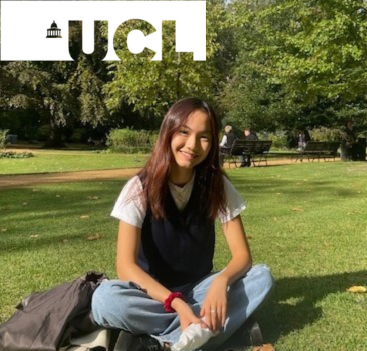
A Student’s Perspective: A Comparison of Lean Library Open, Third Iron’s LibKey, and EndNote Click April 25, 2024This guest blog is by Eva, a student at University College London (UCL) in the UK, who has access to the free version of Lean Library. In this blog, Eva compares the basic functionality of Lean Library to the other academic workflow tools in this space. Next, we’ll be getting Eva access to all the wider functionality that Lean Library Futures offers, including connecting users to LibGuides, LibChat and other library guidance on any academic resource online, surfacing the library discovery service on sites like Google Scholar, and more. Stay tuned for Eva’s full review.
As the majority of students start their research journey outside of the library discovery, imagine having your library holdings accessible to your patrons within their workflow.
Lean Library puts your library on your patrons’ shoulders via one easy-to-use extension on their browser, simplifying online access to library content and services and open access alternatives. Lean Library embeds library collections and services into the patrons’ workflow – whether they start on Google Scholar, PubMed, or beyond.
Meet Eva, an undergraduate student beginning her academic journey. Let’s join her as she explores Lean Library alongside Third Iron’s LibKey and EndNote Click and shares her experiences of using these library technology tools for her studies.
As a first-year BA Education Studies student at UCL’s Institute of Education, my day-to-day life revolves around lots of research and essay writing, particularly in the fields of educational psychology, policies, philosophy, globalization, and sociology. I often start my research on Google Scholar and JSTOR, which I have found to be valuable resources for essay writing and pre-lecture recordings.
My biggest frustration in my learning experience before beginning to use these tools has been finding the right article that fits the context of my research. Often when I had found the right article, it would be behind a paywall and required a subscription to access it.
I then discovered that UCL’s library had various tools available to support me during my research: Lean Library, Third Iron’s LibKey and EndNote Click. While all three have made my life as a student much easier for me, Lean Library has stood out as the superior choice especially for a student like me beginning my university journey.
Lean Library simplifies access to full-text articles and eBooks by providing direct links to resources. It’s super easy for users to request unavailable articles from the library with just a simple click. Additionally, Lean Library allows for easy citing and offers different citation formats (APA, Harvard, etc.) that are quick and easy to use.
In my experience, Lean Library has been a fantastic tool for accessing full-text articles. Depending on the situation, I usually opt for Lean Library when the interface pops up quicker on a website or if only Lean Library provides access to the full text.
Similarly, when I need to do a quick citation, Lean Library’s “Get Citation” button proves to be more efficient than other tools like EndNote, which requires more steps. Lean Library has been an invaluable tool in streamlining my research process since I have integrated it into my workflow.
Third Iron’s LibKey provides links to full-text articles through their one-click to PDF functionality. Third Iron offers other complementary products such as ‘LibKey Discovery’, ‘LibKey.io’, and ‘Browzine’, each offering different methods to access articles and literature.
My biggest use-case of LibKey is for psychology-related assignments, where I usually find LibKey the fastest in accessing the “APA PsycNet” and “Wiley” than the other two browser extensions.
EndNote Click is a browser extension that also simplifies access to full-text articles. It also allows users to save the article to “My locker” for future reference and offers additional features such as downloading PDFs, visiting journal pages, and managing tags.
Personally, I found the “My Locker” function particularly useful during my research for essays. When balancing multiple articles at the same time, this feature helped me organise my research efficiently. Instead of dealing with the stress of switching between multiple open tabs, “My Locker” allowed me to view all saved articles with their titles, authors and publication dates in one place. This streamlined my research process by reducing clutter and making it more manageable.
However, it’s worth noting that the EndNote Click pop-up interface gets hidden behind the LibKey pop-up. To access EndNote Click, I had to manually close the LibKey pop-up first which is slightly inconvenient.
| What Third Iron offers: | What EndNote Click offers: | What sets Lean Library apart: |
|---|---|---|
| 7/10 | 5/10 | 9/10 |
| The interface is slightly too small to be seen and is often blocked by the Cookies pop-up on various websites, due to its placement on the bottom right-hand corner of the page. | Not only does the interface be obstructed by the website’s Cookies pop-up, but it is often also covered by the LibKey interface. | Lean Library provides a big and clear pop-up interface at the top right corner of the screen. It is obvious, without being intrusive and easily guides users to access the direct link to their resource. |
| What Third Iron offers: | What EndNote Click offers: | What sets Lean Library apart: |
|---|---|---|
| 9/10 | 7/10 | 9/10 |
| LibKey’s biggest strength is their One-Click to ‘Download PDF’, which is straightforward and easy to navigate, saving time for students like me during their research process. | The browser interface labelled “EN,” which abbreviates EndNote, initially confused me as “English.” Users might mistakenly interpret it as a translation feature for articles or websites into English. | Lean Library’s pop-up has clear, big buttons for features such as ‘Get Citation’ or ‘Access Full-Article’, which allows for a quick and simple flow. |
| What Third Iron offers: | What EndNote Click offers: | What sets Lean Library apart: |
|---|---|---|
| 6/10 | 9/10 | 8/10 |
| The main reason I have used LibKey is solely for the functionality of being directly linked to the full-text article. | There are many supportive features available on the function menu bar that are beneficial for my research and essay writing. | Alongside the ability to access full-text resources, the citation feature has been a very useful feature during my research, saving me time and helping me accurately reference as a first-year student with little knowledge of referencing. |
In conclusion, the three tools have been beneficial to my studies in various ways and have helped streamline my research process. On comparing the features of each tool, EndNote Click has the most features available, with Third Iron’s LibKey having the least, however, their one-click to PDF has been very helpful in saving time accessing full-text articles. Lean Library has the most straightforward interface design and clearly directs you to access the article, eBook, etc., or create the citation. Notably, on comparisons of the three tools, Lean Library appeared to pop-up on more pages than the others.
From my personal experience, I like how effortless it is to cite my source using Lean Library’s browser extension, just one click and I can select the format of the citation and copy it to my assignment. This saves me lots of time, as I am easily citing sources as I go along, ensuring I have my references organised and avoid situations where I miss out on a source in the reference list.
I have used LibKey primarily as a supplementary tool alongside the other browser extensions. However, LibKey’s pop-up frequently appears slightly more quickly than the other browser extensions and directs me to the full-text article when Lean Library is unavailable.
My favourite aspect is the “My Locker” feature, which organises the articles I’ve viewed. This feature is particularly helpful during essay writing, as it allows me to compare multiple articles, keeping my workflow tidy and streamlined.
Lean Library stands out as my favourite, as it makes the tedious research and essay writing process significantly quicker and simpler. Its ability to quickly and automatically detect whether the library has full access to an article or eBook, regardless of the field of discipline I am researching, speeds up my research process. This feature, combined with the convenience of the single click for requesting unavailable materials eliminates the frustration of not being able to access the article at that time.
Lean Library saves me valuable time, as I don’t need to spend time searching for the hard copy in the library, which may be unavailable or outdated. The overall setup for Lean Library requires minimal steps and is accessible to everyone, regardless of their level of ICT skills. It effectively brings the library to me, integrating academic resources seamlessly into my learning journey at the university.
Lean Library’s library subscriptions takes the library directly to patrons within their workflow. With Lean Library Access, Lean Library Workflow for LibGuides and Lean Library Futures, patrons gain access to numerous additional features that enhance their research experience. These features include streamlining access to the library holdings, providing assist messages to guide patrons, offering the library’s LibGuides to patrons and enabling them to check for print books, all of which from within the patrons workflow via the browser extension.
We presented a session with University of Phoenix, Springshare and Sage Campus on how academic libraries can ensure that students receive the correct guidance at the point of need. As technology continues to advance, AI is making its way into various aspects of our lives, including Higher Education, with students navigating Generative AI tools such as ChatGPT themselves.
The University of Phoenix shared their experience of combining Lean Library‘s iFraming technology with Springshare’s LibGuides integration to deliver library support and guidance on AI directly into patron workflows.
Read on to discover 8 insights about how libraries can provide students with the AI guidance they need:
A study from University of Northampton regarding an AI Special Interest Group found that students have ethical concerns regarding the use of Generative AI and are worried about implications relating to bias and accuracy. Most notably, they felt like they didn’t have the skills to use AI effectively for their studies. Talia from Springshare explained that when students need ‘live’ help with AI, they don’t want to chat with AI – they want to talk to a person! This positions the library in a unique spot where they can come in and provide contextual point of need help in the form of LibGuides, LibChat and Sage Campus.
This research is from our latest Librarian Futures report, The Librarian Skills Landscape, which consists of global perspectives from over 2,000 academic library professionals regarding the emerging skills required to fulfil a library’s mission. This shows that librarians have an important role to play in expansion of their own knowledge of AI in academia, and ensuring students are aware of the challenges, risks and concerns around AI. How do librarians increase their knowledge of AI?
PJ Purchase at University of Phoenix emphasized establishing a cross-functional team with key stakeholders was key in setting up an AI Hub as there were varying degrees of knowledge within the library. The AI Hub is an open center which enables any member of staff within the university to up-skill. There’s training materials, documents and articles from top industry leaders which enables staff to learn more about Generative AI. Additionally, University of Phoenix decided they were going to embrace Generative AI for themselves and their students, and they needed to decide some parameters around how they thought it was going to be used.
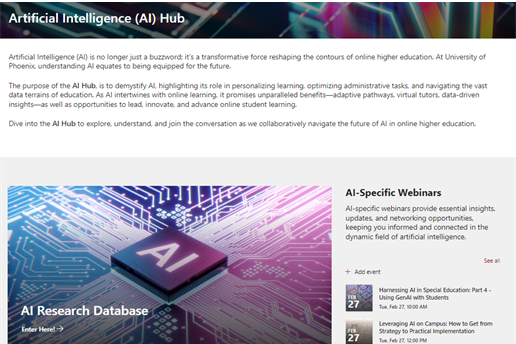
PJ Purchase explained University of Phoenix library is collating these content pieces in phases. Phase one involved writing the guidance materials, whereas phase two is to create a Learning Center through which to teach the ethical use of AI. The Learning Centre focuses on learning objectives which are woven into coursework, for example, to measure AI skills or on-demand training for upskilling. This training could lead to badging opportunities in the future. What tools can libraries use to surface their guidance in patron workflows?
Research from student data within our first Librarian Futures report (2021) found that 59% students would prefer to hear from the library via their homepage, and 55% said only where and when they need it. This raises questions as to what extent the library homepage is an efficient channel when most students begin their research outside of the library on sites such as Google and Google Scholar.
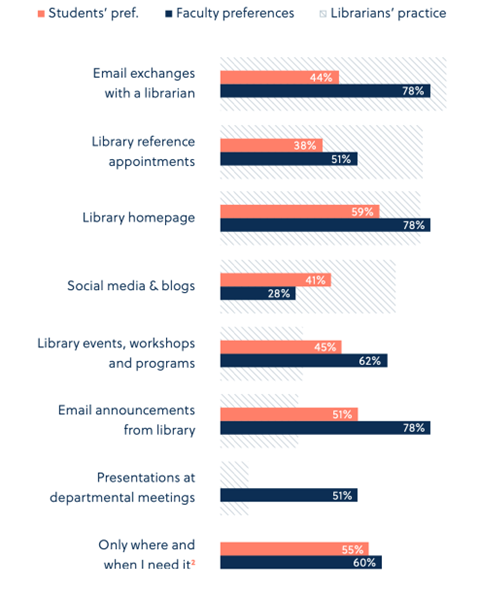
The phrase “If you build it, they will come” doesn’t really work in libraries with students not easily discovering library guidance at the point of need. How can librarians make sure they meet students where they are in their workflow? University of Phoenix utilize their library tools to combine Lean Library’s iFraming technology with Springshare’s LibGuides integration to deliver library support directly into patron workflows. This means when students are searching for research on the web, the Lean Library browser extension will lead students back to content, such as LibGuides, within the library’s collection with one click. Another use for this integration could be that when a student lands on Open.ai or ChatGPT, they’ll see a LibGuide from their library with tips for using ChatGPT ethically and generating the best research outcomes.
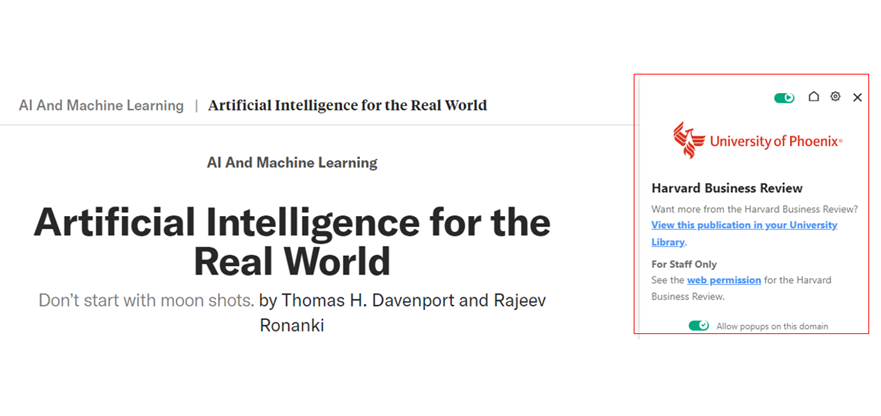
Springshare’s LibChat integration enables librarians to create their own chatbot “flows” to guide end-users towards the answers and resources they’re looking for, before they talk to a librarian, prompting students to choose the type of help they’re looking for.
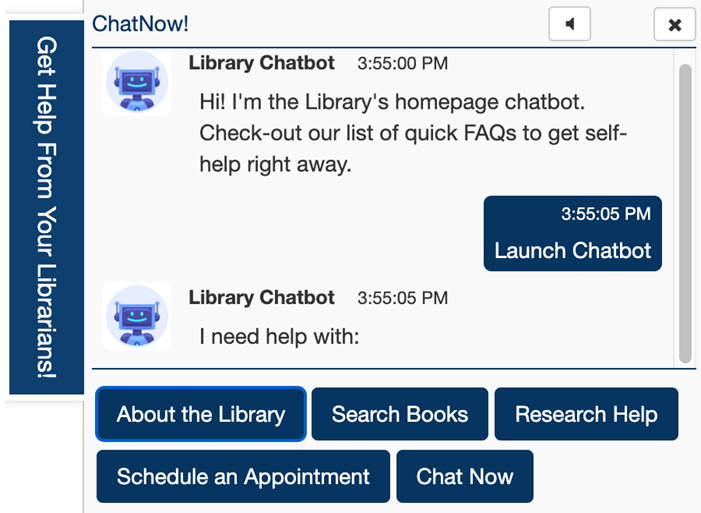
The newly launched Sage Campus and Lean Library integration surfaces their new short online course, The Art of ChatGPT Interactions, to students and researchers when they are in locations within the OpenAI.com domain. The course was designed by AI expert Dr Leo. S Lo, Dean of the College of University Libraries & Learning Sciences at the University of New Mexico. This means students can learn about using AI effectively, improve their prompt engineering and achieve outcomes for their studies and research, without their workflow being interrupted.
We hope you’ve enjoyed learning the different ways that university libraries can use tools to help students navigate the ‘academic wilderness’. If you’d like to find out more about the recently launched Sage Campus and Lean Library integration, catch up on the webinar recording below:
Want to see Lean Library in action? Request a demo now!
We presented a session with University of Phoenix, Springshare and Sage Campus on how academic libraries can ensure that students receive the correct guidance at the point of need. As technology continues to advance, AI is making its way into various aspects of our lives, including Higher Education, with students navigating Generative AI tools such as ChatGPT themselves.
The University of Phoenix shared their experience of combining Lean Library‘s iFraming technology with Springshare’s LibGuides integration to deliver library support and guidance on AI directly into patron workflows.
Read on to discover 8 insights about how libraries can provide students with the AI guidance they need:
A study from University of Northampton regarding an AI Special Interest Group found that students have ethical concerns regarding the use of Generative AI and are worried about implications relating to bias and accuracy. Most notably, they felt like they didn’t have the skills to use AI effectively for their studies. Talia from Springshare explained that when students need ‘live’ help with AI, they don’t want to chat with AI – they want to talk to a person! This positions the library in a unique spot where they can come in and provide contextual point of need help in the form of LibGuides, LibChat and Sage Campus.
This research is from our latest Librarian Futures report, The Librarian Skills Landscape, which consists of global perspectives from over 2,000 academic library professionals regarding the emerging skills required to fulfil a library’s mission. This shows that librarians have an important role to play in expansion of their own knowledge of AI in academia, and ensuring students are aware of the challenges, risks and concerns around AI. How do librarians increase their knowledge of AI?
PJ Purchase at University of Phoenix emphasized establishing a cross-functional team with key stakeholders was key in setting up an AI Hub as there were varying degrees of knowledge within the library. The AI Hub is an open center which enables any member of staff within the university to up-skill. There’s training materials, documents and articles from top industry leaders which enables staff to learn more about Generative AI. Additionally, University of Phoenix decided they were going to embrace Generative AI for themselves and their students, and they needed to decide some parameters around how they thought it was going to be used.
PJ Purchase explained University of Phoenix library is collating these content pieces in phases. Phase one involved writing the guidance materials, whereas phase two is to create a Learning Center through which to teach the ethical use of AI. The Learning Centre focuses on learning objectives which are woven into coursework, for example, to measure AI skills or on-demand training for upskilling. This training could lead to badging opportunities in the future. What tools can libraries use to surface their guidance in patron workflows?
Research from student data within our first Librarian Futures report (2021) found that 59% students would prefer to hear from the library via their homepage, and 55% said only where and when they need it. This raises questions as to what extent the library homepage is an efficient channel when most students begin their research outside of the library on sites such as Google and Google Scholar.
The phrase “If you build it, they will come” doesn’t really work in libraries with students not easily discovering library guidance at the point of need. How can librarians make sure they meet students where they are in their workflow? University of Phoenix utilize their library tools to combine Lean Library’s iFraming technology with Springshare’s LibGuides integration to deliver library support directly into patron workflows. This means when students are searching for research on the web, the Lean Library browser extension will lead students back to content, such as LibGuides, within the library’s collection with one click. Another use for this integration could be that when a student lands on Open.ai or ChatGPT, they’ll see a LibGuide from their library with tips for using ChatGPT ethically and generating the best research outcomes.
Springshare’s LibChat integration enables librarians to create their own chatbot “flows” to guide end-users towards the answers and resources they’re looking for, before they talk to a librarian, prompting students to choose the type of help they’re looking for.
The newly launched Sage Campus and Lean Library integration surfaces their new short online course, The Art of ChatGPT Interactions, to students and researchers when they are in locations within the OpenAI.com domain. The course was designed by AI expert Dr Leo. S Lo, Dean of the College of University Libraries & Learning Sciences at the University of New Mexico. This means students can learn about using AI effectively, improve their prompt engineering and achieve outcomes for their studies and research, without their workflow being interrupted.
We hope you’ve enjoyed learning the different ways that university libraries can use tools to help students navigate the ‘academic wilderness’. If you’d like to find out more about the recently launched Sage Campus and Lean Library integration, catch up on the webinar recording below:
Want to see Lean Library in action? Request a demo now!
Lean Library Cite initially launched in February and has now been updated with improved functionality and new capabilities, which helps streamline your patron’s citation process further. Cite enables students and researchers to easily generate and copy references of articles they access online, via the Lean Library browser extension, to use for writing or with their reference manager of choice – whether Zotero, EndNote, Mendeley, Sciwheel or more.
Lean Library puts your library on your patrons’ shoulders via an easy-to-use extension on their browser. It simplifies online access to library content and open access alternatives and embeds library collections and services into the patrons’ workflow – whether they start on Google Scholar, PubMed, or beyond.
This new feature builds upon the existing product loved by librarians and their patrons worldwide, now guiding students and researchers from the discovery stage of their workflow to the citation stage ready for authoring their work.
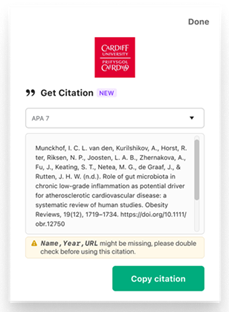
Lean Library Cite simplifies the citation process by generating accurate citations for journal articles and eBooks that patrons are reading, from within the Lean Library pop-up. Patrons can now effortlessly obtain and copy citations for materials as they read with an easy “Get Citation” button.

Once clicked, the citation will be copied to their clipboard, allowing your patrons to easily paste it when writing or into their reference manager of choice.
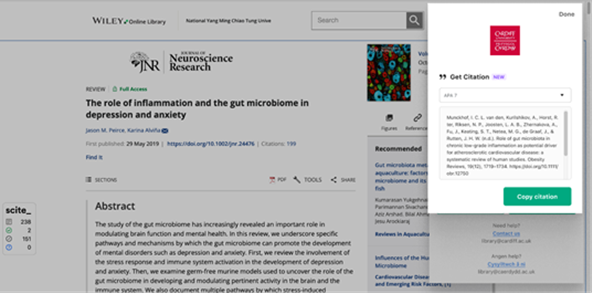
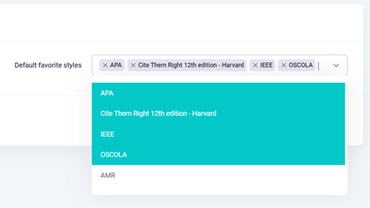
Cite also allows libraries to select the library’s preferred citation style, which will then prominently appear at the top of the citation style drop-down menu for patrons. This feature enables librarians to easily guide patrons towards the citation styles commonly used within their institution.
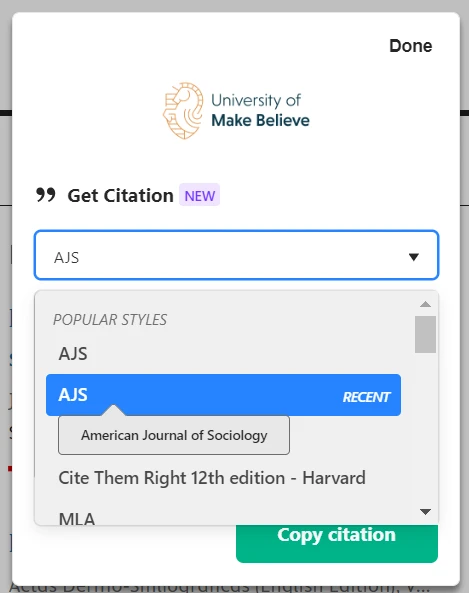
And that is not all! Cite also alerts patrons when metadata is missing from fields, such as the title or author. This functionality allows patrons to then enter the correct data to accurately complete the citation.
Citation can be time-consuming and daunting, particularly for lower-level undergraduate students with no prior experience in the world of citation, academic writing, or using reference management tools. Simultaneously, the increasing popularity of integrating Generative AI, such as ChatGPT into their research workflow, underscores the increasing importance of accurate citation for both students and researchers.
Lean Library guides patrons seamlessly from the discovery stage into the accurate authoring stage of their workflow by making citation simple with an easy-to-use solution that:
Lean Library Cite integrates with the Citation Style Language to provide all major citation styles that your library may use.
Lean Library will soon be extending Cite to further content types including Websites, and much more!
Want to see Lean Library Cite in action? Get a demo now!
Lean Library in 2023: Innovations, Milestones and Events December 18, 2023
As we near the end of 2023, it’s time to take a trip down memory lane and reflect on what has been a fantastic year for Lean Library: A resource access and workflow services tool for libraries.
Lean Library has undergone growth and major development this year, thanks to our customer loyalty, feedback, and new university partners. Here’s what happened in 2023…
Libraries work diligently to curate the best collections, resources and services to support their patrons. However, librarians are often the unsung heroes on and off campus, with students and researchers not properly utilizing (or even being aware of!) the extent of library services and resources.
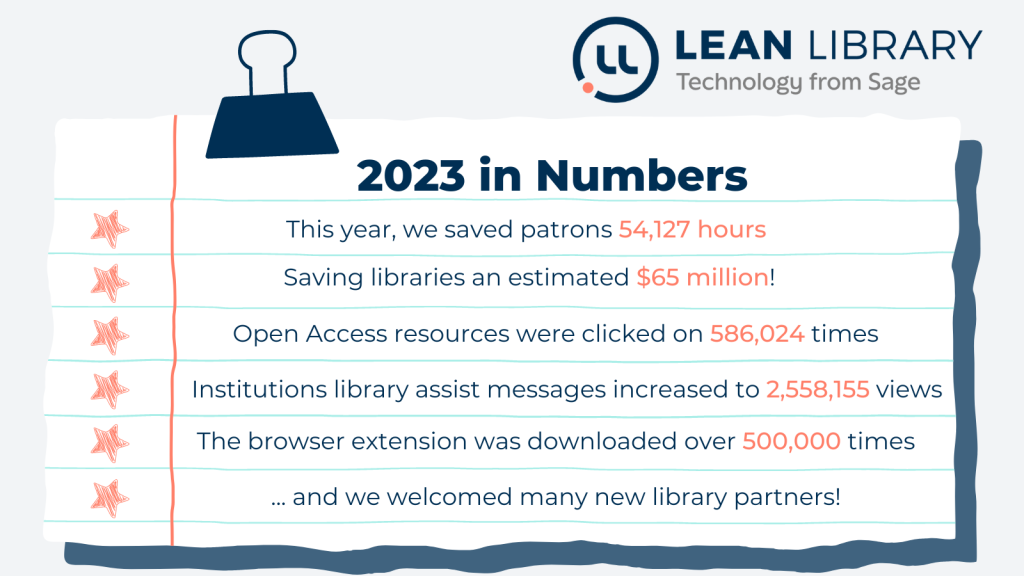
Every day of 2023, Lean Library promoted and increased awareness of libraries by seamlessly bringing library content and services into patrons’ online workflows via the Lean Library browser extension (whether they were on Google, PudMed or beyond). This made patrons’ lives easier, improving their productivity and saving them time and money. And with over half a million downloads of the browser extension, Lean Library made a big impact around the world, as demonstrated in the infographic below:
In 2023, we completely redesigned Lean Library and improved the browser extension to launch on all major web browsers, including Google Chrome, Microsoft Edge, Opera, Mozilla Firefox, and Safari. This launch marked a significant step in Lean Library’s journey as the most comprehensive access broker and workflow tool with a goal to make learning and research workflows smoother than ever before.
The redesign was driven by invaluable feedback from librarians, students, and researchers. We completely revamped the browser extension to be quicker, sleeker, and better than before, with:
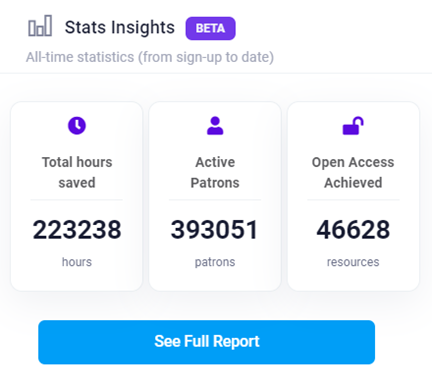
Useful stats and insights are key to any library in demonstrating the value of a technology they implement. That’s why Lean Library launched a new Stats Insight Dashboard that provides insights on Lean Library’s stats on real-benefit factors including:
This takes Lean Library beyond raw statistics to unveil the real value that Lean Library brings to institutions, making it simpler for librarians to demonstrate its value as a must-have tool. The impactful insights enable libraries to build a story around their patron’s usage and visualize the positive impact of Lean Library in transforming the library’s visibility and usage.
The Alternatives feature is a core Lean Library feature that helps patrons access digital resources easily in alternative ways. In 2023, a series of improvements were released to Lean Library, dubbed ‘Alternatives 2.0’, to better support the library in uniting their diverse range of collections in the open web, from print to digital. We strive to be the solution that brings together these rich, library-held collections to users, when they would not typically go to the library environments to find them. The Alternatives 2.0 improvements are as follows:
Zurich University of the Arts implemented Lean Library to enhance their user-centered library strategy and make patrons aware of the many great resources they have access to – thanks to their library. They utilized Lean Library’s enhanced content integration feature to surface the library’s ‘Very Short Introductions‘ collection, which offers a concise and original introduction to a wide range of subjects. By surfacing this collection on Wikipedia and other sites, it promotes it to patrons at point of need.

Often Wikipedia is the starting point for basic research. By linking to the Very Short Introductions collection, we can inform our students and other members of the university of additional valuable information the library licences, and which patrons might not be aware of.”
Simone Welti, Library Information Specialist, Zurich University of the Arts
In July 2023, Kennesaw State University Library implemented Lean Library to promote and drive usage of its digital collections. The library saw an drastic increase in library collected usage after implementing Lean Library, growing from 88 to 3,355 library resources accessed in just 4 months. That’s a whopping 3,712% increase, clearly highlighting the valuable Lean Library unlocks for both the library and patrons.

Lean Library has been instrumental in helping students and faculty become aware of the breadth of resources they can access through our subscriptions, particularly those provided through academic publishers.
Karen Doster-Greenleaf, Director of Research & Instructional Services/Librarian Associate Professor at Kennesaw State University
The service makes my work in research and document finding that much easier for me. Thank you!”
Student, Kennesaw State University
I started using Lean Library when I started researching my dissertation and realized I couldn’t possibly go through 20 different pages of Google Scholar, figuring out if I had access to them. It’s saved me a lot of time.”
BA Student, University of Lincoln
Lean Library is a very useful tool, especially for students, who often forget about the search tools offered by the library… One of the best things is its human team… we are taken very good care of.”
Librarian, University of Extremadura
2023 has been a year full of many Lean Library webinars, conferences, and events that gathered librarians from all corners of the world – from the United States to Europe to Australia. We’ve been delighted to grow our connections and relationships with libraries across the globe and it has been a memorable journey for all of us at Lean Library.
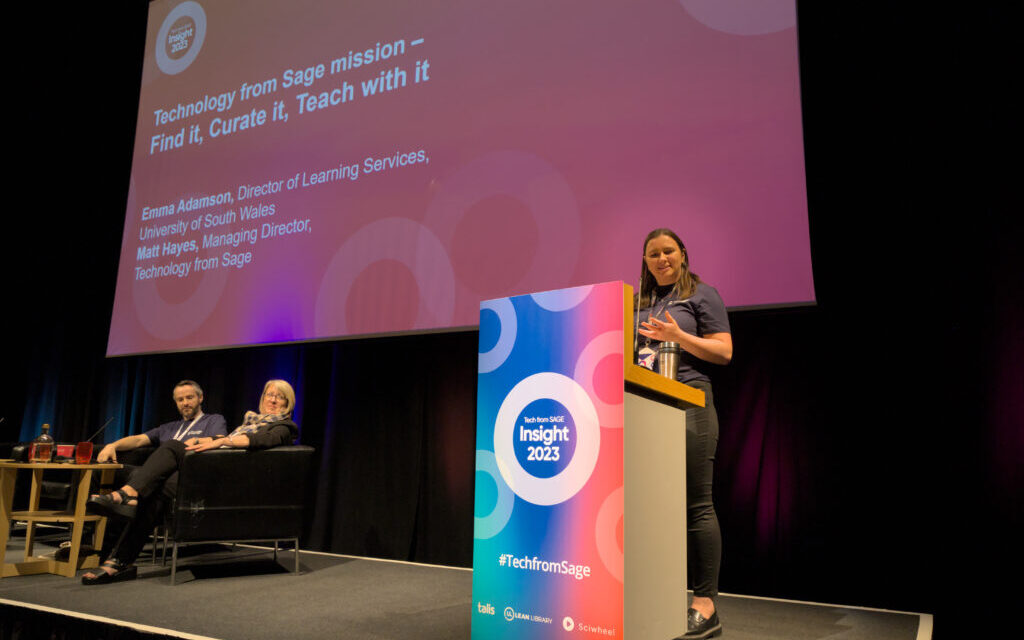
Lean Library’s user community came together in-person at the inaugural Tech from Sage Insight in Birmingham, UK. The event connected users to learn best practice, network, and workshop hot topics like AI in academia or the knowledge gap between librarians and students. Attendees gained insights from experts, learned about evolving needs of patrons, and explored ways to enhance their library through technology. It was a librarian’s dream event, but don’t worry if you missed out as the talks are still available here.
It was an honor to host an engaging in-person event at University of Salford, diving into the massive role academic libraries play in supporting student success and the challenges they face. University of Salford library presented on how they’ve used Lean Library to ensure students can seamlessly access vital study materials and bridge the knowledge gap between the library and students.

Lean Library had a blast presenting at various conferences throughout the year, including these sessions at ER&L in Texas and ACRL in Pittsburgh:
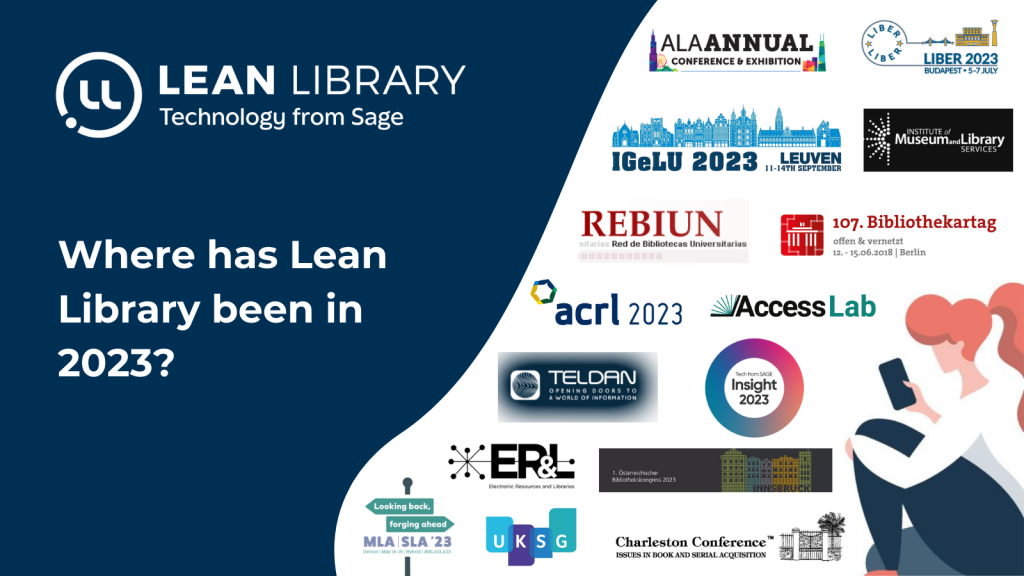
The team at Lean Library thank our university partners for a great year and look forward to connecting more libraries with their patrons in 2024. If your library is contemplating an access broker, looking to streamline access and drive usage of library holdings, or wants support moving toward a patron-centric approach, get in touch below to arrange a demo of Lean Library today.

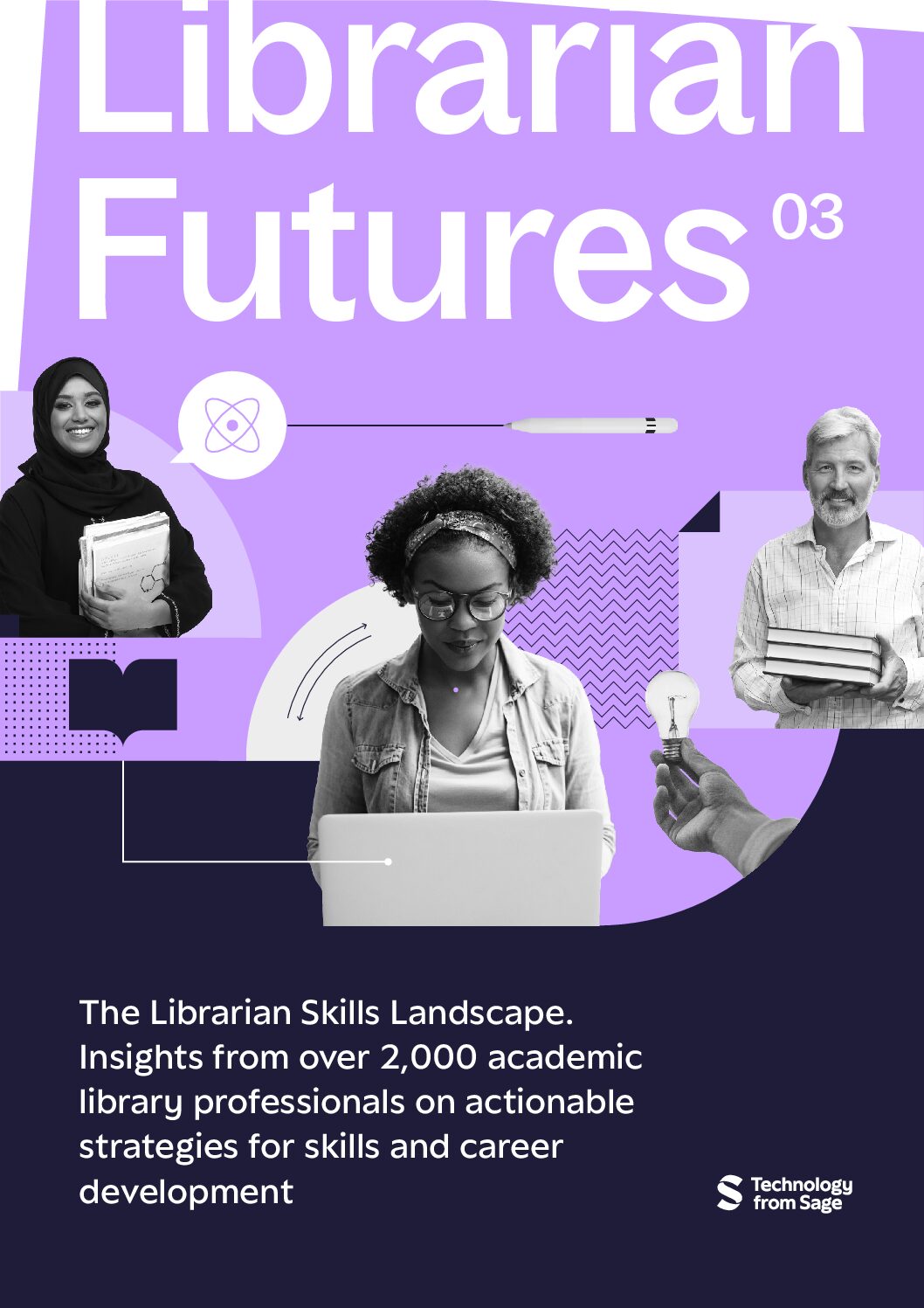
When conducting our research for our latest report Librarian Futures Part III, we asked librarians and library leaders about their visions of the future: which skills do they see as essential to develop in the short, medium, and long-term? We had a range of responses, but a few points really stuck out to us:
It’s a good time to look to the future. We asked colleagues from universities around the world to reflect on the information in Librarian Futures Part III, and tell us where they see exciting opportunities and emerging challenges for 2024, and what their upskilling resolutions are for the year ahead.
If you haven’t yet read our latest report, Librarian Futures Part III: The Librarian Skills Landscape, download your copy below:
It would be remiss of me not to mention AI as a starter – the shift it will bring to all parts of society is akin to the changes wrought by the industrial revolution.”
Andrew Barker, Library Director, Lancaster University
“Looking from the vantage point of December 2023, to meet the challenges that 2024 will bring, I have reflected on the skills, or the understanding, I will need to ensure 2024 (and beyond) is a success and that the library I lead at Lancaster continues to be at the vanguard of sustainable innovation.
It would be remiss of me not to mention AI as a starter – the shift it will bring to all parts of society is akin to the changes wrought by the industrial revolution, and I need to begin to better improve my understanding of the opportunities and challenges (in that order) it is bringing.
It will have far-reaching consequences to libraries and librarians as we once again reframe our old skills to meet new opportunities, it will bring lots of opportunities, but we need to better understand the skills it will require from us – and for us to keep an open mind about the changes it will bring. It will change education, but once again our skills as librarians will ensure we prosper.
Secondly, I want to dive deeper into understanding the connectivity between being part of a university committed to sustainability and the resources we license and purchase – understanding that will ensure we are then able to drive change in the sector to think of new ways of delivering digital to our users without further dam aging the planet. Both big things to deal with to think about and upskill – but it is in the big changes where we will bring meaningful change. Bring it on!”
Skills never thought to be part of a librarian’s position description are now the norm. It hasn’t stopped and it doesn’t look like it is going to stop anytime soon.”
Hector R. Perez-Gilbe, Research Librarian for the College of Health Sciences, University of California
Librarians have been facing drastic changes in their professional world for the last couple of decades and I feel confident in saying that the most drastic changes within academic professions. Technology has impacted libraries in ways that revolutionized the librarian profession into challenges that are constantly changing. Skills never thought to be part of a librarian’s position description are now the norm. It hasn’t stopped and it doesn’t look like it is going to stop anytime soon. The new set of skills and knowledge required to keep up with current trends in information and information-seeking behaviors have taken us to places we never imagined.
When I was in library school, I never thought I would be involved in learning programming coding, or statistical understanding. As a medical librarian, I was always trying to stay ahead or neck and neck with the changes. Tough proposition at the time, so I enrolled in an epidemiology program and got my MPH. Data, analysis, and programming are the main topics in medical librarianship if you want to get elbow-to-elbow with the big leagues of medical information and clinical research.
Our role has shifted from reference desk to team members in clinical research and systematic review studies. Far from the librarian of 20 years ago. Librarians in all disciplines have to keep up with trends in their areas of expertise and the only way to do so is to go out of our comfort zone and learn new skills. One big accomplishment, non-librarian colleagues see us as an asset and team member to help achieve their professional goals. Let’s see where the next chapter will take us.
That is the beauty of this profession – our skills, ideas, and visions are transferrable across a wide range of settings.”
Hannah Rutledge, Director of Library and Information Services, Longwood Gardens
When Librarian Futures Part III was in the research phase, I was at the University of Pennsylvania Libraries as director of their biomedical library. Now, reading the published report, I’m the Director of Library and Information Services at Longwood Gardens, immersed in the world of botanical and horticultural librarianship. That is the beauty of this profession – our skills, ideas, and visions are transferrable across a wide range of settings. Naturally, I feel somewhat removed from the academic library world, yet there are numerous parallels, many of which are clearly outlined in Librarian Futures Part III report, allowing me to feel inspired and right at home.
If I may be honest, the report left me with more questions. I was intrigued but not fully surprised by the different perspectives of library leaders and frontline librarians. This shows not only difference of priorities (which is expected), but it may also show the opportunity for a gap in communication or understanding. Are they communicating these priorities to each other? Does this impact the availability of or support for professional development? Furthermore, I’m curious as to the breakdown of “library leaders,” as there are various levels of library leaders with different priorities in the same institution (i.e. medical library director vs dean of libraries). Now that the librarian skills landscape has been identified, what is the next step? How can we help librarians advocate for the training and development they need? What additional work is needed to accurately identify those interests, needs, and opportunities?
To run off to the gardens now…At Longwood Gardens we have horticultural students and interns (domestic and international), executive leadership fellows, as well as staff and researchers seeking information from various fields ranging from landscape architecture to garden design to sculpture, from turf care to orchids to woody plants. The teams under my purview include the library, archives, digital asset management, plant information and mapping, and docents.
My own primary goals for the new year:
These are vague goals, lacking any actionable tasks, outcomes, or timelines. At this point, they serve more as a guide. With Librarian Futures Part III in tow (as well as the previous two), I intend to utilize the data and insights to help create a better library, archives, and information services – for our users, for the success of the organization, and most importantly, for my staff.
Librarians play a large role in connecting their communities as bridges between people and organizations. Information is the tip of the iceberg.”
Christine Quirion, Chief Operating Officer, Skilltype
The Librarian Futures III report findings show high representation of information science skills across the community, suggesting a comfort zone. Librarians play a large role in connecting their communities as bridges between people and organizations. Information is the tip of the iceberg. The libraries Skilltype works with encourage re-skilling in areas such as AI, online learning, and data literacies so the library can be a full partner in teaching and research. Based on the report’s findings, Skilltype will highlight skills that help information professionals increase their impact and curate their careers in 2024. Skills that I expect to see more of include community outreach, instructional design, project management, assessment, design thinking, marketing, and user experience. These are essential skills to uncover community needs, communicate effectively with stakeholders, and maximize the library’s impact.
Across my academic library career, my skill range extended organically every few years. I started as a digitization supervisor and grew into leadership, UX, and digital development. Now, I’m part of a startup for libraries. Each time I extended my range, my network grew to include colleagues from campus IT, student services, or teaching & learning. New people and perspectives can also be catalysts for growth.
Our research has found that in today’s academic world, the roles of IT and librarians are converging more than ever.”
Richard French, Product Manager, OpenAthens
Our research has found that in today’s academic world, the roles of IT and librarians are converging more than ever. Embracing technology has become pivotal for librarians, forming an integral part of their responsibilities. At OpenAthens, our focus for the next year is on simplifying our products and empowering librarians with user-friendly tools, enabling them to adeptly navigate the increasing significance of technology within their roles.
Thank you to Andrew Barker, Hector R. Perez-Gilbe, Hannah Rutledge, Christine Quirion and Richard French for their contributions to this blog post.
Where has Larry the Lean Library Llama been in 2023? December 11, 2023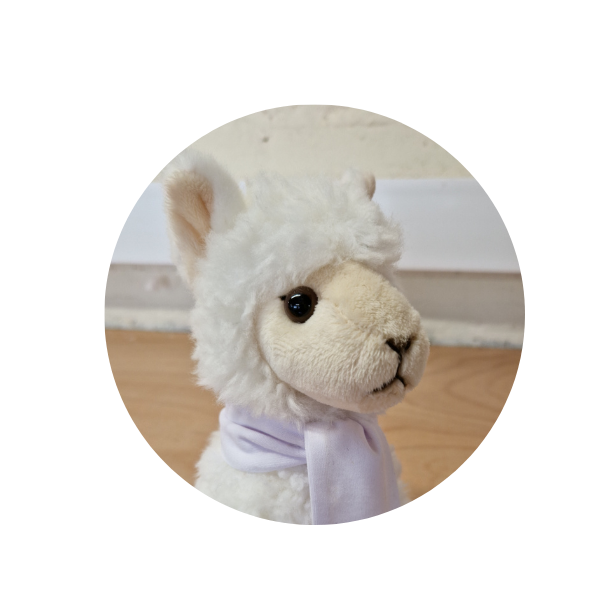
As many of you may know, we have a furry mascot for our Lean Library browser extension – isn’t he cute? The Lean Library Llama joins us at events and conferences, listening in as we talk to academic librarians from all over the world about Lean Library, the easy-to-use browser extension which simplifies online access to library content. We’ve named our Lean Library Llama Larry, but we’ve heard librarians and students name their llama all different names: from Allama Morisette to Louisa.
Do you want to find out where Larry the Llama has been this year and what he’s been up to? Read on to discover the travels of our four-legged friend…
Larry was lucky enough to travel to Austin, Texas for Electronic Resources and Libraries Conference (ER&L) 2023 back in March and had a great time on the stand chatting to librarians about their library.
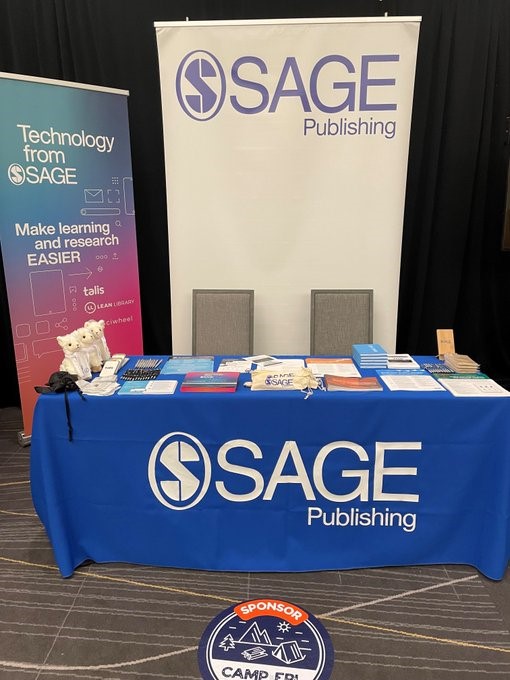
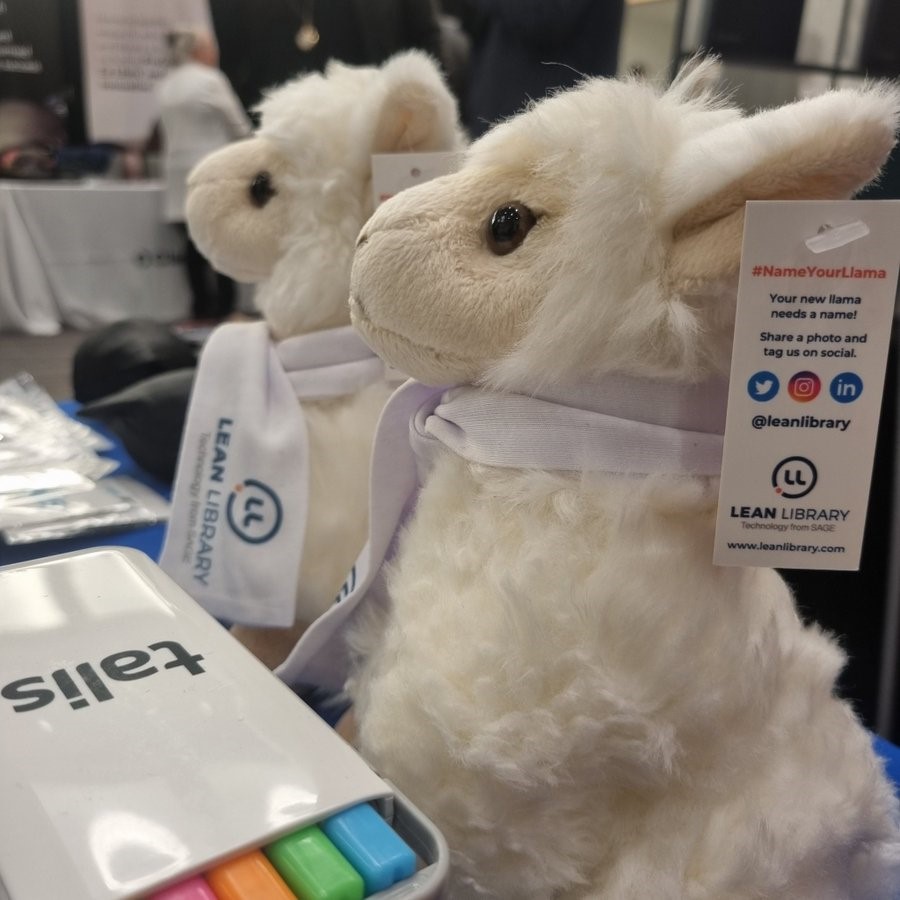
We were delighted to have three sessions at ER&L Conference 2023, ranging from future-proofing access to patron reference management.
Find out more about our sessions below:
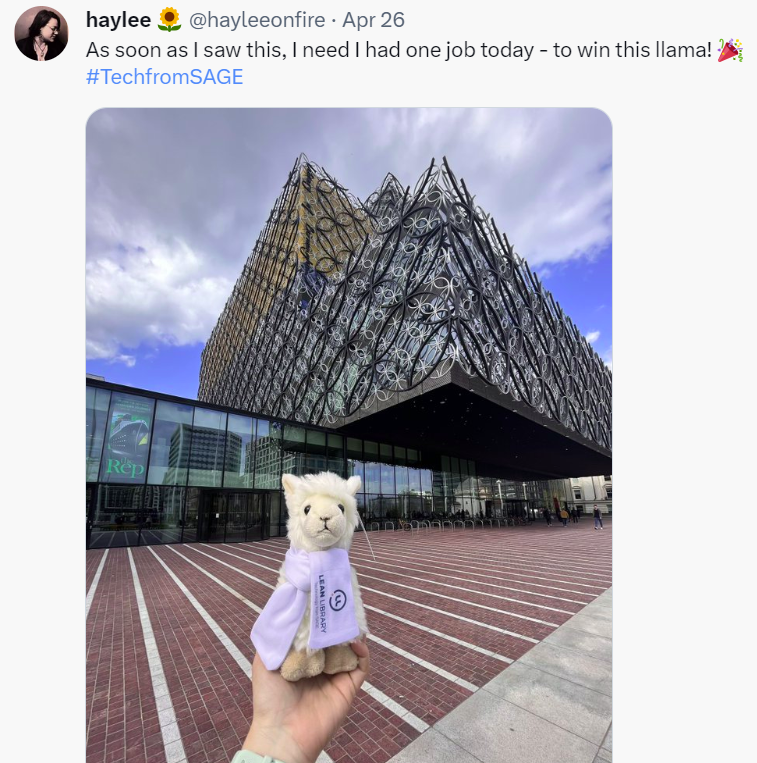
In April, Larry and his friends joined us at our inaugural Tech from Sage Insight Conference in Birmingham at The REP Theatre. It was a jam-packed two days for academic librarians with workshops and presentations on Higher Education topics, ranging from the risks and opportunities of AI to rethinking the library of the future.
We ran a giveaway during the two-day conference for six librarians to win their own llama to take home. All they had to do was tweet about the conference using #TechfromSage. The lucky winners were Lowri, Jackie, Haylee, Hazel, Fiona and Chantal. We loved seeing the photos of the llamas from the winners:


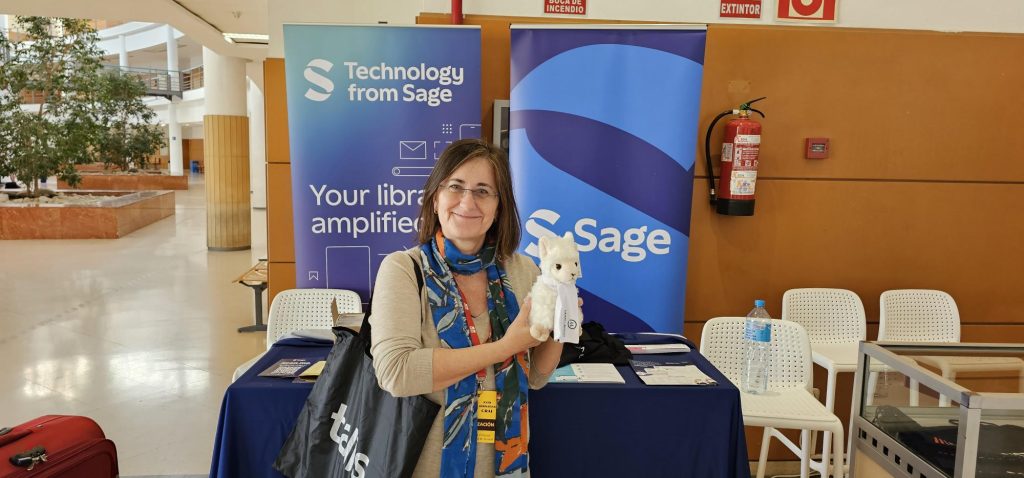
In May, Larry the Llama joined the Lean Library team at REBIUN Asamblea Conference in Alicante, Spain – a wonderful city for an academic conference and we loved meeting so many librarians from Spanish institutions.
Congratulations to Juana from Universisidad de Alicante who won a llama at the stand – we’re sure that this llama has gone to a fantastic home.
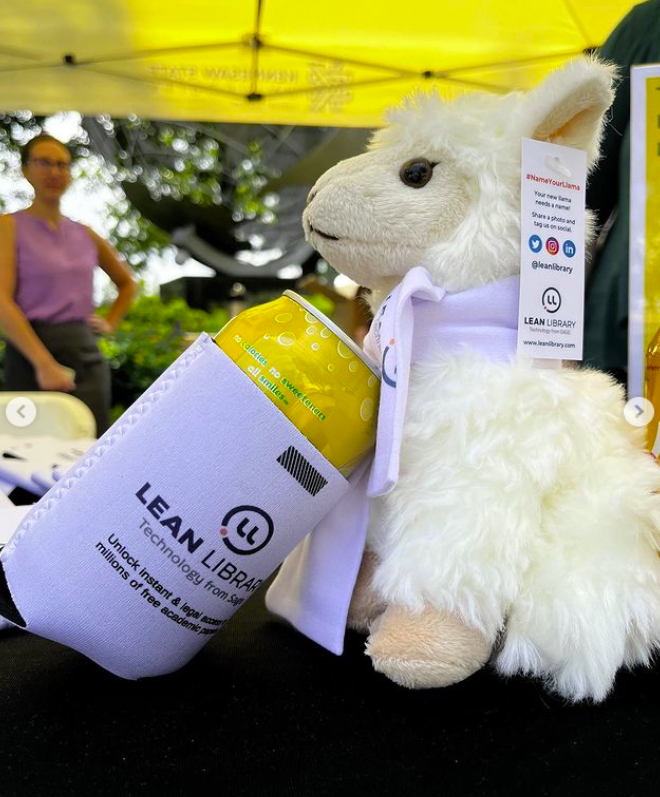
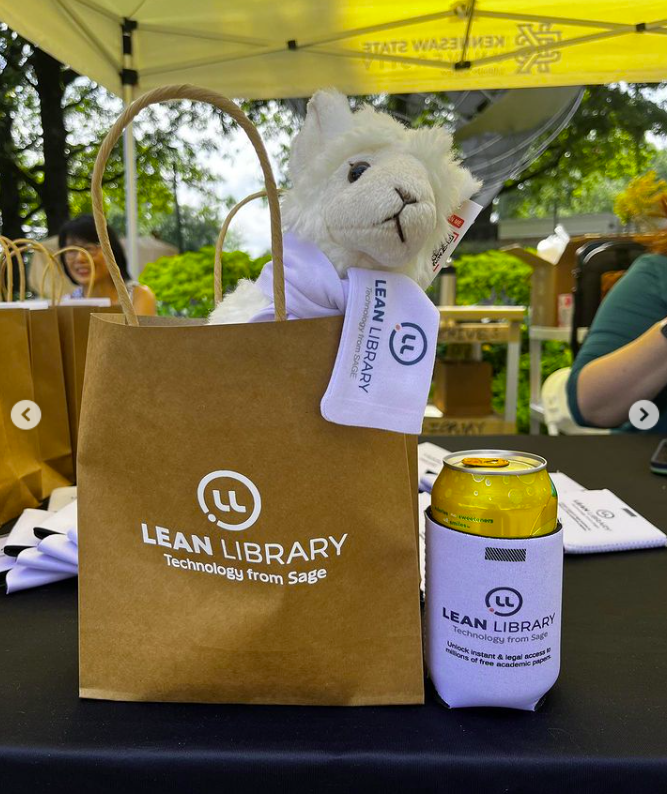
In September, Larry and his friends flew to Kennesaw in the United States (they’re becoming very well-travelled llamas) to promote the Lean Library browser extension at a usage driving event for students, run by Kennesaw State University Library.
We absolutely loved seeing the fantastic photos of the llamas enjoying a cold beverage and hanging out in the Lean Library branded paper bags. We felt it was a fantastic way for Kennesaw State University Library to celebrate that students now had access to Lean Library for their research.
Discover more about how Kennesaw State University Library have used Lean Library to increase their patron usage of digital collections in our case study.
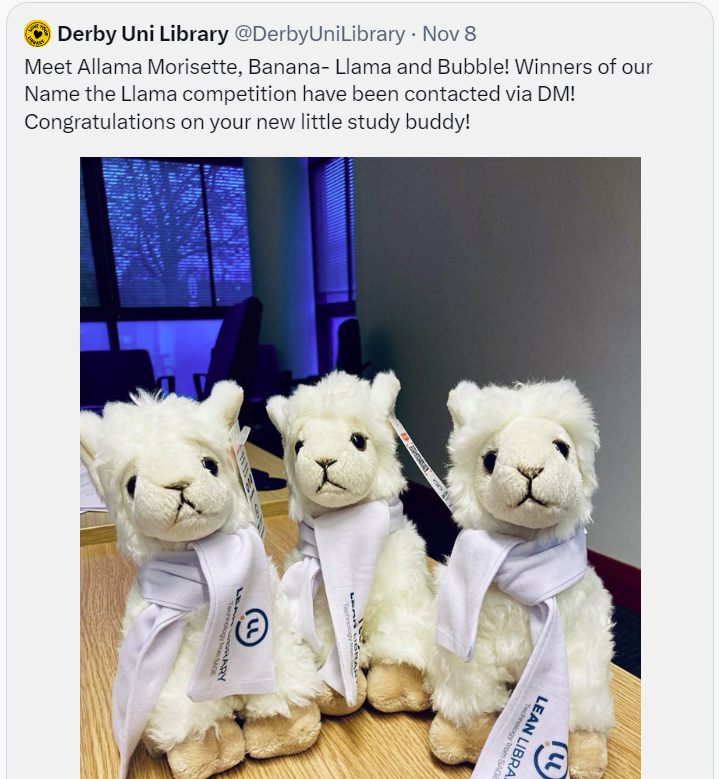
In November, Larry the Llama visited a couple of institutions within the United Kingdom. First stop, was University of Derby Library where three llamas were part of a competition for students to install the Lean Library browser extension and a gain a new study buddy at the same time. We absolutely loved that the three llamas who had found new homes were named Allama Morisette, Banana- Llama and Bubble.
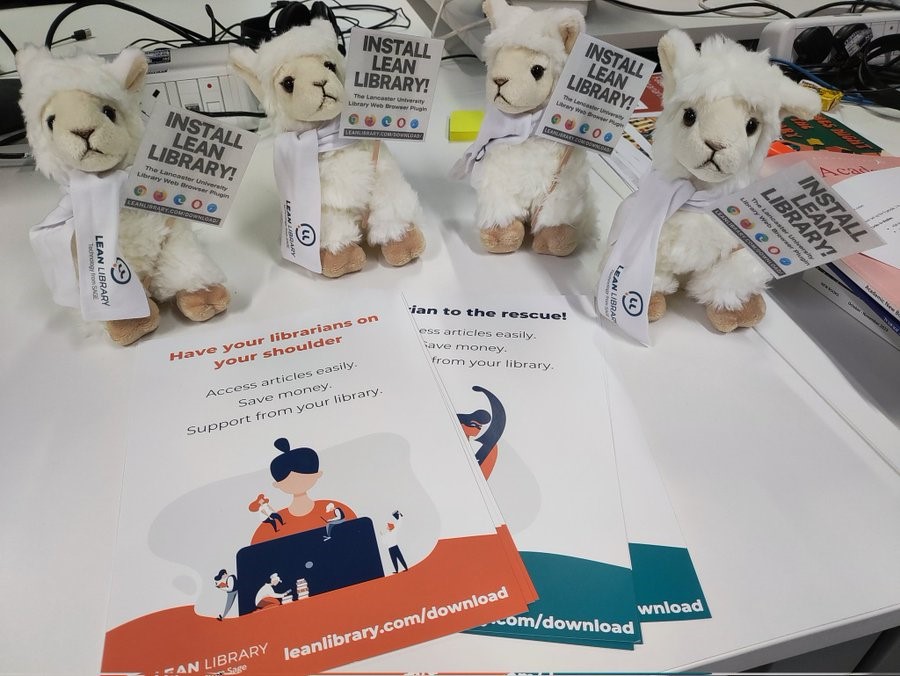
Larry and his friends travelled further up north to Lancaster, United Kingdom to visit University of Lancaster Library and meet some students. The llamas became part of the Lean Library Llama Digital and Usability Outreach Team and we’ve heard reports that they’ve been patrolling University of Lancaster Library to tell students about how Lean Library makes their research process even easier.
We loved the Lean Library tags on the llamas that the University of Lancaster librarians created!
Larry the Llama visited Barbie Land in the summer to be Barbie’s loyal travel companion as she went to the Real World. This may have happened in Larry’s imagination, but we’ll leave that up to you to decide!

We hope 2024 brings even more travels for Larry the Lean Library Llama! Stay tuned for more adventures around conferences and institutions around the world.
Read our blog post to find out more about what Lean Library has been up to in 2023!
9 Key Findings from Librarian Futures Report Part Three November 9, 2023
We recently launched our Librarian Futures Part Three report, titled The Librarian Skills Gap. The report, in partnership with Skilltype, explores the emerging skills required to fulfil a library’s mission – in a decade shaped by social, political, and technological change – and meet the needs of today’s library patrons. We gathered global perspectives from over 2,000 academic library professionals, from frontline librarians to library directors, to ensure a representative set of insights for the report.
Our second Librarian Futures report asked the question: How can academic libraries be more deeply involved in the undergraduate learning journey? The new report investigates the new skills, competencies and responsibilities which librarians will develop in the years ahead and are going to be pivotal to this. We hope this report inspires conversations in your library, amongst your peers, and within the wider library community.
Here are the 9 key findings from Librarian Futures Report Part Three:
An overwhelming majority of librarians agreed or strongly agreed with the following statements:
Results were much more mixed for the statement “I feel confident regarding advancing my career”.
Although some are neutral on this question (17%), and a small number do not feel able to meet these challenges (8% disagree, 1% strongly disagree).
74% of respondents reported that they engaged in upskilling, on average, at least once every 3 months.
However, many librarians are being left out of such conversations, and the impact is particularly pronounced for staff without postgraduate qualifications and for staff working in a hybrid fashion and over 10% of library professionals surveyed as only upskilling once per year.
This is likely in response to the rapid rise of generative AI.
Moving into the medium and long term, a number of librarians see skills in learning analytics being crucial to develop.
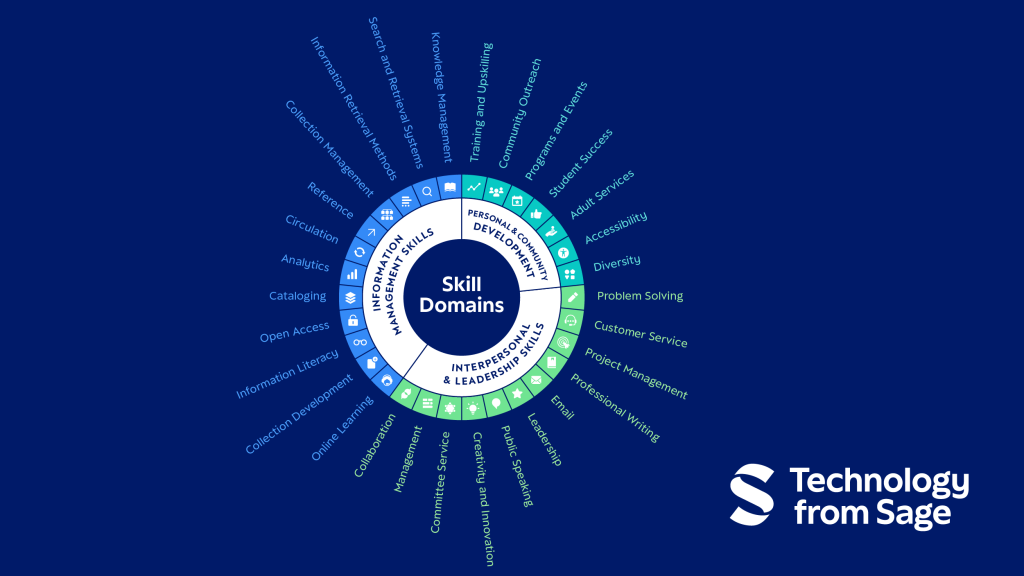
Over half of respondents agreed or strongly agreed that they were given ample opportunity to develop their skill set by the university (56%), and over half felt well supported to do so by senior management (62%), line managers (80%), and colleagues (72%).
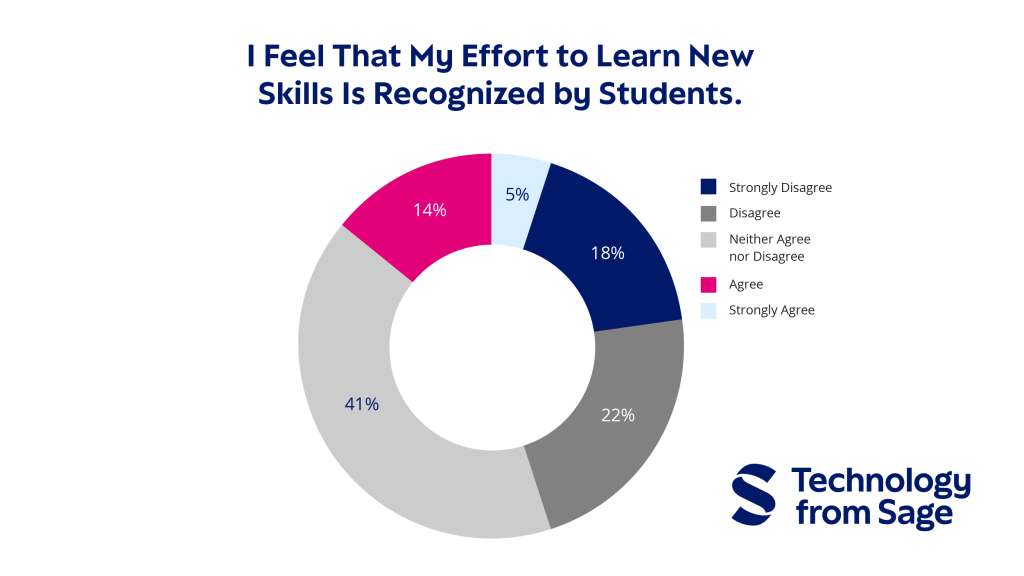
Just 19% of respondents felt that students recognise their efforts to learn new skills. A plurality (41%) of librarians were neutral on the topic, while a relatively huge 40% of librarians actively disagreed with the statement.
Approximately 75% of librarians have had the opportunity to engage in upskilling at least quarterly.
It is also worth noting that librarian training is coupled within travel budgets, which has increased the impact of COVID on librarian training budgets.
The next most popular choice was “other,” with respondents specifying their different ways of discovery. Some respondents described using online platforms such as Coursera or LinkedIn to discover new learning, while others spoke of having to undertake mandatory training.
Download our Librarian Futures Part III report to discover more noteworthy insights regarding the emerging skills required to fulfill a library’s mission and meet the needs of today’s library patrons.
Share your thoughts about the findings in the new Librarian Futures Part III report on Twitter and LinkedIn.