Bringing patrons to library collections
The library puts in a considerable amount of time and effort to develop its collections and provide support for users. But are patrons always gaining easy access to these resources?
“We understand that users don’t necessarily go via library systems to access our resources and can then struggle to access the online resources we subscribe to. It can also be difficult to provide effective support to off-campus users when they have problems accessing resources.”
“It can be difficult to provide effective support to off-campus users.”
Lean Library, a powerful browser plug-in, solves access issues and provides patrons with content as and when they need it, all while protecting their privacy and promoting your library’s brand.
“Library staff are finding it useful in supporting off-campus users to access resources. The Library Assist feature is also useful for providing extra support when accessing resources – we plan to investigate using this across the library. Uptake has been good with nearly 4,000 engaged users each month and we’re pleased with the amount.”
Lean Library strives to deliver a product that continues to bring value to the library.
“The functionality delivers what was promised, it continues to be developed, it is easy for users to install and from the statistics we can see it is being used and helping users access resources.”
Lean Library requires users to download the plug-in. So, how do you get patrons to download it?
“We started with a soft launch over the summer with announcements on the library’s social media and did a full launch in October. We promoted it via social media, flyers on library service points, screensavers, a web page and information on library staff email signatures. We’re continuing to promote it particularly to coincide with new intakes of students. We are finding the statistics useful to be able to monitor usage and see where users’ research has been supported with the plug-in.”
At the end of the day, users need to see the value, and their feedback is important.
“We’ve had positive feedback from users via Twitter and also from our Academic Support Librarians. We’ll be focusing on gathering more qualitative feedback from users going forward.”
| University of Salford, Manchester
|
Find out more about Lean Library.
If you’d like to hear more or receive a product demo, get in touch.
Lean Library Case Study: Erasmus University Rotterdam October 24, 2024
Bringing value to the library
The library puts in a considerable amount of time and effort to develop its collections and provide support for users. But are patrons always gaining easy access to these resources?
“We use EZproxy but it is difficult to explain how to use it. Even student support staff don’t understand.”
Lean Library solves access issues and provides patrons with content as and when they need it, all while protecting their privacy and promoting your library’s brand.
Lean Library strives to deliver a product that continues to bring value to the library.
The Lean Library tool really helps us. Due to issues around privacy, it’s important to have a good, trusting relationship. We have that with Lean Library. We are now going over the 6000 engaged users, which is great! This means we can contact these active searchers with scholarly information. We are able to prompt a message on each website that we want to talk about!”
Lean Library Lean Library requires users to download the plug-in. So, how do you get patrons to download it?
“At first, we used flyers and narrowcasting in our library. Now, we just promote by narrowcasting. The number of engaged users is going up every month.”
|
Find out more about Lean Library.
If you’d like to hear more or receive a product demo, get in touch.
Lean Library Case Study: Mersey Care October 24, 2024
Accessing resources from home and a 45% increase in online journal usage
The library puts in a considerable amount of time and effort to develop its collections and provide support for users. But are patrons always gaining easy access to these resources?
“The installation and ongoing dialogue with Lean Library were exemplary; always consistently helpful and very responsive. I am not necessarily very technically minded but Daniel – our Lean Library contact – guided me through all the necessary steps at our end.”
Lean Library, a powerful browser plug-in, solves access issues and provides patrons with content as and when they need it, all while protecting their privacy and promoting your library’s brand.
Lean Library strives to deliver a product that continually brings value to the library. Does it match your expectations?
“The product has exceeded our expectations in terms of increased user satisfaction and increases in OpenAthens sessions across the Trust.”
Lean Library requires users to download the plug-in. So, how do you get patrons to download it?
“Initially we directly emailed all registered OpenAthens users within the Trust about Lean Library – about a fifth of our user base – and we continue to do this with new software developments such as Highlight and Search. Beyond that, we ran a poster campaign across the organisation informing them of Lean Library and the arrival of the Chrome browser.
Lean Library also promotes itself and our service in an ambient manner as potential users in remote locations are now made aware of our service and the availability of online resources through our Lean Library popups. In our organization, our users wouldn’t necessarily identify as students – as they will have existing OpenAthens account registered under their professional group.”
Collection usage grows when access is simplified
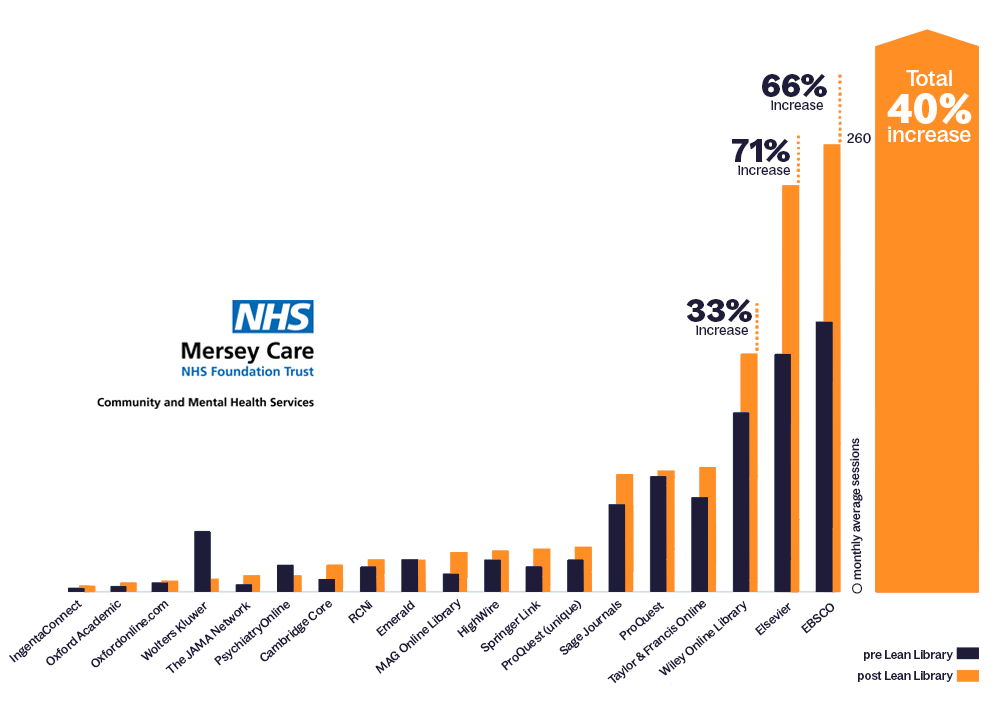
“The implementation of Lean Library in Mersey Care has contributed towards a 45% increase in online journal usage.”
At the end of the day, users need to see the value, and their feedback is important.
“The feedback is uniformly positive – and it is reassuring to know that if for any reason the user did not want to see the popups anymore, we can give them instructions on how to easily disable it.”
|
Find out more about Lean Library.
If you’d like to hear more or receive a product demo, get in touch.
AI in Libraries: September Edition September 3, 2024Clarivate’s Alethea is a noteworthy example of how artificial intelligence (AI) can be harnessed to enhance the student experience beyond traditional academic settings. Alethea offers various features aimed at improving student support and engagement through data-driven insights.
One of the primary ways Alethea supports students outside the classroom is through its predictive analytics capabilities. By analysing historical data and current trends, Alethea helps institutions forecast student needs and challenges before they arise. For instance, the tool can predict patterns in student retention, identify at-risk students, and highlight areas where additional support may be needed. This proactive approach allows institutions to implement targeted interventions that can enhance student retention and success.
Alethea’s data analytics also extend to understanding student engagement and well-being. The tool analyses data related to student activities, participation in extracurriculars, and overall engagement. By examining this data, Alethea helps institutions identify students who may benefit from additional support or opportunities to get involved. This can lead to more personalized recommendations for extracurricular activities, support services, or academic resources, fostering a more engaging and supportive campus environment.
Some key features of the AI research coaching tool are:
Chat-Based Interaction – Alethea offers a chat-based support system where students receive guidance rather than direct answers. This approach encourages students to engage more deeply with their readings and think critically as they work through their assignments.
Blending state-of-the-art AI with solid academic principles – The tool fosters critical, systematic, and reflective thinking, providing support within an environment designed to encourage student growth and self-reliance.
Enhancing students’ interaction with course materials – Promoting class discussions and ensures students are well-prepared and actively engaged in their learning.
Another significant benefit of Alethea is its role in enhancing research opportunities for students. By analysing collaboration patterns and research interests, Alethea can identify potential research opportunities and connections that students might not otherwise discover. This can encourage students to engage in research projects, internships, and collaborative efforts, enriching their academic experience and professional development.
AI tools have integrated themselves into our cultural awareness and daily lives, prompting librarians to question how they can incorporate AI into their librarianship and encourage students and researchers to use tools ethically.
At Lean Library we believe that the right technology can remove barriers to knowledge. We’ve launched an AI in Libraries feature to round-up the latest AI developments for academic librarians.
Read on for September’s edition, collated by Rajeh Shaikh, Product Manager at Sage.

Libraries are embracing the future with AI, and the University of New Mexico’s College of University Libraries and Learning Sciences is at the forefront with its GPT-4 Exploration Program. This initiative, driven by Dean Leo S. Lo and Victoria Anderson, aims to reskill library staff, integrating AI into their daily operations to boost productivity. The program provides hands-on experience with GPT-4, starting with basic AI understanding and advancing to practical applications like drafting emails and generating reports.
Anderson’s experience highlights significant productivity gains, showcasing the potential of AI in administrative tasks. Importantly, the program also emphasizes the responsible use of AI, ensuring staff are aware of ethical considerations and data privacy. This initiative not only enhances individual efficiency but also sets a precedent for libraries worldwide, illustrating the necessity of reskilling programs in preparing staff for a future where AI is integral to library functions.
Libraries, long seen as repositories of knowledge, are now pioneering the adoption of new technologies. The GPT-4 Exploration Program is a prime example of how libraries can lead the AI revolution, equipping staff to navigate and thrive in this new technological landscape. This effort not only modernizes library operations but also ensures that the human element—enhanced by AI—remains at the core of library services, driving forward innovation and efficiency in managing information and supporting research.
Zayed University Library in Dubai has recently developed Aisha, their new conversational AI agent. Initially launched as an experiment, Aisha has evolved into a powerful tool, showcasing how AI can enhance library services.
Using OpenAI’s ChatGPT API, Aisha offers 24/7 support, multilingual capabilities, and even voice interactions. Integrated into the library’s website, Aisha provides accurate, real-time assistance and interacts with users in innovative ways, including image analysis and access to external tools.
Despite challenges such as AI “hallucinations” and API limitations, Aisha has significantly improved library services.
Clarivate’s Alethea is a noteworthy example of how artificial intelligence (AI) can be harnessed to enhance the student experience beyond traditional academic settings. Alethea offers various features aimed at improving student support and engagement through data-driven insights.
One of the primary ways Alethea supports students outside the classroom is through its predictive analytics capabilities. By analysing historical data and current trends, Alethea helps institutions forecast student needs and challenges before they arise. For instance, the tool can predict patterns in student retention, identify at-risk students, and highlight areas where additional support may be needed. This proactive approach allows institutions to implement targeted interventions that can enhance student retention and success.
Alethea’s data analytics also extend to understanding student engagement and well-being. The tool analyses data related to student activities, participation in extracurriculars, and overall engagement. By examining this data, Alethea helps institutions identify students who may benefit from additional support or opportunities to get involved. This can lead to more personalized recommendations for extracurricular activities, support services, or academic resources, fostering a more engaging and supportive campus environment.
Some key features of the AI research coaching tool are:
Chat-Based Interaction – Alethea offers a chat-based support system where students receive guidance rather than direct answers. This approach encourages students to engage more deeply with their readings and think critically as they work through their assignments.
Blending state-of-the-art AI with solid academic principles – The tool fosters critical, systematic, and reflective thinking, providing support within an environment designed to encourage student growth and self-reliance.
Enhancing students’ interaction with course materials – Promoting class discussions and ensures students are well-prepared and actively engaged in their learning.
Another significant benefit of Alethea is its role in enhancing research opportunities for students. By analysing collaboration patterns and research interests, Alethea can identify potential research opportunities and connections that students might not otherwise discover. This can encourage students to engage in research projects, internships, and collaborative efforts, enriching their academic experience and professional development.
AI tools have integrated themselves into our cultural awareness and daily lives, prompting librarians to question how they can incorporate AI into their librarianship and encourage students and researchers to use tools ethically.
At Lean Library we believe that the right technology can remove barriers to knowledge. We’ve launched an AI in Libraries feature to round-up the latest AI developments for academic librarians.
Read on for September’s edition, collated by Rajeh Shaikh, Product Manager at Sage.
Libraries are embracing the future with AI, and the University of New Mexico’s College of University Libraries and Learning Sciences is at the forefront with its GPT-4 Exploration Program. This initiative, driven by Dean Leo S. Lo and Victoria Anderson, aims to reskill library staff, integrating AI into their daily operations to boost productivity. The program provides hands-on experience with GPT-4, starting with basic AI understanding and advancing to practical applications like drafting emails and generating reports.
Anderson’s experience highlights significant productivity gains, showcasing the potential of AI in administrative tasks. Importantly, the program also emphasizes the responsible use of AI, ensuring staff are aware of ethical considerations and data privacy. This initiative not only enhances individual efficiency but also sets a precedent for libraries worldwide, illustrating the necessity of reskilling programs in preparing staff for a future where AI is integral to library functions.
Libraries, long seen as repositories of knowledge, are now pioneering the adoption of new technologies. The GPT-4 Exploration Program is a prime example of how libraries can lead the AI revolution, equipping staff to navigate and thrive in this new technological landscape. This effort not only modernizes library operations but also ensures that the human element—enhanced by AI—remains at the core of library services, driving forward innovation and efficiency in managing information and supporting research.
Zayed University Library in Dubai has recently developed Aisha, their new conversational AI agent. Initially launched as an experiment, Aisha has evolved into a powerful tool, showcasing how AI can enhance library services.
Using OpenAI’s ChatGPT API, Aisha offers 24/7 support, multilingual capabilities, and even voice interactions. Integrated into the library’s website, Aisha provides accurate, real-time assistance and interacts with users in innovative ways, including image analysis and access to external tools.
Despite challenges such as AI “hallucinations” and API limitations, Aisha has significantly improved library services.
Clarivate’s Alethea is a noteworthy example of how artificial intelligence (AI) can be harnessed to enhance the student experience beyond traditional academic settings. Alethea offers various features aimed at improving student support and engagement through data-driven insights.
One of the primary ways Alethea supports students outside the classroom is through its predictive analytics capabilities. By analysing historical data and current trends, Alethea helps institutions forecast student needs and challenges before they arise. For instance, the tool can predict patterns in student retention, identify at-risk students, and highlight areas where additional support may be needed. This proactive approach allows institutions to implement targeted interventions that can enhance student retention and success.
Alethea’s data analytics also extend to understanding student engagement and well-being. The tool analyses data related to student activities, participation in extracurriculars, and overall engagement. By examining this data, Alethea helps institutions identify students who may benefit from additional support or opportunities to get involved. This can lead to more personalized recommendations for extracurricular activities, support services, or academic resources, fostering a more engaging and supportive campus environment.
Some key features of the AI research coaching tool are:
Chat-Based Interaction – Alethea offers a chat-based support system where students receive guidance rather than direct answers. This approach encourages students to engage more deeply with their readings and think critically as they work through their assignments.
Blending state-of-the-art AI with solid academic principles – The tool fosters critical, systematic, and reflective thinking, providing support within an environment designed to encourage student growth and self-reliance.
Enhancing students’ interaction with course materials – Promoting class discussions and ensures students are well-prepared and actively engaged in their learning.
Another significant benefit of Alethea is its role in enhancing research opportunities for students. By analysing collaboration patterns and research interests, Alethea can identify potential research opportunities and connections that students might not otherwise discover. This can encourage students to engage in research projects, internships, and collaborative efforts, enriching their academic experience and professional development.
Student Perspectives on the Academic Workflow September 3, 2024
We were delighted to have Maizie Ellis, a final year student at University of Lincoln, join us over summer 2023 as a student intern in our Product department. Whilst working with us, Maizie conducted research on the ways in which students approach their coursework and compiled these findings into a report. Maizie’s work complements and expands on some of the findings from our second Librarian Futures report, further developing our understanding of key themes around resource discovery, academic skills, and training and engagement.
This project explores Maizie’s work and examines where this new data fits in with our Librarian Futures series. Matthew Weldon (Library Patron Consultant at Lean Library) offers his thoughts on some of the key insights from our data.
Download the findings of the project here: Student Perspectives on the Academic Workflow.
Celebrating Innovations: Meet the Winners of the 2024 Lean Library Innovators Award September 3, 2024
Librarian: Sonali Sugrim, Queens College, CUNY
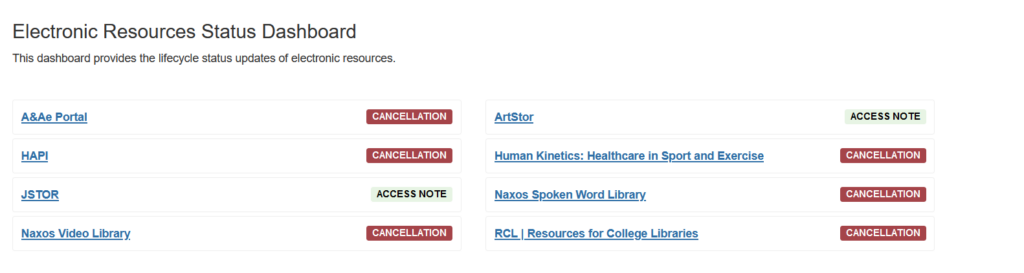
Overview: The Electronic Resources Status Dashboard was developed using Springshare’s System Status Management system to communicate changes efficiently. Updates are shared via email, MS Teams, and the dashboard, benefiting both internal and external users. It links to library pages, informing users about resource changes promptly. Explore it here: Electronic Resources Status Dashboard.
Read on for our interviews with the 2024 winning projects…
Rebecca Y. Bayeck: Winning the award was a great encouragement and also a validation of the importance of this initiative. I started this project in 2020 with the goal of advancing AI literacies among archivists. The initial support for this initiative came from the Council on Library and information Resources (CLIR). This award serves as another grant that will help to continue this initiative, which big perspective is democratizing AI so many, and particularly archivists can have a seat and a say at the table where AI tools are being developed, and even after they get developed and deployed.
Rebecca Y. Bayeck: As of now, the plan is to use the prize to expand this project by developing collaboration with other scholars and experts in this area. I think such collaboration with increase the impact of this project.
Jill Locascio: I am honored and grateful to be named a finalist for the Lean Library Innovators Award. As a librarian who primarily works with systems and eresources, I dedicate a lot of my time to the development and implementation of creative, practical, low-to-no cost solutions to address our library’s evolving needs. It has been extremely encouraging to discover that my approach to creating a Library Data Dashboard may be useful to others in a similar position.
Jill Locascio: Working on the Data Dashboard not only provided me the opportunity to solve an issue facing our library, it also provided me a hands-on opportunity to develop coding skills. Doing so has opened a floodgate of ideas for potential projects which will use code to improve workflows and library services. I plan to use the prize money to take professional development courses that will help continue my growth as a coder, enabling me to implement and share new innovations.
Sonali Sugrim: I’m very pleased to have been selected as a finalist for the Lean Library Innovators Award. It means a lot to me and the work I do. As an E-Resources Librarian, I’m always looking for ways to improve access and discovery while meeting the needs of our users and this award has helped me highlight the work I have done and engage with other professionals on how to improve and engage users.
Sonali Sugrim: I’m no longer at the institution where I implemented this feature. I hope to discuss and implement the same feature or variant feature at my current institution. If this feature may not be top priority at my current institution then I plan to use the prize money to advance my learning of various coding or software technologies to help me improve the way I approach some of my responsibilities.
Congratulations again to the 2024 winners of the Lean Library Innovators Award! Have you spotted any exciting technological innovations in librarianship or Higher Education? Give these innovations a shout out on X and LinkedIn.
At Lean Library we believe that the right technology can remove barriers to knowledge. That’s why, back in 2022, we launched the Lean Library Innovators Award in partnership with ER&L.
The award commends examples of technological innovations in e-resources librarianship, especially in support of pedagogy and/or research workflows across university libraries. The winning innovator received a $2,000 prize, with an additional $500 award to 2nd and 3rd place, to be used to advance future technological innovations and/or professional development.
We’re proud that the Award has been running for three years, and you can read about the prior Award winners here. Find out what winning the award meant to them, and their plans for the cash prize.
Librarian: Rebecca Y. Bayeck, Utah State University
Overview: HAIRA is a platform educating archivists about AI’s role in archives, stemming from prior research. It emerged from a popular webinar series, highlighting the demand for AI education. With funding from CLIR, it offers a website and introductory course, attracting 300 participants in its first module. HAIRA aims to foster AI literacy among professionals at all career stages.
Librarian: Jill Locascio, SUNY College of Optometry
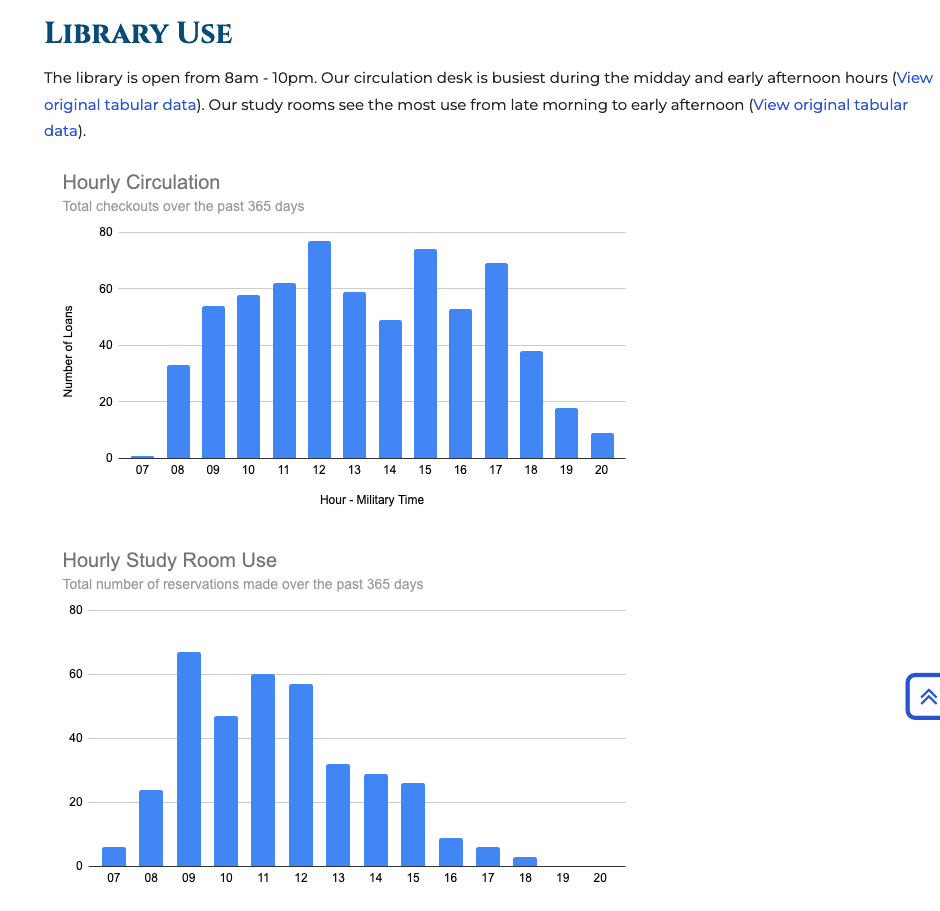
Overview: The SUNY College of Optometry utilized Google Colab to execute a Python script that imports data from Alma Analytics into a Google Sheet via Alma’s Analytics API, which is then used to create self-updating visualizations that can be embedded on a web page, allowing librarians to build their own library data dashboard. This allows librarians to share their data to a wide audience in a clear and concise manner.
Librarian: Sonali Sugrim, Queens College, CUNY
Overview: The Electronic Resources Status Dashboard was developed using Springshare’s System Status Management system to communicate changes efficiently. Updates are shared via email, MS Teams, and the dashboard, benefiting both internal and external users. It links to library pages, informing users about resource changes promptly. Explore it here: Electronic Resources Status Dashboard.
Read on for our interviews with the 2024 winning projects…
Rebecca Y. Bayeck: Winning the award was a great encouragement and also a validation of the importance of this initiative. I started this project in 2020 with the goal of advancing AI literacies among archivists. The initial support for this initiative came from the Council on Library and information Resources (CLIR). This award serves as another grant that will help to continue this initiative, which big perspective is democratizing AI so many, and particularly archivists can have a seat and a say at the table where AI tools are being developed, and even after they get developed and deployed.
Rebecca Y. Bayeck: As of now, the plan is to use the prize to expand this project by developing collaboration with other scholars and experts in this area. I think such collaboration with increase the impact of this project.
Jill Locascio: I am honored and grateful to be named a finalist for the Lean Library Innovators Award. As a librarian who primarily works with systems and eresources, I dedicate a lot of my time to the development and implementation of creative, practical, low-to-no cost solutions to address our library’s evolving needs. It has been extremely encouraging to discover that my approach to creating a Library Data Dashboard may be useful to others in a similar position.
Jill Locascio: Working on the Data Dashboard not only provided me the opportunity to solve an issue facing our library, it also provided me a hands-on opportunity to develop coding skills. Doing so has opened a floodgate of ideas for potential projects which will use code to improve workflows and library services. I plan to use the prize money to take professional development courses that will help continue my growth as a coder, enabling me to implement and share new innovations.
Sonali Sugrim: I’m very pleased to have been selected as a finalist for the Lean Library Innovators Award. It means a lot to me and the work I do. As an E-Resources Librarian, I’m always looking for ways to improve access and discovery while meeting the needs of our users and this award has helped me highlight the work I have done and engage with other professionals on how to improve and engage users.
Sonali Sugrim: I’m no longer at the institution where I implemented this feature. I hope to discuss and implement the same feature or variant feature at my current institution. If this feature may not be top priority at my current institution then I plan to use the prize money to advance my learning of various coding or software technologies to help me improve the way I approach some of my responsibilities.
Congratulations again to the 2024 winners of the Lean Library Innovators Award! Have you spotted any exciting technological innovations in librarianship or Higher Education? Give these innovations a shout out on X and LinkedIn.
At Lean Library we believe that the right technology can remove barriers to knowledge. That’s why, back in 2022, we launched the Lean Library Innovators Award in partnership with ER&L.
The award commends examples of technological innovations in e-resources librarianship, especially in support of pedagogy and/or research workflows across university libraries. The winning innovator received a $2,000 prize, with an additional $500 award to 2nd and 3rd place, to be used to advance future technological innovations and/or professional development.
We’re proud that the Award has been running for three years, and you can read about the prior Award winners here. Find out what winning the award meant to them, and their plans for the cash prize.
Librarian: Rebecca Y. Bayeck, Utah State University
Overview: HAIRA is a platform educating archivists about AI’s role in archives, stemming from prior research. It emerged from a popular webinar series, highlighting the demand for AI education. With funding from CLIR, it offers a website and introductory course, attracting 300 participants in its first module. HAIRA aims to foster AI literacy among professionals at all career stages.
Librarian: Jill Locascio, SUNY College of Optometry
Overview: The SUNY College of Optometry utilized Google Colab to execute a Python script that imports data from Alma Analytics into a Google Sheet via Alma’s Analytics API, which is then used to create self-updating visualizations that can be embedded on a web page, allowing librarians to build their own library data dashboard. This allows librarians to share their data to a wide audience in a clear and concise manner.
Librarian: Sonali Sugrim, Queens College, CUNY
Overview: The Electronic Resources Status Dashboard was developed using Springshare’s System Status Management system to communicate changes efficiently. Updates are shared via email, MS Teams, and the dashboard, benefiting both internal and external users. It links to library pages, informing users about resource changes promptly. Explore it here: Electronic Resources Status Dashboard.
Read on for our interviews with the 2024 winning projects…
Rebecca Y. Bayeck: Winning the award was a great encouragement and also a validation of the importance of this initiative. I started this project in 2020 with the goal of advancing AI literacies among archivists. The initial support for this initiative came from the Council on Library and information Resources (CLIR). This award serves as another grant that will help to continue this initiative, which big perspective is democratizing AI so many, and particularly archivists can have a seat and a say at the table where AI tools are being developed, and even after they get developed and deployed.
Rebecca Y. Bayeck: As of now, the plan is to use the prize to expand this project by developing collaboration with other scholars and experts in this area. I think such collaboration with increase the impact of this project.
Jill Locascio: I am honored and grateful to be named a finalist for the Lean Library Innovators Award. As a librarian who primarily works with systems and eresources, I dedicate a lot of my time to the development and implementation of creative, practical, low-to-no cost solutions to address our library’s evolving needs. It has been extremely encouraging to discover that my approach to creating a Library Data Dashboard may be useful to others in a similar position.
Jill Locascio: Working on the Data Dashboard not only provided me the opportunity to solve an issue facing our library, it also provided me a hands-on opportunity to develop coding skills. Doing so has opened a floodgate of ideas for potential projects which will use code to improve workflows and library services. I plan to use the prize money to take professional development courses that will help continue my growth as a coder, enabling me to implement and share new innovations.
Sonali Sugrim: I’m very pleased to have been selected as a finalist for the Lean Library Innovators Award. It means a lot to me and the work I do. As an E-Resources Librarian, I’m always looking for ways to improve access and discovery while meeting the needs of our users and this award has helped me highlight the work I have done and engage with other professionals on how to improve and engage users.
Sonali Sugrim: I’m no longer at the institution where I implemented this feature. I hope to discuss and implement the same feature or variant feature at my current institution. If this feature may not be top priority at my current institution then I plan to use the prize money to advance my learning of various coding or software technologies to help me improve the way I approach some of my responsibilities.
Congratulations again to the 2024 winners of the Lean Library Innovators Award! Have you spotted any exciting technological innovations in librarianship or Higher Education? Give these innovations a shout out on X and LinkedIn.
What we Learned from Harnessing the Power of Collaboration September 3, 2024Back in April we hosted a roundtable discussion, in partnership with OpenAthens, to explore how academic librarians and IT professionals can work together and meet emerging challenges for patrons head on. Our panel consisted of:
Matthew Weldon, Library Patron Consultant, Lean Library
Adam Snook, Technical Consultant, OpenAthens
Craig Amos, Associate Dean of Library Access and Delivery, Broward College
Emma Adamson, Director of Learning Services, University of South Wales
In case you missed the discussion, you can catch up below:
Read on to discover our 9 key takeaways from the roundtable discussion with our panel:
Speakers emphasized that librarians and IT professionals working together can help overcome challenges such as upskilling and institutional barriers, leading to more effective and innovative solutions in higher education.
“The end result was that we achieved more by doing it together than by working separately. So that’s my view, it doesn’t mean it’s always easy. And I think there’s recognition that sometimes there may be competing priorities, and, and different sort of understanding around what the challenges and the solutions are.” – Emma Adamson
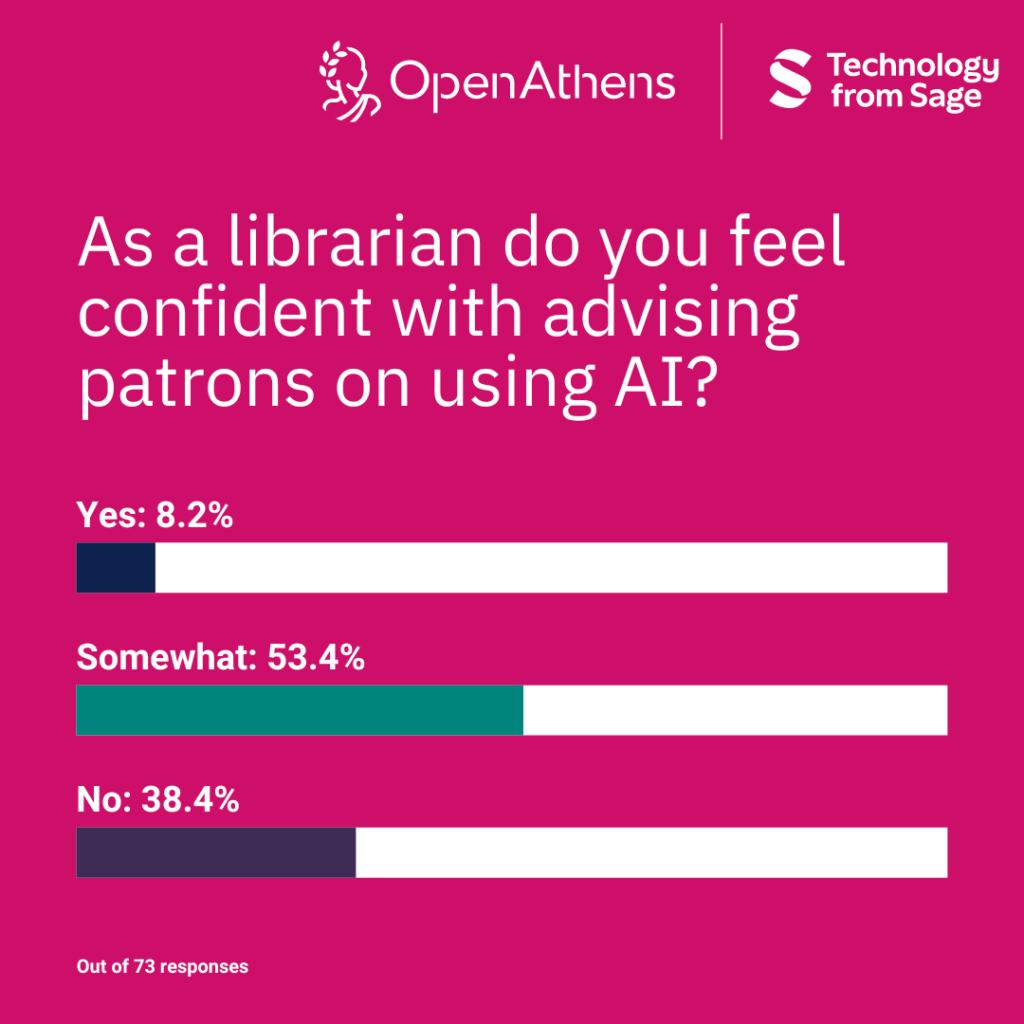
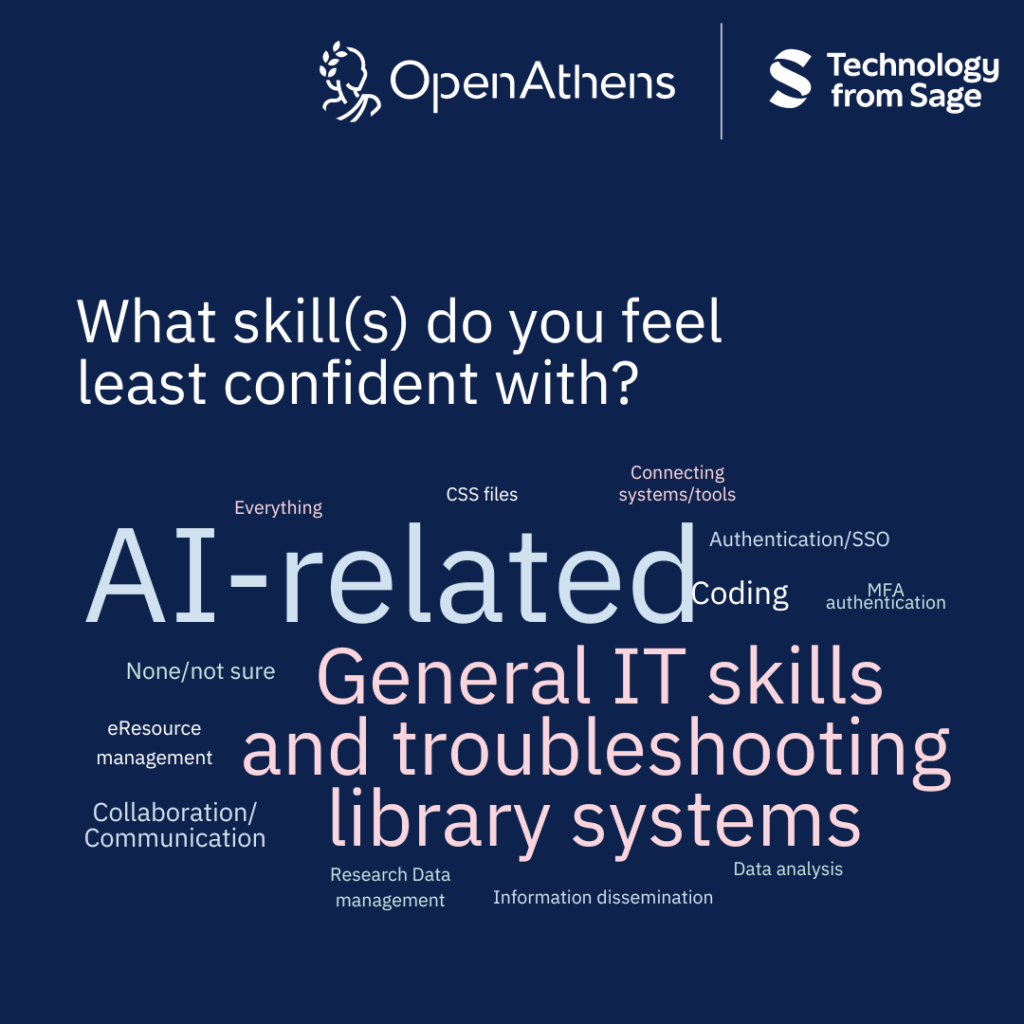
The discussion highlighted that while 53% of librarians feel somewhat competent in advising patrons on AI, there is a significant need for further upskilling. The third Librarian Futures report revealed that many librarians are less confident in their ability to answer questions on generative AI, indicating a gap in knowledge that needs to be addressed.
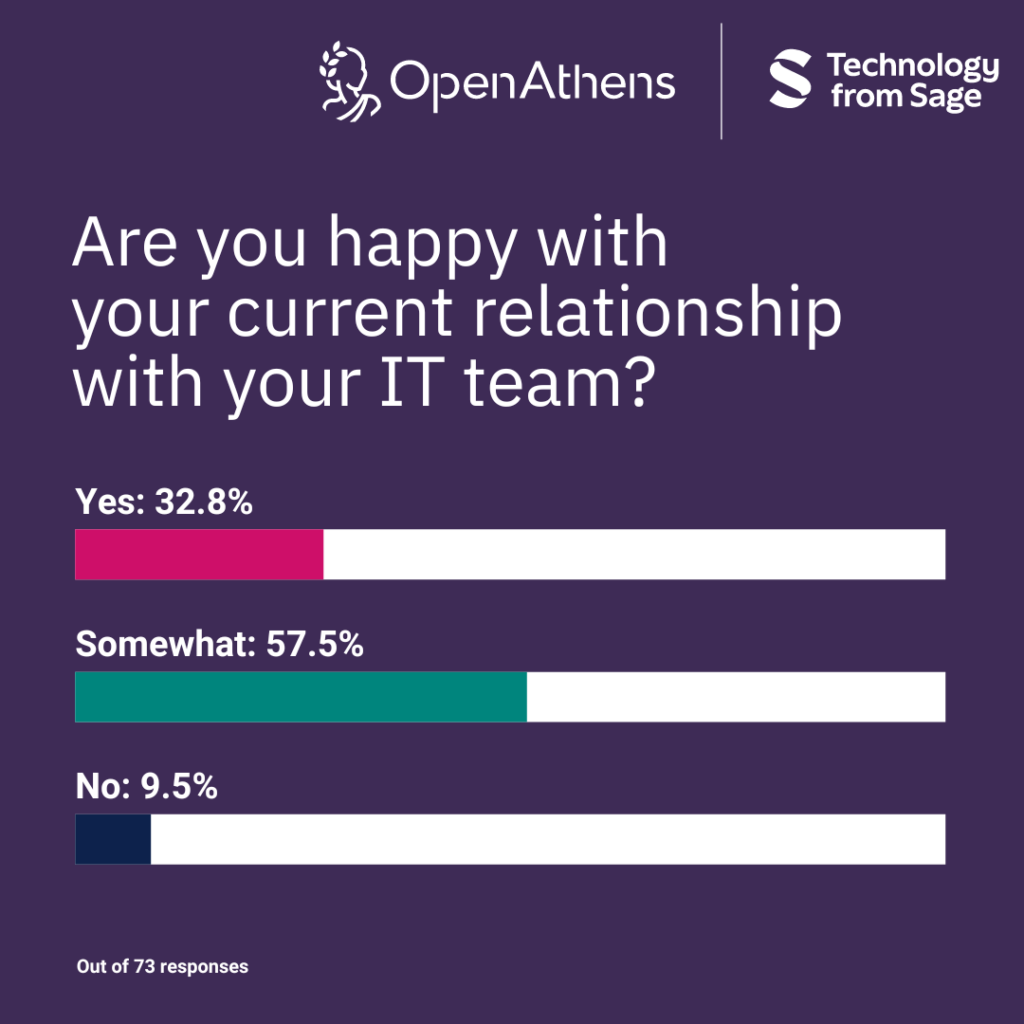
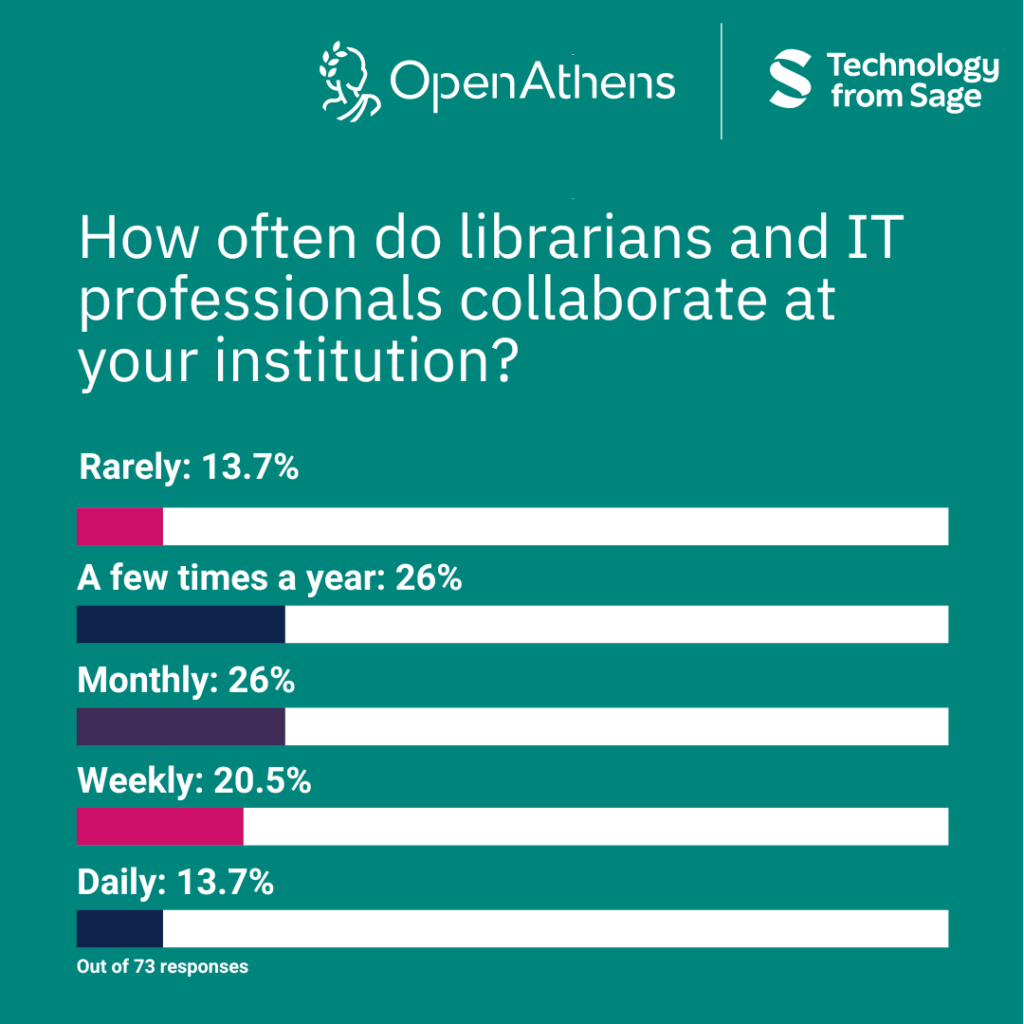
Despite the acknowledged benefits of collaboration, only 14% of institutions report daily or weekly collaboration between librarians and IT professionals. This statistic underscores the need for more structured and frequent communication channels between these departments.
Librarians face several barriers to upskilling, including a lack of time and resources. Additionally, the third Librarian Futures report pointed out that IT departments are often not involved in librarians’ skill development, which creates a gap that needs bridging for more cohesive growth and technological competences.
“I know that AI is the huge buzzword that comes up every single webinar and every single event these days, but there were things beyond that as well that I thought were worth drawing attention to here. There are challenges in the way of librarians looking to upskill themselves, we found that there was a real appetite for upskilling and for development.” – Matthew Weldon
The webinar showcased successful collaboration models, such as the implementation of single sign-on (SSO) systems. These systems have made it significantly easier for students to access library resources, demonstrating the practical benefits of effective collaboration between IT and library teams.
“When we onboarded with OpenAthens, we worked with the systems office with the state consortium, but our IT team were heroic, and they made us a priority. And we worked with our networking team, and we’re able to get directly under the secure single sign on for the institution.” – Craig Amos
One notable example of successful collaboration is the partnership between higher education institutions in Wales and the National Health Service. Together, they developed a cloud-hosted library management system that saved money and enabled open research access, showcasing the power of cross-institutional collaboration.
Executive leadership buy-in is critical for the success of collaborative projects. The speakers highlighted the importance of having librarians involved in decision-making processes and explaining their roles clearly to other departments to foster understanding and support.
The integration of AI in academic research requires a collaborative approach. IT and library professionals need to work together to address AI concerns, ensuring quality assurance and ownership of work. The speakers stressed that no single department has a monopoly on AI skills, making inter-departmental collaboration essential.
The shift towards hybrid and online courses is transforming how libraries deliver information. The speakers discussed the need for agility and understanding emerging needs as technology evolves. Tools like SpringShare were praised for allowing libraries to access various resources affordably, highlighting the need for flexible and adaptive library services.
“Modern librarianship is often now getting even more technical than ever with a lot of systems librarians out there, not just whatever the traditional librarian is. I think going back to the danger, different people, different teams generally have different goals. That’s inevitable that there’s going to be different strategies. But I think it’s by communicating with one another understanding each other’s different goals, you can see where things align, and also try and avoid where they clash.” – Adam Snook
Our roundtable discussion highlighted the critical role of collaboration between librarians and IT professionals in navigating the future of higher education. By addressing barriers to upskilling, leveraging executive leadership, and embracing innovative solutions, institutions can enhance their library services and better support their academic communities.
Introducing a brand refresh and new website August 20, 2024Lean Library has launched a refreshed brand and new website on the leanlibrary.com domain. The rebrand aligns the Lean Library suite of library products, Lean Library and Sciwheel, into a visually cohesive suite with a unified brand identity to provide a more consistent customer and user experience.
Lean Library’s new visual identity better depicts the ethos behind our innovative technologies and the people that they serve: academic librarians and their patrons. Our products have new aligned logos and refreshed color palettes that build on the product history; for example, we have brightened the recognizable orange for Lean Library.
The Lean Library website has been shut down, and leanlibrary.com is now the sole website for information on Lean Library and its products, including case studies, library resources and more.
There will be no disruption to the Sciwheel platform or extension, but the Sciwheel blog previously on the Sciwheel platform will be removed and you can instead find community pieces, user stories and other posts on with the Lean Library blog instead.
We recently launched a combined Lean Library LinkedIn channel as the hub of information for all our webinars, events, insights and more. Similarly, we launched a Lean Library YouTube Channel. We continue to maintain the Lean Library and Sciwheel X channels for product-specific updates for our customers and users. Follow us there!
The brand refresh is reflected in our products in addition to on our website, social media channels and marketing material for a fully cohesive customer journey. Customers can head to our resources pages on this website to get the logos, brand guidelines and new handy promotional assets to update any of their guidance materials.
Lean Library is launching a new Librarian Futures newsletter that shares librarian-patron insights and think-pieces from Lean Library and an array of industry partners. Sign up to receive the newsletter here.
Lean Library first launched in November 2021 as an umbrella brand for Sage’s portfolio of individually operating technology businesses, Talis and Lean Library.
Lean Library has grown significantly in the past three years:
This brand refresh reflects this growth and how Lean Library has combined the Lean Library and Sciwheel businesses into one operating division to benefit from shared services, knowledge and expertise – read more about our values, brand story and product strategy here.
Lean Library Workspace User Case Study: Leonardo Pegollo June 4, 2024It is the dawn of a new academic year and students from all over the world are flocking back to campuses, many of whom have been studying or working from home for some time. One of these academics is our loyal Lean Library Workspace user, Leonardo Pegollo. He is a public health resident physician in Italy, and in this story, he explains how Lean Library Workspace has been instrumental to his work and studies, and why he’s so eager to recommend our service to others.
After six years of medical school, Leonardo tells us that each time he starts a new academic year, he feels that the cycle starts anew and this is an exciting but daunting realisation at times. But one thing he can count on is the knowledge that there are tools available that will make his life easier as a researcher, and one of those is Lean Library Workspace.
Leonardo explains, “Back in the day when I was just a PDF hoarder, I used different apps and tools to regulate my flow of information. Storing articles, getting metadata and incorporating them into projects was a tedious process that often clashed with my writing software.” He continues. “Each app I tried, was just a different kind of nightmare. Working with other people further complicated the matter as integrating citations or working on a group of papers for a common project was afflicted by errors, program conflicts and cumbersome syncing.”
Leonardo would often dream of a service that would be easily accessible from a computer for handy PDF upload and could easily integrate into collaborative platforms. He explains “I wasn’t really questioning the status quo, I was just dealing with the issues that every researcher does at some point, and thinking of them as an obstruction to my modest scientific production.”
”There is a lot to love about Lean Library Workspace and I could not be happier to use a software tool that is worth every cent of its subscription.
Leonardo recalls that a day he will definitely remember was the day he was introduced to Lean Library Workspace. “It was the very beginning of my final thesis development. The pandemic was hitting hard and I needed to work with many collaborators, online, without losing precious time with citations, styles and endless syncing errors.” He explains. “A dear friend of mine suggested Lean Library Workspace as a solution for all my problems. A wonderful world made of seamless interaction, effortless citations and a variety of options to satisfy journal formatting guidelines. Not only this, but Lean Library Workspace gives me the ability to bring all my papers and project folders together, using just my access credentials. This has been a real game-changer!”
He goes on to explain that since he first became aware of Lean Library Workspace he has begun a personal quest to convert friends and colleagues to using it, as he has found that Lean Library Workspace has blurred the boundaries between ideas and production of a scientific article. “The idea of zipping through draft papers with citations and their style already in order, perfectly linked and updating with the text, has earned me the (benevolent) envy of my department!”
”Lean Library Workspace gives me the ability to bring all my papers and project folders together, using just my access credentials. This has been a real game changer!
With the new academic year upon us, Leonardo sees this as the perfect time to share his experience of Lean Library Workspace with colleagues. “With Lean Library Workspace, both myself and my colleagues have been able to publish two systematic reviews. This is because Lean Library Workspace finally allows us to be scientists rather than robotic compilers, as I now save so much time managing my references.”
He also explains how much he likes the discovery tool available on Lean Library Workspace. “Lean Library Workspace also helps the discovery of new papers that is based on my imports. This has made Lean Library Workspace the place to not only write my papers but also to stimulate ideas!”
He finishes his glowing review of Lean Library Workspace by telling us how much he enjoys it overall. “There is a lot to love about Lean Library Workspace and I could not be happier to use a software tool that is worth every cent of its subscription. Of course, the free tier has very few limitations but as we say in Italy “appetite increases by eating (or “l’appetito vien mangiando”), you will love the flexibility of project folders and they will become your ally in organizing your ideas.”
Interested?
Find out more about Lean Library Workspace.
If you’d like to receive a product demo, get in touch.
Lean Library Workspace User Case Study: Jocelyn Anderson June 4, 2024
We spoke with avid Lean Library Workspace user and forensic nurse, Jocelyn Anderson, her pronouns are she/her/hers. Her work in forensics led her to work in the field of violence research. This means that her work tends to answer questions related to how violence impacts health and ways in which health care providers can help to improve health and justice outcomes for patients. In this story, she shares how she first learned about Lean Library Workspace and how it has helped her research.
Jocelyn’s initial inspirations for pursuing a career in nursing started when she was in college. “I was trying to figure out what I wanted to be when I grew up, and a mentor who was a nurse told me that if I went into medicine I’d complete residency and then end up stuck in a speciality and bored.” She continues “But that as a nurse there are nearly unlimited options for career movement, growth, and change. No shade to the fabulous physician colleagues out there, but I think she was right, and I am super happy I chose the path I did.”
Jocelyn has never looked back since entering the field of nursing, and her favourite part of her job is that as a nurse and researcher she will never be bored. “Some days I am seeing patients who were sexually assaulted via a telehealth program, some days I’m doing research about sexual violence and alcohol use among college students, some days I’m teaching students Introduction to Forensic Nursing, and some days now I’m working with community organizations to give COVID-19 vaccines in high school gyms and on dairy farms.” However, she does mention that like many jobs out there, the downside to her work is completing the dreaded task of paperwork (which I’m sure many of us can relate to).
Jocelyn mentions that she was originally introduced to Lean Library Workspace during her postdoc. “The lab I worked in during my postdoc switched to Lean Library Workspace shortly after I left. Some of my friends and colleagues there said they really liked it and that it was way nicer than the product we had been using before.” she continues, “I was still tying up with this lab, so I also switched over to Lean Library Workspace and I started dabbling. I eventually got hooked and switched my own fledgling lab over.”
Her favorite feature available on Lean Library Workspace is the Google Docs integration. “(Previously), having to upload and download the files from Google to Word to work on the file as a team then work on the references – and not being able to have everyone see or edit the references in real-time was definitely annoying. (With Lean Library Workspace) being able to work with friends and colleagues geographically divided, on a paper or grant and have the references be up-to-date is so fabulous.”
”Science doesn’t happen in a vacuum, teaching don’t happen in a vacuum. It’s been really challenging to be or feel productive without the opportunity to be in the spaces I’m use to and with the people I’m use to.
Recently Jocelyn has been working on a couple of different projects using Lean Library Workspace – some of this work includes looking at HIV post-exposure prophylaxis (medications to prevent HIV given after an exposure) following sexual assault. “My team has been doing interviews with patients and health care providers to discuss what the conversations around that currently look like – with an ultimate goal of building an internet-based, multimedia tool to help share information in an accurate and more streamlined manner.”
She explains that she found moving over to Lean Library Workspace a pretty straightforward process. “I have been in pretty much every reference manager you can imagine at this point, tried many to try to figure out what I like and don’t,” she says. “I used some because they were what was accessible during undergrad or grad school. So I’ve had a lot of practice moving libraries around at this point. Lean Library Workspace’s ability to import with just a list of DOIs is another fabulous feature though!”
Find out more about Lean Library Workspace.
If you’d like to receive a product demo, get in touch.