Sage has sold Lean Library—a suite of tools that streamlines access to library content and services—to a management group bringing deep product expertise, entrepreneurial leadership, and an agile, tech-first operating model.
The new management team comprises Daniel Horvath, who will continue in his role as Lean Library Director; Jan Thij Bakker, co-founder of Lean Library; and Nenad Vidic, CEO of ThinkIT, the software development agency behind Lean Library’s technology, and a key contributor to the ongoing evolution of Lean Library’s technology platform. As Managing Director, Daniel Horvath will oversee a seamless transition and ensure smooth day-to-day operations, maintaining uninterrupted service for customers and end-users.
“It has been a privilege to be part of Lean Library since its founding days,” said Daniel Horvath. “Under Sage’s ownership, we’ve benefited from unparalleled investment, support, and commitment—helping us grow from a simple browser extension into the multi-channel productivity tool we are today and enabling us to scale to hundreds of libraries globally.”
Over the past year, Sage has made significant investments to expand the core business that has driven the company for over 60 years. This strategic focus prompted a reappraisal of its tech-first division, Technology from Sage (TfS), which includes Lean Library and Talis, which was acquired by Kortext in October.
“Sage is proud to have nurtured Lean Library’s growth over the past seven years—transforming it into a global suite of products serving hundreds of institutions. We deeply believe in its mission to extend library services, elevate library recognition, and strengthen the future of libraries,” said Karen Phillips, Executive Vice President of Learning at Sage. “We are confident that it will see a new phase of growth under this new ownership, with focused tech resources and an agile operational model fit for a software-as-a-service product.”
This acquisition enables Sage to continue its mission as a key enabler of resources that advance scholarship, fostering critical thinking, and building career skills, while Lean Library continues to concentrate on developing technologies that support rigorously created research and resources.
“As Sage now refocuses on its core publishing mission, I’m excited to continue that journey as a standalone business,” Daniel Horvath said. “My commitment is that we build on everything we’ve achieved with Sage and continue our focus on providing libraries and their patrons with transformative tools that help them meet the challenges and opportunities of the years ahead, across areas such as open access, AI, and research integrity.”
Congratulations to our October Library of the Month, Universitat Autònoma de Barcelona! October 30, 2025Each month we select a Library of the Month to honor libraries who have been using our technologies in interesting and innovative ways, from creating innovative assist messages to driving usage of library content with Lean Library.
The winning library will be awarded a prize to share amongst their team or a donation to a charity of their choice as a way for us to say thank you.
Universitat Autònoma de Barcelona (UAB) is a leading public university in Spain, recognised internationally for its excellence in research and academic impact. Located just outside the city of Barcelona, UAB was founded in 1968 and today serves around 35,800 students across undergraduate, master’s and PhD programmes.
We’re delighted to name UAB our Library of the Month for October in recognition of their outstanding advocacy for Lean Library, both within their university and beyond. UAB initially set a goal of 2,000 engaged Lean Library users and has now reached an incredible 25,000 engaged monthly users.

We asked Beatriu Piera, Project Manager of Library Services, at Universitat Autònoma de Barcelona to tell us more about what winning means:
“A few years ago, we decided to adopt Lean Library because it allowed us to extend our library resources beyond our website and Discovery tool. We explored how and where to integrate Lean Library to better support our students — and having 25,000 engaged users is just fantastic.
But we’re not stopping there. We’ve optimized our integration with platforms like Primo VE and continue to add new features. Every day, we work to enhance the learning experience for our students — and the results speak for themselves!”
Discover our previous winners below:
Could you be next?
Join us next month to see who’s won.
Congratulations to our September Library of the Month, University of Pikeville September 12, 2025Each month we select a Library of the Month to honor libraries who have been using our library technologies in interesting and innovative ways, from creating well-curated reading lists with Talis Aspire to driving usage of library content with Lean Library.
The winning library will be awarded a prize to share amongst their team or a donation to a charity of their choice as a way for us to say thank you.
University of Pikeville (UPIKE) is a private, liberal arts university located in Pikeville, Kentucky, United States. Founded in 1889, around 2,000 students currently attend UPIKE.
We’ve awarded them our Library of the Month Award for September, as they are great advocates of both Lean Library and Lean Library Workspace. Lean Library Workspace is the latest offering from Lean Library which provides libraries and their users with an all-in-one offering that supports the entire research journey, from content discovery and access through to authoring work.
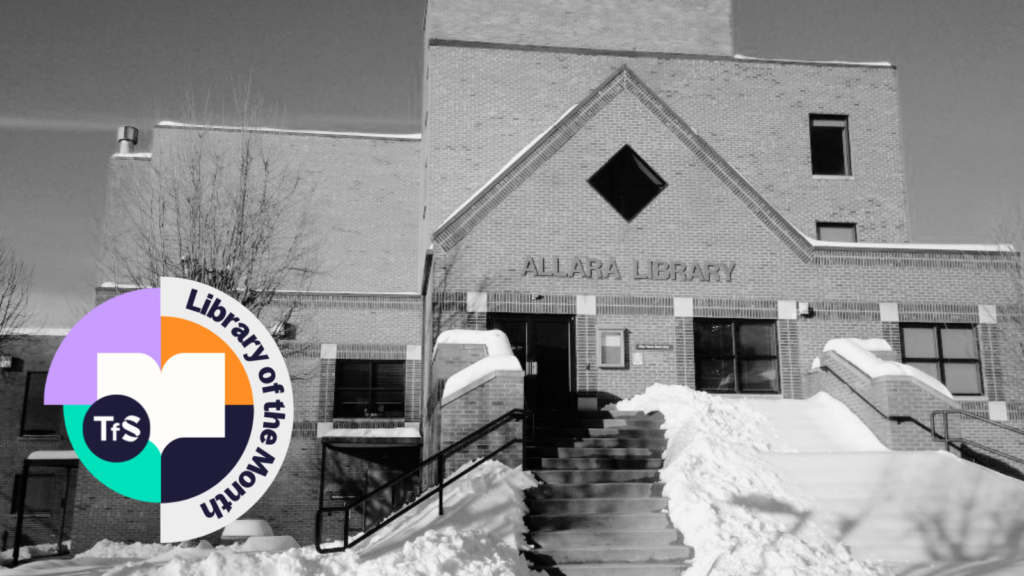
We asked Edna Fugate, CA, Director of Library Services, Allara Library at UPIKE to tell us more about what winning Library of the Month means:
“UPIKE’s Allara Library has a wonderful group of librarians and staff, as well as a supportive and collaborative campus community. Lean Library and Lean Library Workspace offer us the opportunity to share library resources on an even greater scale than before.
We are also able to reach out to other departments and provide opportunities to work together to make sure UPIKE’s students are prepared to have a successful university experience. We are excited to be recognized as Lean Library’s Library of the Month!”
Discover our previous winners below:
Could your library be next?
Join us next month to see who’s won.
Lean Library Case Study: University of Leeds September 8, 2025
Established in 1904, University of Leeds is one of the largest universities in the UK. They are part of the Russell Group of research-intensive universities and have more than 37,000 students currently studying at the institution.
The university faced a common challenge which many university libraries experience: how to ensure students are aware of library-subscribed content and collections even when they begin their research outside of the library discovery, for example, on sites such as Google Scholar and ChatGPT.
What challenges was your library facing before using Lean Library?
“While undergraduate students made frequent use of our main discovery service, a significant number of postgraduate researchers accessed content through other routes and were therefore often unaware of the library’s owned and subscribed content.
Lean Library helped us address this issue by integrating with the user’s workflow, quickly revealing and providing access to library-owned and subscribed materials, regardless of where the user began their search.”
– Alison Hazelaar, Access & Acquisitions Manager: Metadata & Discovery at University of Leeds Libraries.
In 2024 University of Leeds implemented Lean Library, a library tool which integrates library collections and services directly into student online workflows via the browser extension, to embed library guidance and library-subscribed content wherever the student is in their research journey. This not only makes it easier for students and researchers to easily access the wealth of resources available to them but promotes the library throughout user workflows.
University of Leeds have maximised Lean Library features including Assist Messages, Advanced Library Search (ALS) and Print Alternatives, to further amplify the library’s value and more deeply communicate messages to students.
Which is your favourite feature you have implemented and why?
“One of our favourite features has been the use of Assist Messages which we have added to several websites to offer guidance to users. One example is the Assist Message pop-up which allows the user a link to check the Universities guidance around Generative AI and how to use it.
Check@Leeds, allowing users to highlight a word or topic on any website and search Leeds holdings from there has also been a big hit!”
– Alison Hazelaar, Access & Acquisitions Manager: Metadata & Discovery at University of Leeds Libraries.
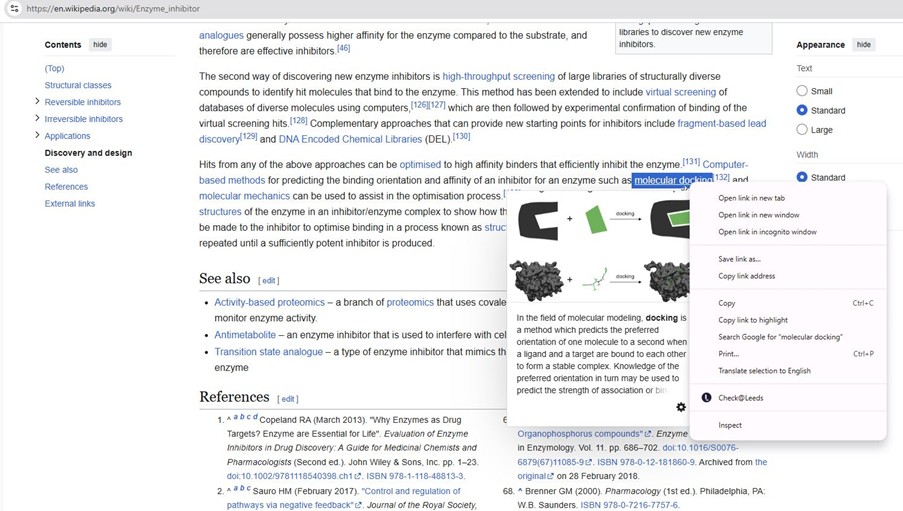
Figure 1: Screenshot of Check@Leeds which allows users to highlight a word or topic on any website and brings them to University of Leeds holdings.
University of Leeds have set up Assist Messages across the AI websites which students visit the most including: Perplexity, Claude, Copilot and ChatGPT. Assist Messages about AI guidance have the highest amount of views (nearly 8,500 views across these messages) amongst students compared to other types of Assist Messages. This shows that library advice on using AI is impactful and needed amongst students at the point-of-need.
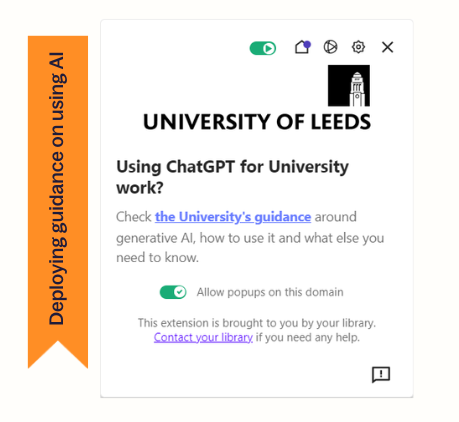
Figure 2: University of Leeds Assist Message which advises students on the University’s guidelines around Generative AI when they visit the ChatGPT website.
Find out more about how libraries can deploy AI guidance to students here.
University of Leeds have also utilised Additional Library Search (ALS) to brings the power of their library discovery service to Google – where many students begin their search for research. Students can pull their library’s discovery search results into their Google and Google Scholar search result page via the Lean Library extension to discover more content from their library.
Additionally, University of Leeds have seen great usage of the Access and Library Alternatives features amongst their students. The Access feature simplifies access to eResources the library subscribes to, whilst Library Alternatives connects users to alternative resources in the library’s holdings when they hit paywalled resources online.
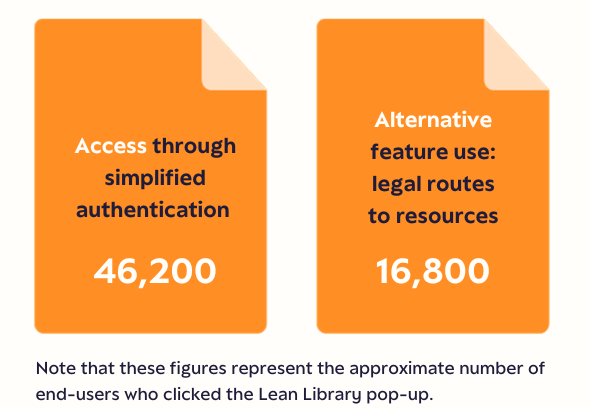
Figure 3: University of Leeds Access and Alternatives feature use amongst students using Lean Library in 2025.
The Print Alternatives feature, a new enhancement to Lean Library’s existing Alternatives feature, seamlessly surfaces the library’s print book availability when users search for books online. University of Leeds was the first adopter of the Print Alternatives feature and are excited about what this means for increasing usage of library print collections with the library commenting “It is just getting better”. This enables institutions to maximize the impact of their print collections alongside digital offerings.
Read more about the Print Alternatives feature here.
Implementing Lean Library at University of Leeds has ensured discovery of both library-subscribed content and legal, Open Access papers for students whether they begin researching outside of the library or via the library catalogue.
“We had existing data that showed that we’re slightly unusual in having users who do start with our library search but now we’re better able to meet the needs of those users who were starting their search journeys elsewhere. It’s another string to our discovery bow!”
– Alison Hazelaar, Access & Acquisitions Manager: Metadata & Discovery at University of Leeds Libraries.
Since adopting Lean Library in August 2024, University of Leeds have 600 engaged monthly users using Lean Library.
This has been increasing consistently since February 2025 due to targeted outreach efforts from the library earlier this year:
How did you promote Lean Library at your institution to users?
“We’ve promoted Lean Library through three main channels:
• Intra-Library Outreach where we introduced and demonstrated Lean Library to library colleagues, including a full All staff meeting. We have given tailored presentations to specific teams, addressing their questions and sharing promotional materials.
• Faculty Outreach with sessions held with academic and postgraduate colleagues to discuss LL as an alternative access option.
• Communications Support via The Library Communications team who launched a dedicated webpage in January 2025, followed by a full campaign in February. This campaign used news stories, banners, social media posts, and digital displays.
• The publisher negotiations that were happening from 2024 into 2025 also provided another helpful push as we were able to recommend Lean Library to affected departments to highlight how they could still access a wide range of research articles.”
– Alison Hazelaar, Access & Acquisitions Manager: Metadata & Discovery at University of Leeds Libraries.

Do you have any feedback from students or users at your institution?
“We have mostly been letting the statistics do the talking in this first year of having Lean Library. We have exceeded our projection for sign-ups and we now concentrate on the active user metric to show that it’s still very much being used.
User experience is very important to us and, as we move into year 2 [of using Lean Library], we will be thinking about how we can gather first-hand feedback from users.”
– Alison Hazelaar, Access & Acquisitions Manager: Metadata & Discovery at University of Leeds Libraries.
What are you looking to do next with Lean Library?
“We are looking forward to promoting Lean Library Workspace to help users organise and manage both their reading and research in one single place. We’re also excited to learn more about the one One-Click to PDF widget which provides instant access to PDF versions of articles.”
– Alison Hazelaar, Access & Acquisitions Manager: Metadata & Discovery at University of Leeds Libraries.
Find out more about Lean Library.
If you’d like to hear more or receive a product demo, get in touch.
Increasing Usage of Library Collections: Ghent University Adopts Lean Library September 4, 2025Ghent University is the second largest University in Belgium, with around 50,000 students and 9,000 staff. It is an internationally renowned university, with a reputation for scientific research, and is ranked in the top 100 universities globally. Ghent University have partnered with Lean Library to implement Lean Library at their institution. This will streamline access to information resources and enhance library discovery, for example, highlighting their extensive library collections to students.
Lean Library integrates library collections and services directly into students’ online workflows, making it easier for students to access the resources they need without leaving their current tasks. This not only increases the visibility and usage of library resources but also enhances student productivity by saving them time and effort in accessing necessary research materials.
Remarking on the adoption of Lean Library, Ghent University library comment “As a library, we strive to lower the barriers to academic content by connecting students and researchers with collections, wherever they begin their search. So we invest in tools that empower everyone to use our collections effortlessly.”
Ghent University were aware of Lean Library’s capabilities for a few years, and the library’s recent transition to EZProxy and Primo was an ideal opportunity to implement Lean Library to ensure that Ghent University’s researchers can easily access the wealth of resources available to them.
Find out more about Lean Library.
If you’d like to hear more or receive a product demo, get in touch.
Announcing Lean Library’s First Further Education Partner, The College Merthyr Tydfil September 4, 2025The College Merthyr Tydfil (TCMT) is a Further Education (FE) college located in Merthyr Tydfil, Wales, United Kingdom with around 4,000 students and 250 staff members. Merthyr Tydfil are partnering with Lean Library to implement Lean Library and Lean Library Workspace (formerly Sciwheel) to further showcase library collections within student and researcher workflows.
Lean Library integrates library collections and services directly into students’ online workflows, making it easier for students to access the resources they need without leaving their current tasks. This not only increases the visibility and usage of library resources but also enhances student productivity by saving them time and effort in accessing necessary research materials.
TCMT will also be introducing Lean Library Workspace, an end-to-end research tool, to its students to support them with reference management, project collaboration and authoring work. These capabilities support TCMT’s values of developing student skills and supporting learners of every ability.
Erika Neck, Learning and Digital Resources Coordinator at The College Merthyr Tydfil comments “Our students love using Lean Library, so easy to bring the library service to their research rather than asking them to come to us. The Workspace is the ideal tool to also help them with their referencing and for them to cite resources quickly and easily. This was easy to setup and implement and is a great tool to find resources that we already subscribe to and that are Open Access.”
As Lean Library’s first FE partner for Lean Library, TCMT is poised to provide a more supportive, and stress-free learning environment for its student community.
Find out more about Lean Library and Lean Library Workspace.
If you’d like to hear more or receive a product demo, get in touch.
Librarian Futures Part IV: AI Is in Student Workflows—Is Your Library? July 25, 2025As AI becomes a staple in academic workflows, students are embracing tools like ChatGPT, Claude and Microsoft Copilot for tasks such as summarizing resources, drafting essays and exam preparation. But while generative AI is transforming how students learn, it’s also introducing new pressures and uncertainty—especially around academic integrity, mental wellbeing, and finding trustworthy guidance.
The latest Librarian Futures Part IV report, Librarian Leadership on the AI Frontier, confirms what many librarians already suspect. Most students feel overwhelmed (57% report feeling this way often or very often), but few are turning to the library for help. Only 17% of students would turn to a librarian for AI guidance. Even fewer (8%) report having received guidance from librarians on how to use AI in their studies. How can academic librarians play a vital role in guiding students and researchers with the responsible use of AI and embed the library into emerging AI workflows?
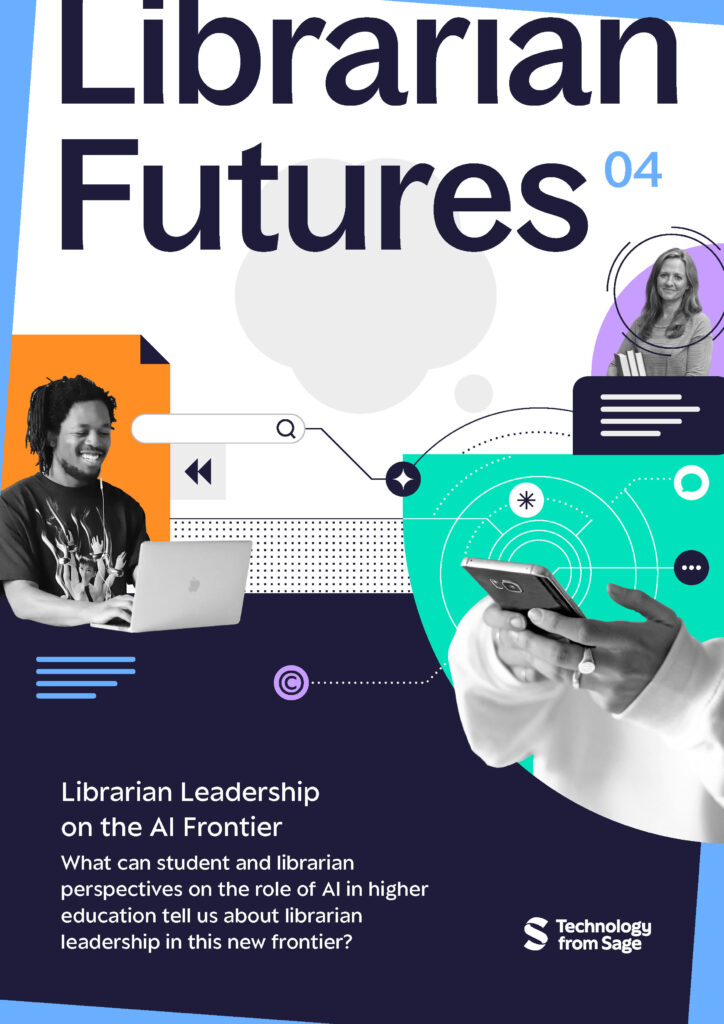
Librarian Futures Part IV, Librarian Leadership on the AI Frontier, draws on global surveys of 1000 students and 300 librarians
Discover the ways that institutions have used Lean Library, a trusted tool which streamlines access to library resources, to bridge this critical gap and bring the expertise, support, and services of the academic library directly into students’ workflows. Here’s how:
The latest Librarian Futures report found that students use multiple sites to find research in addition to the library website; 67% use Google, 55% use ChatGPT and 44% use Google Scholar. Instead of expecting students to seek out the library for help, Lean Library meets them where they are with Assist Messages (personalized messages from the library for users). For example, Lean Library can deliver a message through the pop-up with citation advice when students are browsing ChatGPT, or link to the library’s AI policy when students start their research on AI websites.
One library has deployed Assist Messages on multiple AI platforms including Perplexity, ChatGPT, Claude and Microsoft Copilot to direct students to the library guidance and policy around using these tools responsibly and ethically.
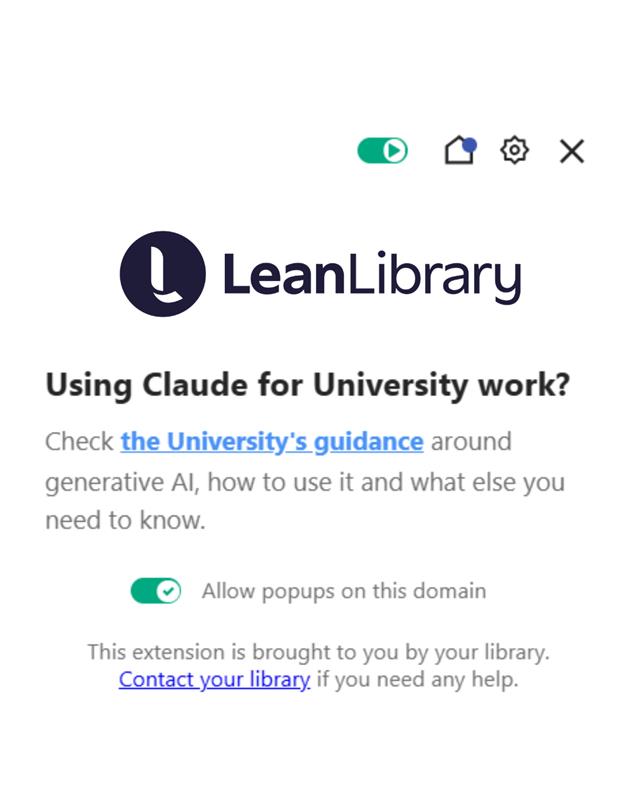
An example of an Assist Message which directs students to Claude guidance
Many students want help using AI responsibly but don’t know where to turn. Librarian Futures Part IV shows students are far more likely to trust an AI tool if it’s recommended by their library, yet they rarely receive that guidance.
One way for librarians to teach students how to use AI tools effectively is by directing them to free, trusted courses on AI digital literacy. For example, the Sage Campus and Lean Library integration surfaces the short online course, The Art of ChatGPT Interactions, to students and researchers when they are in locations within the OpenAI.com domain. The course was designed by AI expert Dr Leo. S Lo, Dean of the College of University Libraries & Learning Sciences at the University of New Mexico.
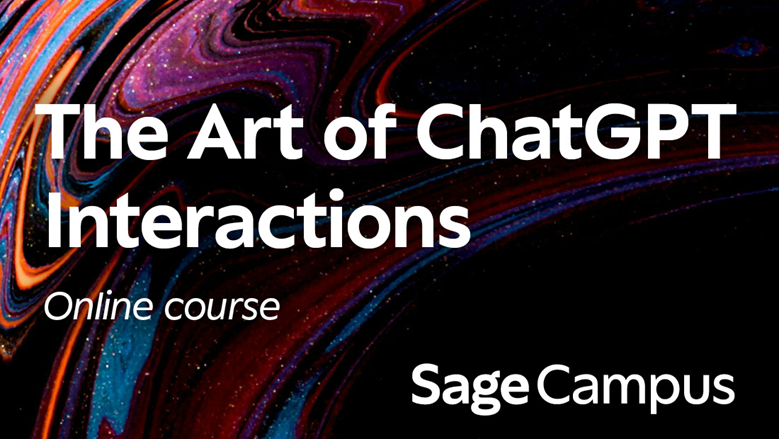
The Art of ChatGPT Interactions online short course, designed by AI expert Dr Leo. S Lo
This means students can learn about using AI effectively, improve their prompt engineering and achieve outcomes for their studies and research, without their workflow being interrupted. The library recommending free, trusted courses to students, created by librarians, mitigates the risk of the students picking up incorrect guidance as there are multiple AI courses available. This aims to reduce student stress and improve AI and research outcomes, whilst positioning the library as the go-to source for AI guidance.
Find out more about the Sage Campus AI course and how University of Phoenix have combined Lean Library‘s iFraming technology with Springshare’s LibGuides integration.
A fascinating finding from the report is that 27% of students wouldn’t look to anyone at their institution for AI guidance—more than those who would turn to a librarian (17%). Libraries have written multiple AI guides and resources for students, but how can they make sure they’re being shown to students at the point-of-need and not hidden on a library website?
With Lean Library, Library Guides or LibGuides (via Lean Library’s integration with Springshare), onboarding and instructional materials can be deployed on any academic resource or website to reach users right when they need it. This means the guidance is visible on sites such as Google Scholar, publisher websites, or even ChatGPT, rather than students searching for it.
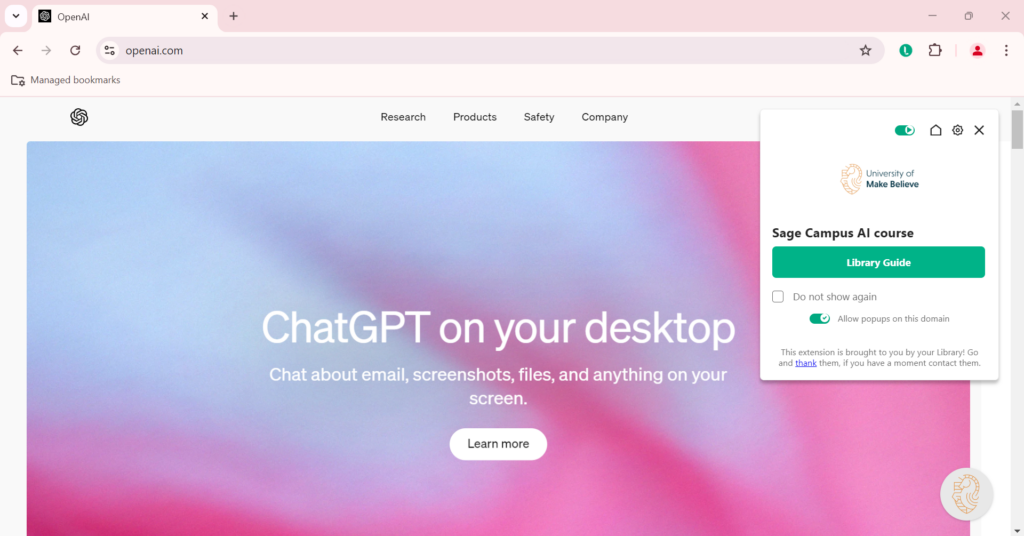
An example of Lean Library surfacing a Library Guide directing students to the Sage Campus AI course
Check out how Utah State University have embedded LibGuides in student workflows, increasing usage of a LibGuide by 450%.
Librarian Futures Part IV highlights that one of the few areas where students do turn to librarians is for getting access to resources—something Lean Library excels at. By removing barriers to access and improving discoverability of legitimate, library-provided materials, Lean Library helps students spend less time hitting paywalls and more time doing meaningful work.
Streamlining access has many positive benefits including reducing academic stress, especially for students juggling deadlines and unclear institutional AI policies. University of Hertfordshire adopted Lean Library to make it easier for students to find and access both library-subscribed materials and Open Access resources.
“There’s the risk if you don’t provide easy routes to access things legally, then potentially people may decide to do things via routes that increase risk to the institution—things that open you up to a cybersecurity risk. It was also part of a risk management strategy: let’s make this as easy as possible so they don’t try and do something that opens their own device to risk or an institutional device.”
Rebecca Scott, Project Manager, University of Hertfordshire
Read more about University of Hertfordshire’s case study.
Finally, librarians can feel empowered to personalize their presence with the Lean Library Library Chat (LibChat) feature. The LibChat integration allows librarians to deploy their live chat service to patrons. This can be very helpful for students when they face a challenging situation and want targeted support without having to go to the library’s contact page to find it.
As 60% of students said they would rather hear from the library only ‘when and where they need it’, and 53% of GenZers say they feel more comfortable communicating online than in person, this kind of humanized, live-action support can reestablish the librarian as a trusted partner in learning.
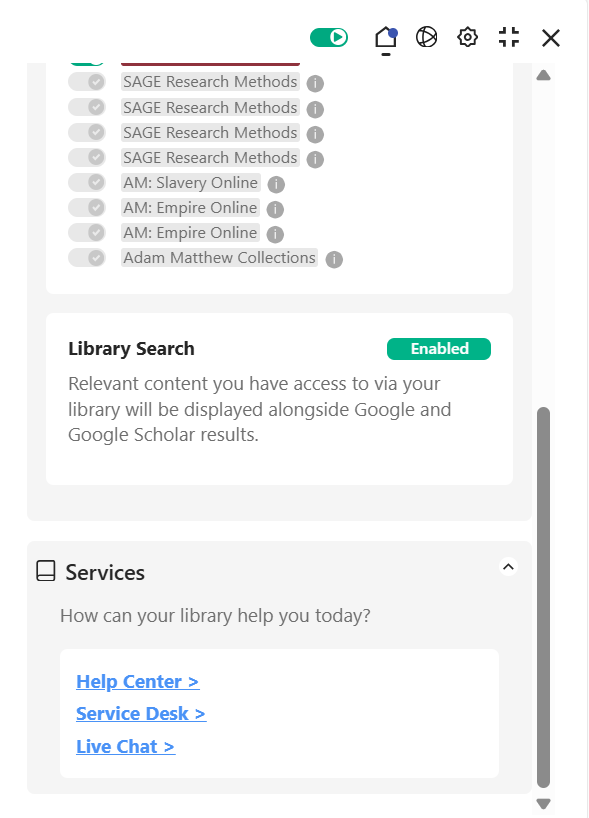
An example of a Lean Library pop-up showing students directed to Library Chat, Services Desk and Help Centre
The Librarian Futures Part IV report makes it clear: students trust their librarians, but they don’t always think to turn to them. Lean Library helps change that. By embedding the library where it’s needed most—in the student workflow and on AI sites students use to begin their research—Lean Library not only supports academic success but also reduces stress and builds confidence in the AI age.
Let’s meet students where they are and bring AI guidance to them directly in their workflow, rather than have students look for AI access and support elsewhere.
“It is important to balance the benefits of AI with responsible usage, both in our professional practice and in effectively guiding students through this rapidly changing landscape. By promoting digital literacy, librarians play a key role in helping students effectively use and assess AI-generated content in their academic work and beyond.”
PJ Purchase, University Librarian and Director of University Library, University of Phoenix
Find out more about Lean Library.
If you’d like to hear more or receive a product demo, get in touch.
Regent College London adopts Lean Library to Maximise Student Success July 24, 2025Regent College London (RCL) are partnering with Lean Library to implement Lean Library. This will provide the college’s 10,000 students with streamlined access to library holdings.
RCL offers Higher National Certificates, foundation year routes, foundation degrees, bachelor’s degrees, top-up degrees and master’s degrees in a wide array of subjects, with a focus on employability and developing in-demand skills. The RCL community welcomes students with varying degrees of qualifications and levels of confidence using technology. Students had previously experienced issues with accessing library resources for their courses. Lean Library provides a solution by taking the onus off students, ensuring they have streamlined access to centralised course materials and other library resources – saving students time and money.
Reflecting on this exciting partnership, Chris Baldwin, Director of Digital Academic Strategy at RCL, commented:
“Access to the right learning materials at the right time is essential for student success. We’re excited to launch this partnership, which will empower our students and enrich the overall educational experience we provide.”
Adopting Lean Library will integrate library collections and services directly into student online workflows via the browser extension. RCL’s implementation of Lean Library will alleviate research obstacles for students and provide them with access to both library-subscribed materials and Open Access papers at the point-of-need.
By adopting Lean Library, students will have simplified access to course materials and will be able to navigate clearly structured resource lists for their studies. This aligns with RCL’s commitment to put the student experience first and at the heart of teaching and learning.
If you’d like to hear more or receive a product demo, get in touch.
AI in Libraries: July Edition July 15, 2025At Lean Library we believe that the right technology can remove barriers to knowledge. The AI in Libraries feature shares the latest AI developments for academic librarians and worldwide projects.
Read on for July’s edition, collated by Rajeh Shaikh, Product Manager at Sage.

On June 25, 2025, Wiley announced a new partnership with AI search platform Perplexity to bring its academic content (from nursing and business to engineering and education) into a conversational, AI-powered search experience. As Perplexity’s first education partner, Wiley ensures users get transparent, cited results from trusted sources. Pilots are already running at Texas A&M and Texas State, with more universities to follow. The initiative reflects Wiley’s commitment to responsible AI and student-first innovation.
Johns Hopkins Libraries announced ongoing initiatives to explore the use of artificial intelligence in academic research and learning. A new internal task force is examining ethical, privacy-conscious ways to incorporate generative AI tools, focusing on how they can support student success, enhance search and discovery, and respect scholarly values. The team is also hosting open conversations to shape a transparent, inclusive approach.
University of Oxford announced the launch of the Entente CordIAle Paris-Saclay – Oxford-Cambridge AI Initiative, a major international partnership focused on ethical, sovereign, and world-class AI. This initiative spans collaborative research, joint thesis supervision, and industry engagement. Academic libraries of institutions involved in this partnership will be central to its success, managing AI-generated data, supporting research, and addressing ethical questions in scholarly communication.
Congratulations to our July Library of the Month, University of Leeds! July 11, 2025
Each month we select a Library of the Month to honor libraries who have been using our library technologies in interesting and innovative ways, driving usage of library content with Lean Library.
The winning library will be awarded a prize to share amongst their team or a donation to a charity of their choice as a way for us to say thank you.
University of Leeds, based in Yorkshire, United Kingdom is part of the Russell Group of research-intensive universities and are renowned globally for the quality of our research and teaching. They educate nearly 37,000 students and their alumni network has grown to over 320,000 worldwide.
We’ve awarded them our Library of the Month Award for July, as they are great advocates for Lean Library, and have utilized Assist Messages to convey important library guidance to students. For example, Assist Messages have been set up on Perplexity, Claude, Copilot and ChatGPT, with nearly 8,500 views across the messages – providing students with guidance at the time they need it.
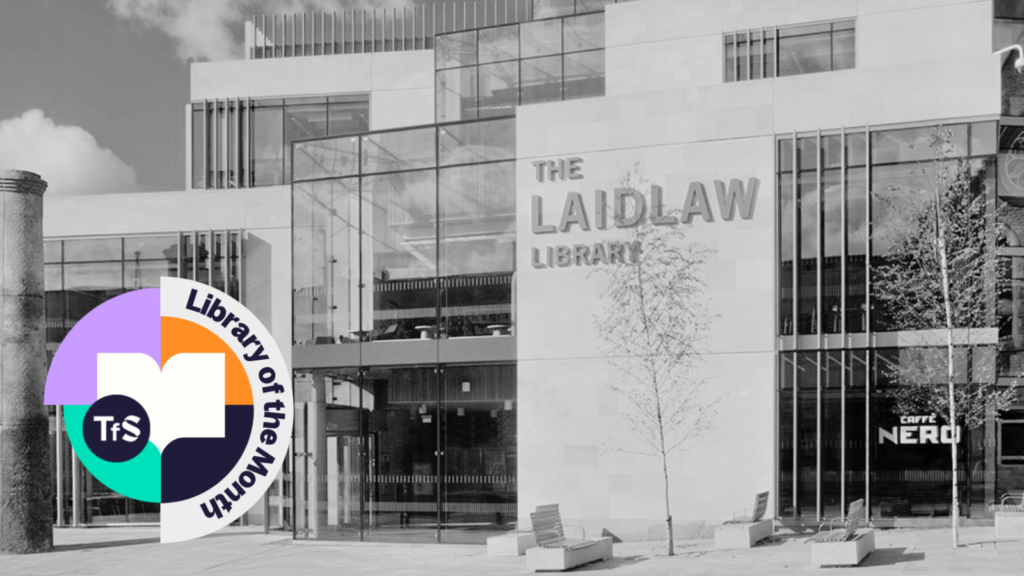
We asked Alison Hazelaar, Access & Acquisitions Manager: Metadata & Discovery at University of Leeds Libraries to tell us more about what winning Library of the Month means:
“We are thrilled to be Lean Library’s Library of the Month! It’s wonderful to have Lean Library helping our users connect easily with the content they need both on- and off-campus. It’s like a little bit of library magic happening behind the scenes.”
Discover our previous winners below:
Could your library be next?
Join us next month to see who’s won.